
Working from a beach in Bali sounds romantic until your laptop charger dies, your Airbnb has 12 Mbps download speed, and you realize you missed a tax filing deadline three time zones ago.
The digital nomad lifestyle is real, growing fast, and increasingly supported by infrastructure built specifically for remote workers. By 2026, more than 35 million people work remotely across borders for at least part of the year, according to MBO Partners research. Governments compete for them with dedicated visas. Banks build products for them. Insurance companies underwrite policies tailored to their lifestyle.
But the romantic version of nomad life skips the hard parts. Visas, taxes, healthcare, banking, internet, and gear all need actual planning. This guide covers the digital nomad essentials that matter in 2026, with specific recommendations and practical workflows that work in real conditions.
What Counts as a Digital Nomad in 2026?
A digital nomad is someone who works remotely while traveling, typically staying in each location for weeks or months rather than days. The category covers freelancers, salaried remote workers, founders, consultants, and creators.
In 2026, the lifestyle has split into three patterns:
Slow Nomads
Stay in one country for 3 to 12 months at a time.
Fast Nomads
Move every 2 to 6 weeks.
Part-Time Nomads
Work remotely abroad for 1 to 3 months per year while maintaining a home base.
Each pattern has different visa, tax, and lifestyle implications.
Digital Nomad Visas Worth Knowing
Over 65 countries now offer dedicated digital nomad visas in 2026. They typically allow 6 months to 2 years of legal residence with the right to work remotely for foreign clients or employers, often without local tax obligation if you stay under specific thresholds.
| Country | Visa Length | Income Requirement | Standout Feature |
|---|---|---|---|
| Portugal (D8) | 1 to 2 years, renewable | $3,500/month minimum | Path to permanent residency and EU access |
| Spain (DNV) | 1 to 5 years | $2,800/month minimum | Reduced tax rate of 24% for first 4 years |
| Estonia | Up to 1 year | $4,800/month minimum | Fully digital application, fast approval |
| Croatia | Up to 1 year | $2,600/month minimum | Tax-free on foreign income |
| UAE (Dubai) | 1 year, renewable | $3,500/month minimum | Zero personal income tax |
| Mexico (Temporary Resident) | Up to 4 years | $2,600/month minimum | Easy renewal, popular nomad community |
| Thailand (DTV) | 5 years | $14,000 in savings | Long stay, low cost of living |
| Brazil | 1 year, renewable | $1,500/month minimum | Lower cost of living, vibrant cities |
| Indonesia (Bali KITAS) | 5 years, renewable | Investment-based | Long-term Bali residency option |
| Japan (Digital Nomad Visa) | 6 months | $68,000/year minimum | First-world infrastructure, strong yen advantage |
Income requirements and rules change regularly. Always check the most recent official source before applying. Most applications now happen fully online and take 4 to 12 weeks for approval.
Banking and Money Management for Nomads
Traditional banks were not built for people who change addresses every few months. The right financial setup saves real money and prevents access problems abroad.
Multi-Currency Accounts
Wise (Formerly TransferWise)
The default choice for most nomads.
- Holds 40+ currencies
- Includes a debit card
- Offers near-interbank exchange rates
- Real local account numbers in USD, EUR, GBP, AUD, and several others
Revolut
Strong alternative with:
- Built-in investing
- Crypto support
- Travel insurance bundled into paid plans
N26 (EU Residents)
Clean European banking with no foreign fees on the main paid plans.
Backup Banking
Always carry a backup.
A standard recommendation:
- One fintech card (Wise or Revolut)
- One traditional bank debit card with no foreign fees
- One credit card for emergencies and rental car holds
Charles Schwab remains a strong US option for international ATM fee reimbursements.
Address and Mail Forwarding
Many financial services require a fixed address.
Popular Services
- Earth Class Mail
- Anytime Mailbox
- Traveling Mailbox
Costs run $15 to $40 per month and solve a long list of nomad headaches.
Health Insurance for Nomads
Standard health insurance from your home country usually does not cover extended international travel. Travel insurance covers short trips. Nomads need something in between: international health insurance designed for people without a permanent home.
SafetyWing Nomad Insurance
The most popular nomad insurance in 2026.
- Subscription-based
- Easy to start and pause
- Covers most countries
- Strong fit for travelers under 40
Genki
EU-based competitor to SafetyWing with strong coverage and competitive pricing.
Cigna Global / IMG Global
Full international health insurance for nomads who need real coverage rather than travel-style policies.
WorldTrips Atlas
Strong for shorter-term coverage, especially for nomads spending under 6 months abroad per year.
Important Reminder
Medical evacuation coverage of $100,000 or more is non-negotiable. A serious accident in a country with weak hospitals can become a six-figure expense overnight.
Tax Considerations Nomads Cannot Ignore
Tax planning is the part most nomads underestimate.
US Citizens
US citizens are taxed on worldwide income. No matter where you live, you owe US taxes.
The Foreign Earned Income Exclusion (around $130,000 in 2026) can shelter some of this income with proper qualification.
Most Other Countries
Most countries tax based on residency. If you spend more than 183 days in one country, you usually become a tax resident there.
Tax Treaties Matter
Many countries have agreements that prevent double taxation on the same income.
Hire a Specialist
General accountants rarely handle nomad situations well.
Popular firms include:
- Greenback Expat Tax Services
- Bright!Tax
- Nomad Capitalist
Internet, Phones, and Connectivity
Reliable internet is the single most important infrastructure decision in nomad life.
Mobile Data Strategy
eSIM Services
- Airalo
- Holafly
- Nomad
These provide instant data plans in over 200 countries.
Local SIMs for Long Stays
When staying somewhere over 30 days, local prepaid SIMs are usually much cheaper.
Backup Hotspot
Portable hotspots like the Skyroam Solis Lite provide backup connectivity when your primary fails.
Choosing Accommodations With Real Internet
Airbnb listings often advertise “fast Wi-Fi” without specifics.
Best Practice
Always ask hosts to send a Speedtest screenshot before booking long stays.
Aim for:
- 25 Mbps minimum download speed
- 50+ Mbps for video-heavy work
Coliving spaces like Selina and Outsite offer infrastructure designed specifically for remote workers.
The Essential Nomad Tech Kit
Most experienced nomads carry a small, durable kit refined over years.
| Item | Recommended Choice | Why It Matters |
|---|---|---|
| Laptop | MacBook Air M-series, Lenovo X1 Carbon, ThinkPad | Long battery, durable, lightweight |
| Universal adapter | Anker 67W GaN with USB-C PD | One adapter for every country |
| Power bank | Anker 20,000 mAh GaN with AC output | Charges laptop and multiple devices |
| Noise-cancelling headphones | Sony WF-1000XM5, AirPods Pro 2, Bose QC Ultra | Flights and coworking focus |
| Portable monitor | ASUS ZenScreen, Lenovo M14 | Productivity boost |
| Backpack | Aer Travel Pack 3, Tortuga Outbreaker, Peak Design Travel | Carry-on size and organization |
| VPN | Mullvad, ProtonVPN, NordVPN | Security on public Wi-Fi |
| AirTags / SmartTags | Apple AirTag, Samsung SmartTag | Track bags and devices |
Productivity and Work Tools
Most professional nomad work depends on the same handful of tools.
Calendar With Timezone Support
- Google Calendar
- Cal.com
- Calendly
Always set your default timezone carefully and let booking links auto-convert.
Async-First Communication
- Slack
- Loom
- Notion
- Linear
These support distributed work far better than Zoom-heavy workflows.
Cloud-First File Storage
- Google Drive
- Dropbox
- iCloud
Offline sync matters when traveling.
Password Manager
- 1Password
- Bitwarden
Strong unique passwords are non-negotiable.
Time Tracking
- Toggl
- Harvest
- Clockify
Useful for invoicing and tax records.
Where Nomads Cluster (And Why)
Strong nomad communities make the lifestyle dramatically easier.
Portugal (Lisbon and Porto)
- Strong nomad infrastructure
- EU access
- English widely spoken
Mexico City and Oaxaca
- Vibrant communities
- Good internet
- Affordable for dollar earners
Bali (Canggu and Ubud)
Still one of the world’s strongest nomad hubs despite infrastructure challenges.
Thailand (Bangkok and Chiang Mai)
- Excellent infrastructure
- Low cost
- New 5-year DTV visa
Medellín and Buenos Aires
Growing nomad presence and strong communities.
Tbilisi, Georgia
- 1-year visa-free stay for many passports
- Low cost
- Surprisingly strong internet
Vietnam (Da Nang and Ho Chi Minh City)
Affordable, fast-growing, and remote-work friendly.
6 Common Digital Nomad Mistakes
Underestimating Taxes
Living in a tax-friendly country does not automatically erase home country obligations.
Skipping Real Health Insurance
Travel insurance is not enough for long-term nomad life.
Moving Too Fast
Changing cities every two weeks burns out most nomads quickly.
Working With Weak Wi-Fi
Always test internet before committing to long stays.
Carrying Everything
Experienced nomads usually pack one carry-on and buy locally when needed.
Ignoring Loneliness
Coworking spaces, coliving communities, and local groups matter more than most beginners expect.
Expert Tips From Long-Term Nomads
Build Redundancy Into Everything Important
Carry:
- Two cards
- Two internet sources
- Backup accommodations
- Emergency contacts
Anchor Your Routine, Not Your Location
Strong routines survive city changes.
Invest in One Strong Home Base
A fallback location prevents burnout and helps during emergencies.
Treat Passports and Visas Like Assets
Track expiration dates carefully and keep digital copies.
Save Aggressively Early
Six to twelve months of expenses in savings protects against income instability.
Connect With Local Nomad Communities
Nomad List, Facebook groups, coworking spaces, and local meetups all help build real friendships.
Frequently Asked Questions
How Much Does It Cost to Live as a Digital Nomad in 2026?
Typical monthly costs:
- Southeast Asia: $1,500 to $3,000
- Latin America: $2,000 to $3,500
- Europe: $2,500 to $4,500
- High-cost cities (Tokyo, Dubai, Singapore): $5,000+
Most sustainable nomads target roughly $2,500 to $3,500 monthly.
Which Country Has the Best Digital Nomad Visa?
It depends on your priorities.
- Portugal: path to EU residency
- Spain: favorable taxes
- Thailand: long stays and low cost
- UAE: zero income tax
- Estonia: unmatched digital infrastructure
How Do Digital Nomads Handle Health Insurance?
Most use specialized international insurance.
- SafetyWing and Genki for flexible coverage
- Cigna Global and IMG Global for full international plans
Do Digital Nomads Pay Taxes?
Yes.
US citizens owe worldwide taxes. Most other countries tax based on residency rules.
Many nomad visas include reduced tax rates or exemptions, but professional advice is strongly recommended.
What Gear Do I Really Need to Start Nomading?
Essentials include:
- Reliable laptop
- Universal travel adapter
- Power bank
- Noise-cancelling headphones
- Quality carry-on backpack
- Smartphone
Most nomads refine their setup over time.
Build the Life That Travels With You
The digital nomad lifestyle is harder than Instagram makes it look and more rewarding than office workers expect. The infrastructure to support it is better in 2026 than at any previous point in history. Visas exist, banks support you, insurance providers cover you, and global communities welcome you.
Build the boring foundations first: visas, taxes, insurance, banking, and gear. The interesting parts (the cities, the people, the work that fits around your life) take care of themselves once the foundations are solid.
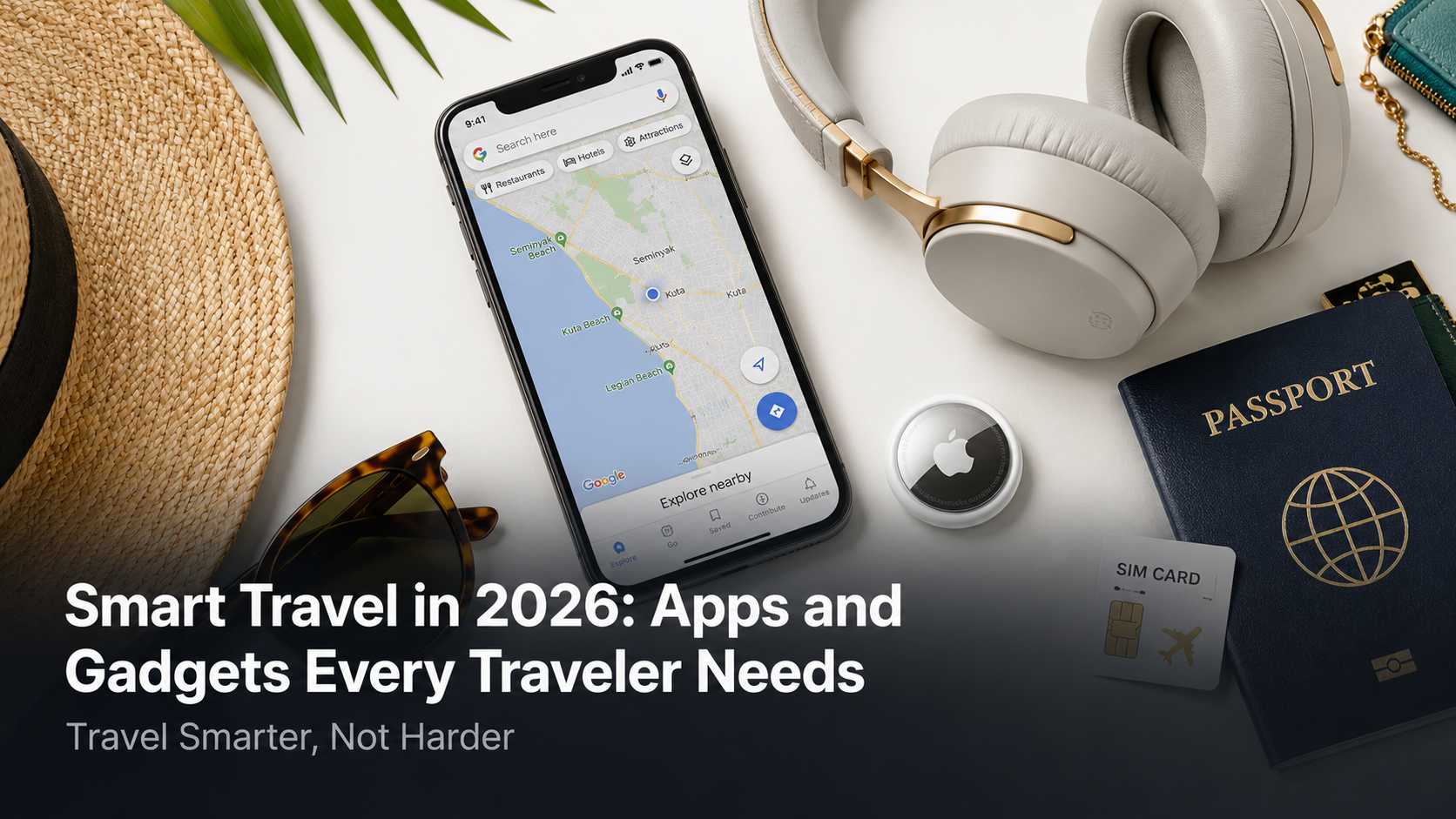
For the broader picture on travel apps, smart luggage, and tech that makes any traveler more capable, read our pillar: Smart Travel in 2026: Apps and Gadgets Every Traveler Needs. More travel and remote work content lives on PostoryCafe.com.