
Most travel apps are free, ad-supported, and exactly worth what you paid for them. A small number of paid travel apps deliver enough genuine value that experienced travelers consider them essential. The trick is knowing which ones earn their subscription fees and which ones are dressed-up versions of free alternatives.
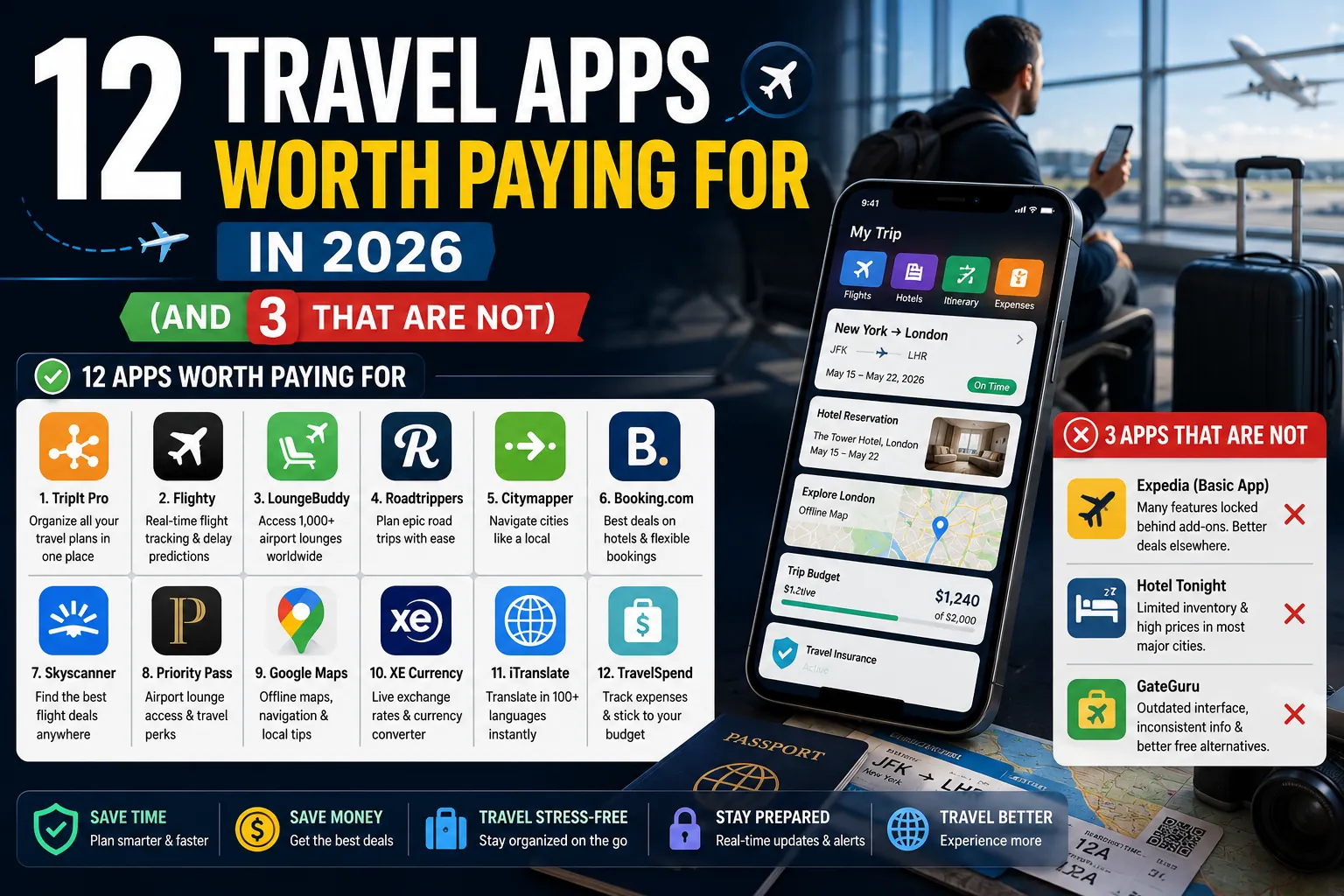
This guide covers the 12 travel apps and services that frequent travelers and digital nomads consistently pay for in 2026, based on real usage rather than marketing claims. It also names three popular paid travel apps that are genuinely not worth the money.
How We Picked These Apps
The criteria: each app on this list either saves real time, prevents real costs, or solves a problem free alternatives cannot. Subscription fatigue is real. Every paid travel app has to earn its place against the free alternatives, which in 2026 are often surprisingly capable.
Apps Worth Paying For
1. Flighty Pro ($4 per month)
Flighty Pro tracks flights better than any airline app. It detects delays before airlines officially announce them, predicts gate changes, alerts you to inbound aircraft delays that will cascade into your flight, and provides historical reliability data for the specific flight you booked. For frequent fliers, it routinely saves missed connections.
2. Wise Premium ($6 per month, conditional value)
Wise itself is free. The Premium tier is worth paying for if you make more than $3,000 in monthly cross-currency conversions, because the slightly better FX rates and elevated transfer limits more than cover the cost. For occasional travelers, free Wise is fine.
3. Airalo eSIM (pay-as-you-go, not subscription)
Not technically a subscription, but Airalo earns this list because international data through eSIM consistently saves 60% to 90% compared to airport SIMs or carrier roaming. A 7-day Europe regional plan costs $10 to $15 versus $50+ for traditional roaming.
TripIt Pro ($49 per year)
TripIt Pro automatically organizes every booking confirmation email into a clean itinerary, monitors for fare drops on your flights (with refundable airlines), and alerts you to alternate flights when delays occur. The fare monitoring alone has earned back the subscription cost for most users within a single trip.
5. SafetyWing Nomad Insurance ($45 to $65 per month)
For digital nomads and long-term travelers, SafetyWing covers what your domestic health insurance does not: international medical care, medical evacuation, and trip interruption. Pause and resume coverage as your travel changes. The most popular nomad insurance in 2026 because it scales to actual lifestyle.
6. Premium Lounge Access (Priority Pass at $99 to $469 per year)
Priority Pass gives access to over 1,500 airport lounges worldwide. For frequent international travelers, the value math is simple: the average lounge visit includes food, drinks, Wi-Fi, and quiet workspace worth $35 to $60. Two long layovers per year at major airports easily justify the membership. Many premium credit cards include Priority Pass for free.
7. AllTrails+ ($36 per year)
For travelers who hike, AllTrails+ provides offline maps, real-time GPS tracking, and trail-specific weather. The offline map feature alone is worth the subscription for anyone who hikes in areas with weak cell service. Free AllTrails is sufficient for casual day hikers.
8. NordVPN or Mullvad VPN ($60 to $80 per year)
A VPN is non-negotiable for frequent travelers using public Wi-Fi at hotels, cafes, and airports. NordVPN, Mullvad, and Proton VPN all deliver strong security at reasonable cost. Beyond security, VPNs help access streaming services from your home country while abroad and bypass restrictive networks in some destinations.
9. Going (formerly Scott’s Cheap Flights) ($49 to $199 per year)
Going alerts you to mistake fares and steep flight discounts from your home airports. The premium tier covers premium cabin deals. For travelers with flexibility on dates and destinations, a single deal alert often saves more than the annual subscription. Best for explorers, less useful for those with fixed travel dates.
10. Hopper Premium ($5 per month or $60 per year)
Hopper’s prediction algorithm tells you whether flight and hotel prices will rise or fall in the next 7 days. The Premium tier adds price freezes, cancellation flexibility, and cashback on bookings. For travelers who want to optimize when to book rather than just searching for available options, it adds real value.
11. Mindtrip or Wonderplan AI Trip Planner ($8 to $20 per month)
AI trip planning tools have matured significantly in 2026. Mindtrip and Wonderplan generate detailed personalized itineraries with bookable links, restaurant reservations, and routing optimization. For travelers who plan one or two big trips per year, the value justifies a temporary subscription during the planning phase rather than year-round.
12. Apple One Family or Google One ($12 to $30 per month)
Not strictly a travel app, but the cloud storage from these family plans is invaluable when traveling. Photos backup automatically, important documents stay accessible, and Find My / Find My Device features let you locate lost items. For families traveling together, the value compounds.
3 Paid Travel Apps That Are NOT Worth It
A short list of popular paid travel apps that consistently fall short of their value proposition.
Travel Insurance From the Booking Site
The trip insurance offered at checkout when booking a flight is consistently overpriced and underpowered. Always buy trip insurance through a dedicated provider (Allianz, World Nomads, SafetyWing, IMG) rather than the airline or hotel checkout flow. The dedicated providers offer broader coverage at lower cost.
Premium “Travel Curator” Apps
Apps that promise hand-curated travel recommendations from experts ($15 to $50 per month) almost never deliver value beyond what free travel blogs and AI itinerary planners provide. The “expert curation” is typically affiliate-driven content recycled from publicly available sources.
Lounge Day Pass Apps
Apps offering one-time lounge access for $30 to $60 per visit are worth using only if you have an unexpectedly long layover and no Priority Pass. For anyone who flies internationally more than twice a year, Priority Pass annual membership is dramatically better value.
How to Choose Which Paid Apps Are Right for You
A simple test: would I pay this subscription if I had to pay quarterly out of pocket today? If the answer is yes for 4 of the last 4 quarters, the app belongs in your stack. If you cannot remember the last time you used it, cancel and re-subscribe before your next trip if needed.
Most paid travel apps offer free trials or refund windows. Use them. The actual value of a travel app shows up during real travel, not during research.
Common Mistakes
- Subscribing year-round to apps you only use during trips. Many travel apps allow pause-and-resume billing. Use it.
- Paying for premium features you do not use. Premium tiers often add features you would never touch. Verify the specific features you need are in the cheapest tier that covers them.
- Ignoring credit card travel benefits. Many premium credit cards include Priority Pass, travel insurance, rental car insurance, and lounge access for free. Audit your existing benefits before paying separately.
- Forgetting to cancel after the trip. Auto-renewing travel apps you no longer need is a slow leak. Set calendar reminders.
Expert Tips
- Stack credit card benefits with paid apps. Many premium cards (Chase Sapphire Reserve, Amex Platinum, Capital One Venture X) include benefits that overlap with paid travel apps. Audit before doubling up.
- Use annual subscriptions when commitment is high. Annual plans typically save 20% to 40% over monthly. Worth it for tools you use consistently.
- Test paid apps during one major trip before committing. A paid app that earns its keep on a single big trip will keep earning its keep. One that does not, will not.
Frequently Asked Questions
What is the most valuable paid travel app in 2026?
For frequent fliers, Flighty Pro is consistently named the most valuable paid travel app in 2026 because of how often it prevents missed connections and surfaces information airlines do not share until much later. For digital nomads, SafetyWing or another nomad health insurance subscription typically delivers the most value because of the catastrophic cost of medical incidents abroad.
Are travel app subscriptions tax deductible for business travel?
For business travelers and self-employed professionals, travel app subscriptions used for business trips are generally tax deductible as ordinary business expenses. Keep receipts and records of business use. Consult a tax professional in your jurisdiction for specifics.
Should I buy travel apps year-round or per-trip?
Depends on your travel frequency. Travelers taking 4 or more trips per year usually save with annual subscriptions. Occasional travelers (1 to 2 trips per year) save more with monthly plans started before each trip and cancelled afterward. The math changes by individual app.
Pay for the Apps That Earn Their Place
The right paid travel apps deliver real value that free alternatives cannot match. The wrong ones become a slow leak in your finances. Audit your travel app subscriptions twice a year, cancel what you do not use, and pay for what saves you real time and money.
For the broader picture on travel technology, gear, and infrastructure, read our pillar: Smart Travel in 2026: Apps and Gadgets Every Traveler Needs. More travel guides live on PostoryCafe.com.