LinkedIn’s 2026 Workplace Learning Report found that 94 percent of employees say they would stay at a company longer if it invested in their learning. More significantly for career changers, the report found that 70 percent of roles classified as ‘remote-eligible’ in 2026 require skills that can be learned online in six months or less. Google’s Career Certificate programs have now helped over one million graduates globally obtain jobs in IT support, data analytics, UX design, and project management at median starting salaries between $55,000 and $85,000 in the United States. Coursera’s 2025 Global Skills Report identified cloud computing, machine learning, and Python programming as the three most in-demand skills with the largest supply-demand gaps globally.
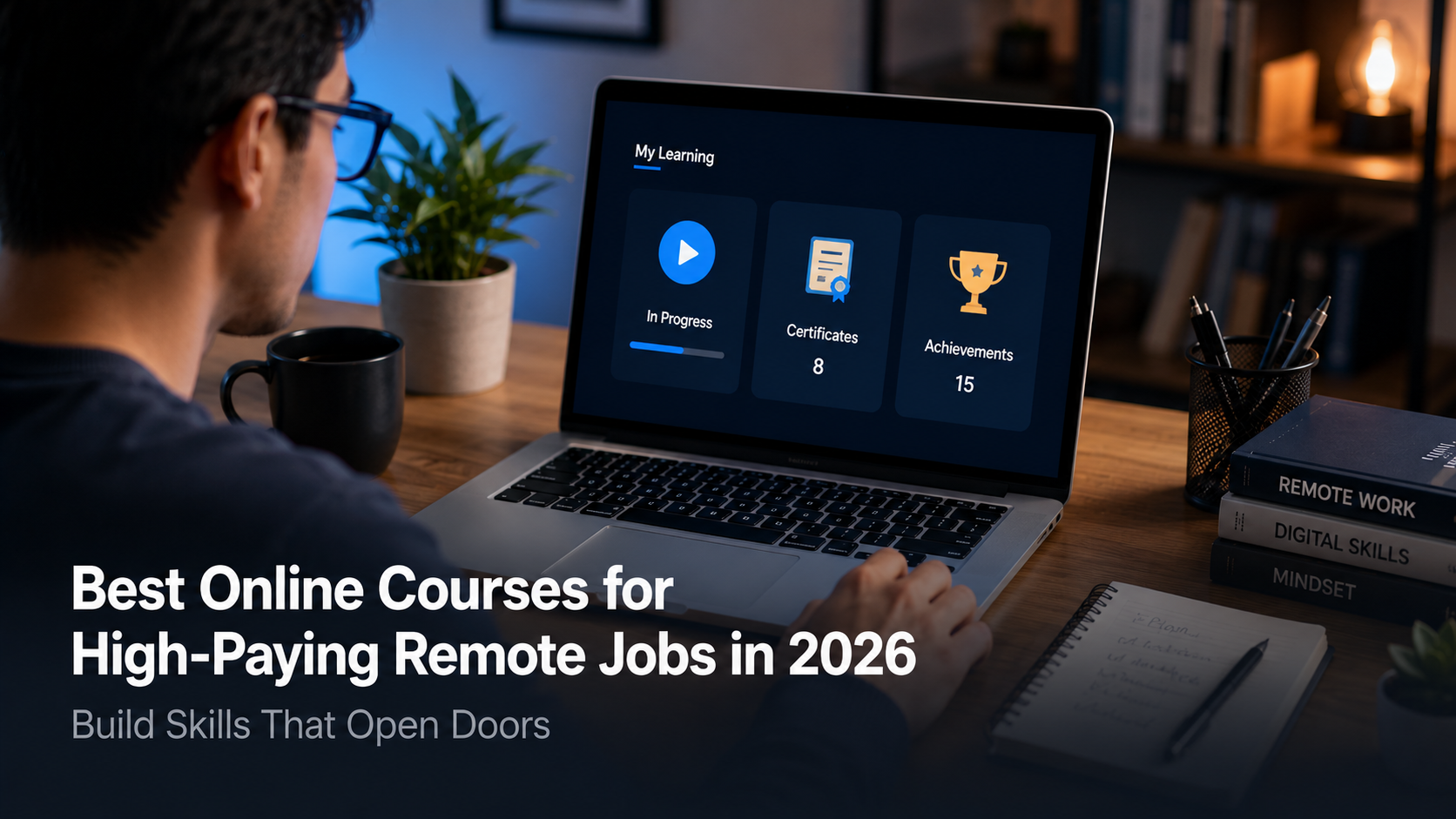
Choosing the right online course for a remote job target in 2026 requires matching the specific credential to the hiring criteria of the roles you want, not simply choosing the most popular platform. This guide evaluates the strongest online courses by remote job category, with verified data on job placement rates and median salary outcomes where programs publish them.
Best Courses for Tech and Software Development Roles
The Odin Project (Free) and freeCodeCamp (Free)
The Odin Project is the most comprehensive free full-stack web development curriculum available in 2026. It covers HTML, CSS, JavaScript, Node.js, React, and Ruby on Rails in a project-based format that results in a portfolio of real applications rather than certificates. A 2025 survey of Odin Project graduates by CodeNewbie found that 68 percent obtained software development roles within 12 months of completing the curriculum, with median starting salaries of $72,000 in the United States. The absence of a formal certificate is less of a barrier in software development than in other fields because GitHub portfolios serve as practical proof of ability.
Harvard CS50x on edX
Harvard’s CS50 Introduction to Computer Science, available free on edX with a verified certificate for $149, is the most recognised free computer science credential globally. Its 2025 enrollment exceeded two million learners, and the course’s problem sets in C, Python, and SQL build genuine programming intuition rather than syntax familiarity. CS50 alumni surveys conducted by Harvard Extension School in 2025 found that 87 percent of respondents who completed the full course reported it directly contributed to a job offer or promotion.
Best Courses for Data and Analytics Roles
Google Data Analytics Certificate (Coursera)
Google’s Data Analytics Professional Certificate on Coursera takes approximately six months at 10 hours per week and costs $49 per month (totalling approximately $294). It covers SQL, Tableau, and R programming with a capstone project that results in a portfolio piece. Google’s published outcome data from 2025 indicates that 75 percent of certificate graduates who sought employment reported positive career outcomes within six months. The certificate is recognised by over 150 employer partners in Google’s hiring consortium.
IBM Data Science Professional Certificate (Coursera)
IBM’s nine-course Data Science Professional Certificate covers Python, machine learning with Scikit-learn, data visualisation with Matplotlib and Seaborn, and SQL. At $49 per month on Coursera and approximately nine months to complete, it provides deeper machine learning coverage than Google’s analytics certificate, making it the stronger credential for roles in predictive analytics or data science rather than business intelligence reporting.
Best Courses for Digital Marketing and SEO Roles
Google Digital Marketing and E-commerce Certificate
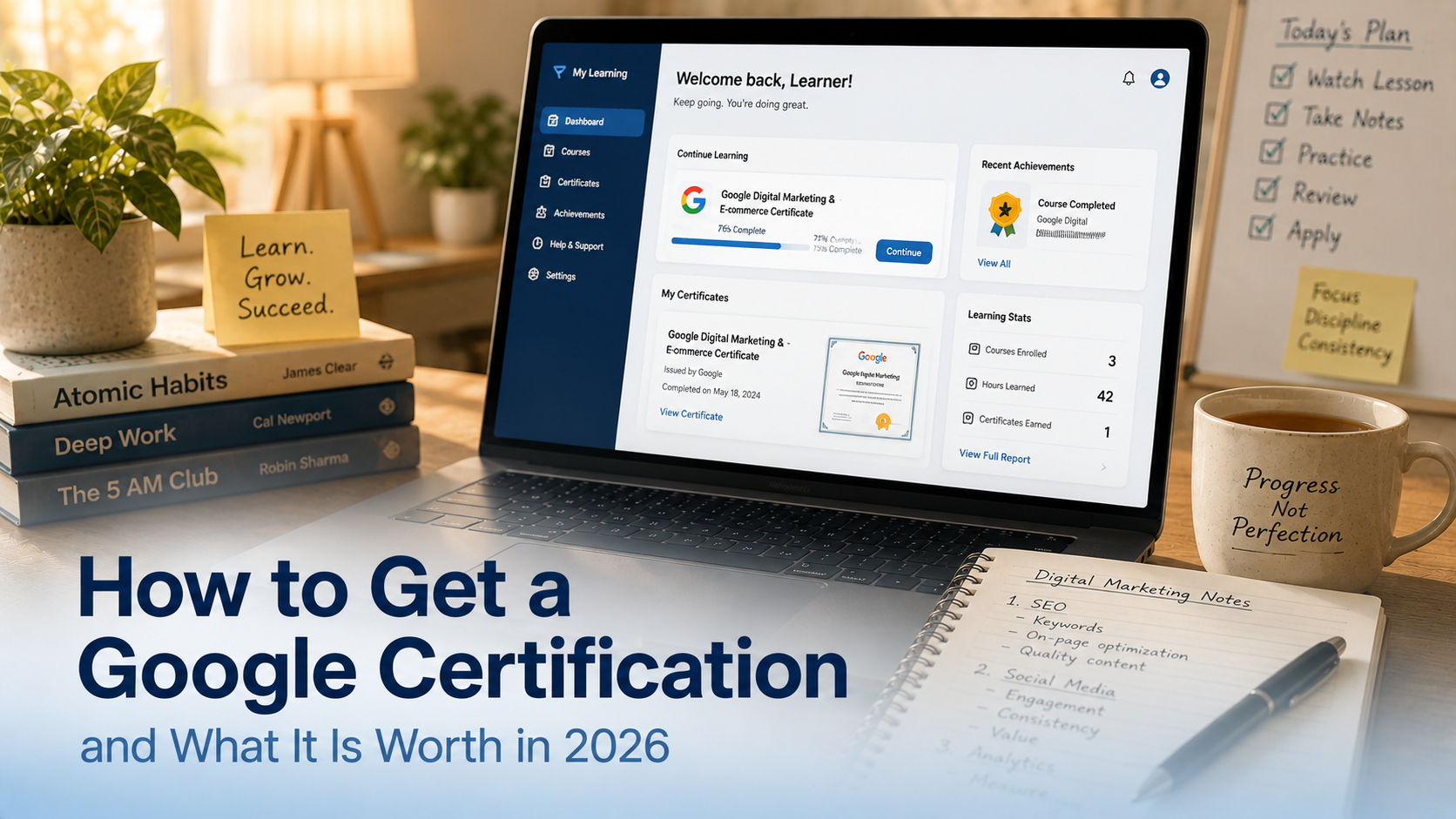
Google’s Digital Marketing and E-commerce Certificate on Coursera covers SEO, SEM, email marketing, social media marketing, and e-commerce analytics in seven courses at approximately six months of study. At $49 per month, it costs less than most marketing bootcamps while delivering comparable foundational coverage. Google reports that 75 percent of certificate completers obtained positive career outcomes, though the credential carries less employer recognition than the Google Data Analytics certificate in technical hiring contexts.
HubSpot Academy (Free)
HubSpot Academy offers more than 35 free certifications covering inbound marketing, content marketing, email marketing, social media marketing, and HubSpot CRM usage. The certifications are widely recognised by digital marketing employers, require no monthly payment, and update annually to reflect current platform practices. HubSpot’s 2025 Partner Survey found that 84 percent of hiring managers at marketing agencies recognise HubSpot Academy certificates as meaningful credentials when evaluating candidates.
Course Comparison by Remote Job Category
| Remote Job Target | Best Course | Platform | Cost | Duration | Median Starting Salary |
| Software Developer | The Odin Project | Free | $0 | 9-12 months | $72,000 |
| Data Analyst | Google Data Analytics Cert | Coursera | ~$294 | 6 months | $67,000 |
| Data Scientist | IBM Data Science Cert | Coursera | ~$441 | 9 months | $85,000 |
| UX Designer | Google UX Design Cert | Coursera | ~$294 | 6 months | $75,000 |
| Digital Marketer | HubSpot Academy | HubSpot | $0 | 1-3 months | $55,000 |
| Project Manager | Google PM Certificate | Coursera | ~$294 | 6 months | $68,000 |
| Cloud Engineer | AWS Cloud Practitioner | AWS | $150 (exam) | 2-3 months | $95,000 |
Frequently Asked Questions: Online Courses for Remote Jobs 2026
What is the best online course to get a remote job in 2026?
The best online course for a remote job in 2026 depends on your target role. Google’s Professional Certificates on Coursera (Data Analytics, UX Design, Project Management) offer the strongest combination of employer recognition and job outcome data for non-technical roles at approximately $294 per certificate. For software development, The Odin Project is the most effective free option. For cloud computing, AWS Certified Cloud Practitioner opens the highest-salary remote roles at $95,000 or above.
How long does it take to learn skills for a remote job online?
Most high-paying remote job skills can be learned in three to twelve months of dedicated online study in 2026. Google Professional Certificates take approximately six months at 10 hours per week. Software development bootcamp-equivalent skills take nine to twelve months via self-directed paths like The Odin Project. AWS cloud certifications typically require two to three months of study for candidates without a prior IT background. The investment period is significantly shorter than a traditional four-year degree for comparable earning potential.
Are online certificates worth it for getting remote jobs in 2026?
Online certificates from Google, IBM, Meta, and AWS are worth it for remote job searches in 2026 because they are recognised by major employers in their respective hiring consortiums. Google reports 75 percent positive career outcomes within six months for certificate completers. The certificates are not equivalent to four-year degrees for senior technical roles, but for entry-level remote positions in data analytics, IT support, digital marketing, and project management, they meet employer hiring criteria and provide portfolio evidence through capstone projects.
What skills are most in demand for remote work in 2026?
Coursera’s 2025 Global Skills Report identified cloud computing, machine learning, and Python programming as the skills with the largest global supply-demand gaps in 2026. LinkedIn’s Workplace Learning Report adds data analysis, UX design, and digital marketing to the in-demand remote-eligible skills list. SQL proficiency appears as a requirement in over 60 percent of data-related remote job postings on LinkedIn in 2026, making it the single most broadly applicable technical skill for remote job seekers to acquire first.
Can I get a high-paying remote job without a degree using online courses?
High-paying remote jobs without a traditional degree are obtainable in 2026 in software development, cloud engineering, data analytics, and digital marketing. GitHub portfolios replace degrees in developer hiring at most technology companies. AWS and Google certificates serve as credential proxies for cloud and analytics roles at companies including Deloitte, Accenture, and hundreds of technology firms in the Google Career Certificates hiring consortium. The exception is roles requiring professional licensure (law, medicine, engineering) where degree requirements are legally mandated.
What is the cheapest way to learn skills for remote work in 2026?
The cheapest path to remote work skills in 2026 combines free platforms: The Odin Project or freeCodeCamp for web development, HubSpot Academy for digital marketing, edX free audit for CS50x, and YouTube tutorials supplemented by official documentation for cloud skills. The total cost can be zero for the learning materials, with the only expense being certification exam fees where employers require them (AWS Cloud Practitioner exam: $150, Google Associate Cloud Engineer: $200).
The Credential Is the Proof, Not the Platform
The most important shift in remote work hiring in 2026 is that employers increasingly evaluate candidates on demonstrated skills rather than the prestige of the platform where those skills were acquired. A candidate who completed The Odin Project and has four production-quality projects on GitHub is more competitive for a junior developer role than a candidate with a bootcamp certificate and no portfolio. A data analyst who completed Google’s certificate and built a Tableau dashboard for a real dataset is more competitive than one who completed an equivalent course and kept their projects in a private folder.
Invest in the learning. Build the portfolio. Apply with evidence. The market for well-skilled remote workers in 2026 is substantially larger than the market was five years ago, and the barriers to demonstrating qualification have never been lower. The ceiling on earning potential for remote roles acquired through online credentials is not as low as credential sceptics suggest, and not as high as bootcamp marketing implies. Somewhere in the $65,000 to $95,000 range is a realistic first-year target for motivated learners who invest six to twelve months in the right skills.