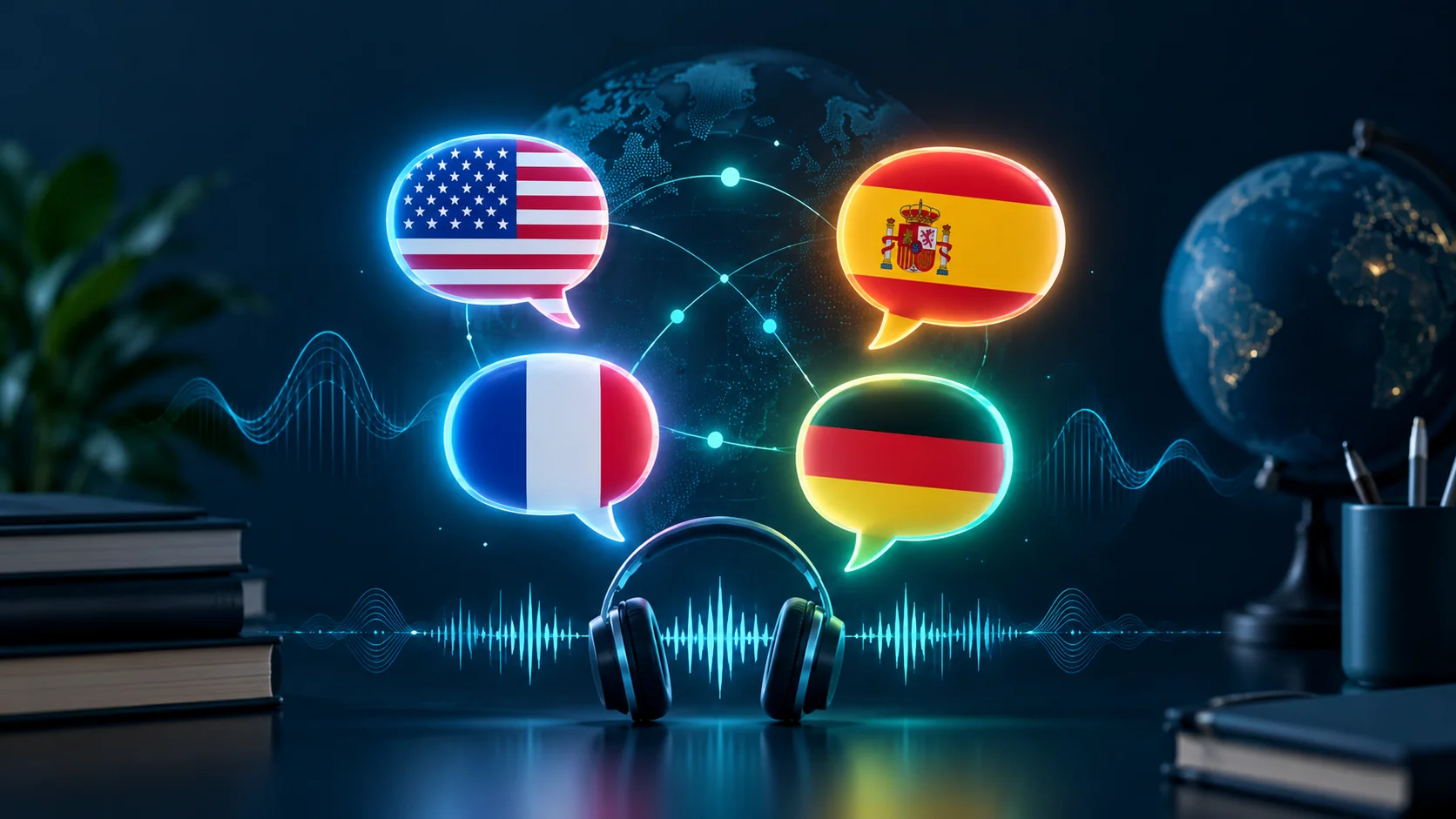
Language learning apps have moved beyond gamified vocabulary drills to include AI conversation partners, live tutor marketplaces, adaptive curriculum engines, and real-time speech feedback. The market in 2026 has stratified into distinct products serving different learner types and goals. The right app depends heavily on how you learn, how much time you have, and what level of fluency you need.
This guide compares the four leading platforms with honest assessments of where each works and where it falls short.
1. Duolingo: The Habit Builder
Duolingo is the most widely used language learning app globally with over 600 million registered users. The gamified, streak-based design is optimized for one specific outcome: getting you to open the app every day. For building a daily language habit, nothing is more effective. For achieving real conversational fluency, its limitations are real.
Strengths
- Best habit-building mechanics of any language app.
- Free tier covers core content for most major languages.
- Duolingo Max adds AI conversation practice with GPT-4 integration.
- Effective for absolute beginners and maintaining passive exposure.
Weaknesses
- Alone, it rarely produces conversational fluency.
- Grammar coverage is light, which creates gaps for advanced learners.
- Gamification can create streak-chasing behavior that prioritizes completion over actual learning.
Pricing
Free tier available. Duolingo Plus $6.99/month. Duolingo Max $13.99/month (includes AI conversation features).
2. Babbel: The Structured Course Approach
Babbel takes a more traditional course-based approach than Duolingo. Lessons are designed by professional linguists, cover grammar explicitly, and focus on practical conversational scenarios. No free tier, but more systematic instruction for learners who want genuine progress.
Strengths
- More rigorous grammar instruction than Duolingo.
- Speech recognition for pronunciation feedback.
- Curriculum designed by linguistics professionals.
- Strong live class option for group practice.
Weaknesses
- No free tier (only 7-day trial).
- Less engaging than Duolingo for pure habit formation.
- Content depth falls off at advanced levels.
Pricing
1-month plan $13.95. 3-month plan $29.85 ($9.95/month). 12-month plan $59.40 ($4.95/month).
3. Pimsleur: The Audio-First Method
Pimsleur is built around audio-only lessons designed for commuters, drivers, and people who learn better by listening than reading. The method uses spaced repetition in audio format, focusing on speaking from the very first lesson. Effective for building spoken confidence in ways apps with text-heavy interfaces do not.
Strengths
- Best for commuters, drivers, and audio learners.
- Spoken fluency from lesson one.
- Available in 50+ languages including many uncommonly taught languages.
- Strong for building confidence in pronunciation and conversation.
Weaknesses
- Weaker on reading, writing, and grammar instruction.
- Expensive compared to competitors.
- Lessons feel repetitive after extended use.
Pricing
$20.95/month for Premium subscription (all 50+ languages). Individual language programs $14.95/month.
4. Preply: The Tutor Marketplace
Preply is a live tutor marketplace connecting learners with native speaker tutors for 1-on-1 video lessons. It is not an app in the traditional sense: there is no gamified lesson structure. It is a human connection platform. For learners who need to reach real conversational fluency, nothing competes with hours of 1-on-1 tutoring.
Strengths
- Fastest path to genuine conversational fluency.
- Access to native speaker tutors from target countries.
- Completely personalized lessons.
- Corporate language training programs for teams.
Weaknesses
- Most expensive option.
- Requires scheduling and commitment.
- Quality varies by tutor.
Pricing
Tutors from $5 to $50+ per hour depending on language, experience, and location. Packages available.
Comparison Table
| Platform | Best For | Free Tier | Starting Price |
|---|---|---|---|
| Duolingo | Daily habit, beginners, casual learners | Yes | $6.99/month |
| Babbel | Structured grammar, practical conversations | No (7-day trial) | $4.95/month (annual) |
| Pimsleur | Audio learners, commuters, spoken fluency | Limited trial | $14.95/month |
| Preply | Conversational fluency, personalized learning | No | $5+/hour (tutor-dependent) |
Honorable Mentions
- Italki: similar to Preply, strong tutor marketplace with community language exchange features.
- Rosetta Stone: veteran platform now with AI speech coaching. Strong for immersive vocabulary learning.
- Anki: open-source flashcard app with user-created decks. Best supplement for vocabulary retention.
- Speechling: focused on pronunciation coaching with human feedback.
How to Build an Effective Language Learning Stack
The most effective learners in 2026 use multiple tools together:
- Daily habit app (Duolingo or Babbel): 10 to 15 minutes per day for vocabulary exposure and habit.
- Weekly tutor session (Preply or Italki): 30 to 60 minutes for conversation practice and grammar feedback.
- Supplementary exposure: target language podcasts, TV shows (with subtitles), YouTube channels.
This combination produces faster progress than any single app alone.
5 Common Language App Mistakes
- Believing an app alone produces fluency. No app produces real fluency without real conversation practice.
- Streak-chasing on Duolingo. Completing easy lessons to maintain a streak without challenging yourself produces the feeling of progress without the reality.
- Skipping speaking practice. Reading and listening improve passively, but speaking requires active output. Start speaking from day one.
- Switching languages too often. Give each language at least 6 months before judging progress.
- Expecting fast progress on hard languages. Mandarin, Arabic, and Japanese require 3 to 5x more study time than European languages for English speakers.
Expert Tips
- Change your phone language immediately. Surrounding yourself with the target language in everyday interfaces accelerates vocabulary acquisition.
- Use language exchange apps (Tandem, HelloTalk). Free conversation exchange with native speakers complements paid tools.
- Listen to podcasts in the target language. Slow Spanish, Coffee Break French, and similar series bridge the gap between beginner and native-speed content.
- Set a concrete goal. “I want to hold a 5-minute conversation in French by December” is better than “I want to learn French.”
Frequently Asked Questions
Can I become fluent with an app?
An app alone will not produce fluency for most people. Apps are excellent for building vocabulary, grammar foundations, and daily habits. Conversational fluency requires regular practice with native speakers (live tutoring, language exchange) and significant immersive exposure (TV, podcasts, reading). Apps are a necessary but insufficient component of a complete learning system.
Which language is easiest to learn as an English speaker?
The US Foreign Service Institute (FSI) rates Spanish, French, Italian, Portuguese, and Dutch as easiest for English speakers (approximately 600 to 750 hours to professional proficiency). Norwegian, Swedish, and Afrikaans are similarly rated. Chinese Mandarin, Japanese, Arabic, and Korean are rated hardest (2,200+ hours).
Is Duolingo actually effective?
Duolingo is effective for what it is designed for: habit formation, vocabulary exposure, and basic phrase recognition. A 2020 City University study found Duolingo learners showed vocabulary and grammar retention comparable to college courses for equivalent hours studied. The limitation: most users do not study equivalent hours, and no app compensates for lack of speaking practice.
Consistency Beats Perfect Method
15 minutes of daily consistent practice with any good app produces more progress than occasional intensive sessions. Pick the platform that fits your schedule and learning style, commit to a daily practice, add conversation practice weekly, and give it 6 to 12 months before measuring fluency progress.
For the broader picture on EdTech, AI tutors, and online learning platforms, read our pillar: The Rise of EdTech AI Tutors in 2026. More learning guides live on PostoryCafe.com.