A fifth grader in Ohio gets stuck on long division. Instead of waiting until class tomorrow, she opens an app that explains the step she missed, shows her two alternative methods, and gives her five practice problems that adjust in difficulty as she solves them.
That tutor is not human. It costs her family nothing. And it will remember exactly where she struggled next week when she signs in again.
This scene is no longer a demo from a Silicon Valley pitch deck. In 2026, AI in education is real, widely deployed, and changing how students of every age learn. EdTech trends 2026 show clear movement from novelty to infrastructure. Schools, universities, and independent learners are all integrating AI tutors into their daily learning routines.
This guide covers what AI-powered personalized learning actually looks like today, which platforms are leading the shift, where the technology genuinely helps, where it falls short, and what parents, educators, and learners should know before adopting it.
What Is EdTech? A Quick Reset
EdTech (educational technology) is any digital tool used to teach, assess, or support learning. That includes video courses, learning management systems, classroom software, adaptive learning platforms, and increasingly, AI tutors.
The category has existed for decades. What changed recently is the quality of the AI layer. Modern large language models understand student questions in plain language, explain concepts at different levels, and adapt on the fly. That unlocked a type of personalization that older adaptive systems only promised.
The 2026 EdTech Market at a Glance
HolonIQ estimates the global EdTech market will clear $410 billion by the end of 2026, up from about $250 billion in 2022. AI-powered tools account for the fastest-growing segment, with adaptive and tutoring platforms growing over 40% year-over-year.
Adoption is broad. OECD data shows that over 60% of US and European K-12 schools now use some form of AI-assisted learning software. In higher education, the number exceeds 75%. Corporate training has moved even faster, with AI-driven learning platforms displacing older LMS tools at large employers.
How AI Tutors Actually Work
Most people picture an AI tutor as a chatbot that answers homework questions. That is part of it, but the serious systems do much more.
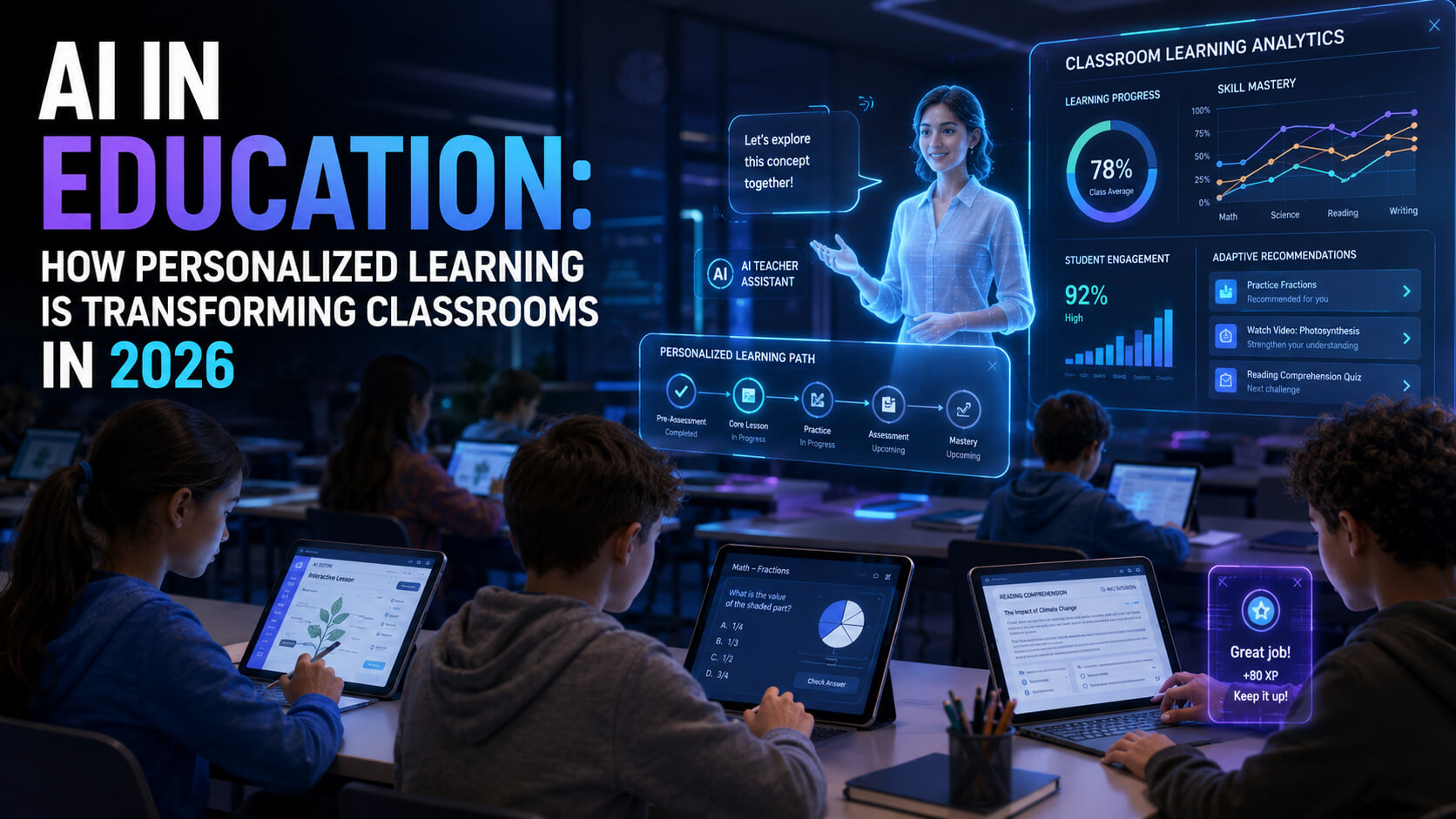
A modern AI tutor combines three layers: a language model that understands student questions and generates explanations, a learner model that tracks each student’s progress and gaps, and a content engine that surfaces the right problem, video, or reading material at the right moment.
The loop is simple. The student attempts a concept. The system measures how well they did. Based on the result, the tutor picks the next best step: a hint, an alternative explanation, a worked example, or a new problem. Over weeks, the model builds a detailed picture of what that student knows, where they struggle, and what teaching style works for them.
What Personalized Learning Looks Like in Practice
Before AI tutors, “personalized learning” usually meant a teacher tried to differentiate instruction across 30 students. It was impossible to do well at scale. AI changes the math.
In an AI-supported classroom in 2026, every student works at their own pace on material that is just slightly above their current level. The teacher spends less time lecturing the middle and more time intervening where the AI flags real confusion. Students who are ahead keep moving. Students who are behind get targeted support without public embarrassment.
This does not replace teachers. It changes what teachers do with their time.
The Leading AI Tutoring Platforms in 2026
Dozens of platforms now claim AI tutoring features. A much smaller number actually deliver. These are the platforms with strong adoption, published outcomes data, and a track record of continuous improvement.
| Platform | Best For | Key Strength | Pricing |
|---|---|---|---|
| Khan Academy (Khanmigo) | K-12 math, science, humanities | Free AI tutor with strong Socratic method, nonprofit | $4 per month suggested donation |
| Duolingo Max | Language learning | Role-play conversations, explain-my-answer, high engagement | $30 per month |
| Carnegie Learning MATHia | Middle and high school math | Proven outcomes data, deep integration with US curricula | School licensing |
| Century Tech | K-12 in UK and Middle East | Full platform with teacher dashboards | School licensing |
| Squirrel Ai | K-12 in Asia, expanding globally | Granular knowledge mapping, adaptive drilling | Paid subscription |
| Coursera Coach | Adult learners and university courses | Built into Coursera catalog, 24/7 tutoring across thousands of courses | Free with Coursera Plus ($59/month) |
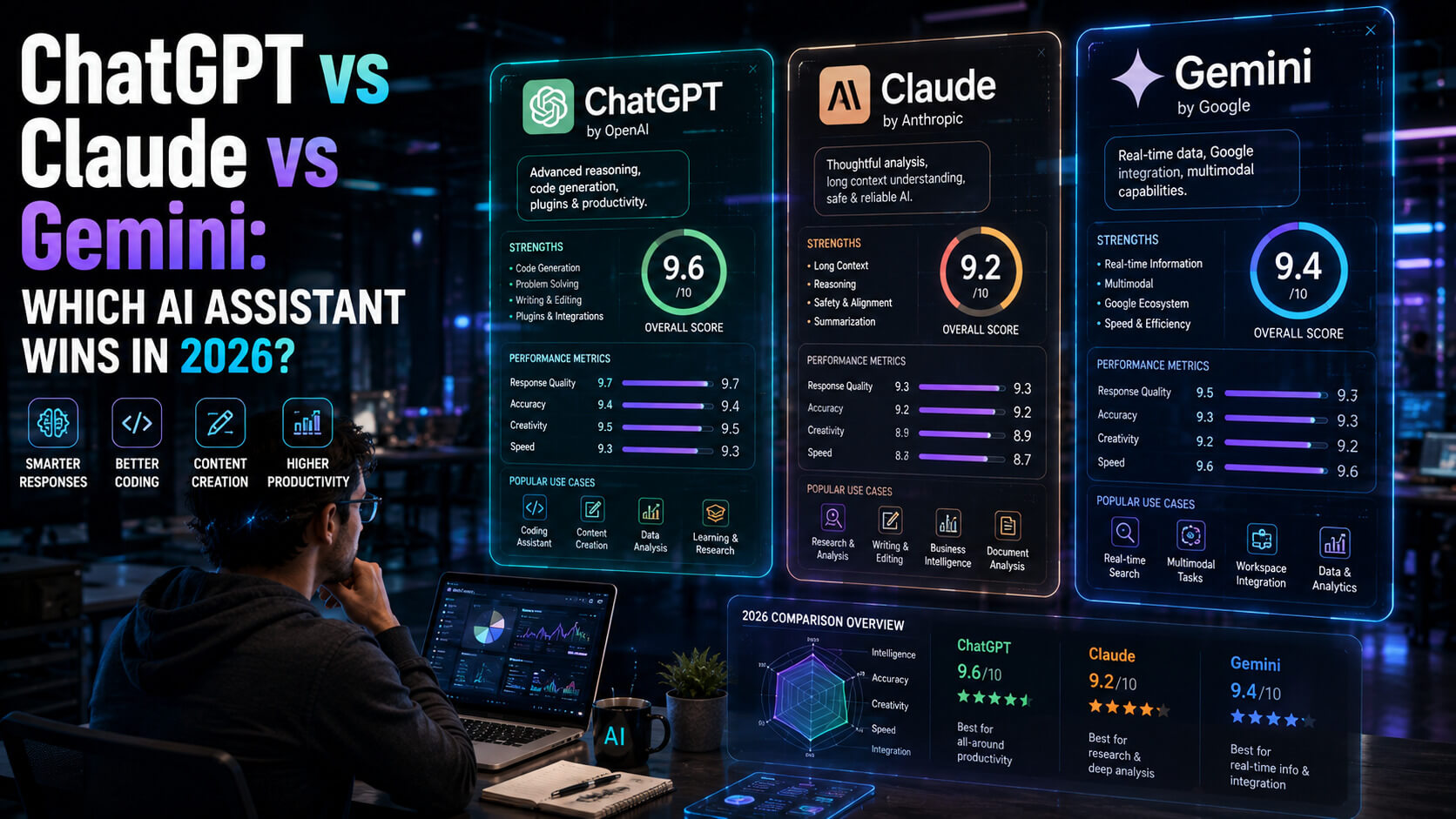
| GPT-based custom tutors (ChatGPT, Claude) | Self-directed learners | Flexible, accessible, but less structured | $20 per month |
Outcomes data matters more than marketing. Carnegie Learning published results showing that students using MATHia outperformed control groups on standardized assessments by roughly one to two grade levels after sustained use. Duolingo’s published research shows measurable gains in language proficiency for users who hit daily streaks, though effects vary by language and starting level.
Where AI Tutors Genuinely Help Students
The hype around AI tutors is loud. The real, measurable benefits are quieter but more interesting.
1. Unlimited Patience and Availability
A human tutor costs $40 to $150 per hour in most markets. An AI tutor works 24 hours a day, never gets frustrated with repeated questions, and costs a tiny fraction of the human equivalent. For families who could never afford private tutoring, this alone is transformative.
2. Identifying Specific Knowledge Gaps
Students often fail a test without understanding exactly why. AI tutors can pinpoint the single missed concept (the specific step in long division, the grammar rule, the physics formula) and build targeted practice around it. That is slow, expensive work for a human teacher to do for each student.
3. Reducing Math and Language Anxiety
Some students shut down when asked a question in front of peers. The private setting of an AI tutor lowers that pressure. Early research out of Stanford and MIT shows that students report feeling less anxious asking “dumb questions” to an AI than to a teacher or classmate.
4. Supporting English Language Learners
AI tutors can translate on the fly, explain concepts in a student’s first language, and help with both subject learning and language acquisition simultaneously. In diverse classrooms, this closes a gap that overworked teachers cannot always address.
5. Scaffolding for Neurodivergent Learners
Students with ADHD, dyslexia, or autism often need different pacing or presentation styles. AI tutors can break problems into smaller steps, reread instructions in different ways, and provide visual or audio alternatives without stigma. Schools and families increasingly lean on AI tutoring as a complement to formal learning support.
4 EdTech Trends Shaping 2026
1. Multimodal Learning (Voice, Image, Video)
Early AI tutors were text-only. The 2026 versions accept voice input, interpret photos of handwritten homework, and generate instructional videos on demand. A student can point their phone at a confusing physics problem and get a step-by-step explanation in 30 seconds.
2. AI-Assisted Teacher Tools
Most district-level adoption in 2026 is less about replacing teachers and more about reducing their administrative load. Platforms like MagicSchool AI and Eduaide.ai help teachers generate lesson plans, differentiate assignments, draft parent communications, and grade routine assessments. Teachers report getting back four to eight hours per week of prep time.
3. Assessment and Academic Integrity Shifts
Take-home essays and standardized homework are losing value as assessment tools because AI can write both. Schools and universities are shifting toward oral defenses, live problem-solving, and process-based grading. This is uncomfortable but overdue.
4. AI-Powered Career and Skill Coaching
Beyond K-12 and university, adult learners are using AI coaches for job interview prep, career pivots, and upskilling. Platforms like LinkedIn Learning, Coursera, and emerging coaching apps combine AI tutoring with structured curricula, helping working adults gain new skills faster than traditional courses allow.
AI Tutors vs Human Teachers: A Clear Comparison
AI tutors will not replace teachers. The useful question is where each shines and where each struggles.
| Strength Area | AI Tutors | Human Teachers |
|---|---|---|
| Availability | 24/7, no schedule | Limited class time |
| Patience with repetition | Unlimited | Varies |
| Subject coverage breadth | Very broad | Depth in specialty |
| Emotional support and mentorship | Weak | Strong |
| Real-time adaptation of content | Excellent | Limited by class size |
| Motivating a struggling student | Limited | Strong |
| Cost | Very low | High |
| Understanding classroom dynamics | Weak | Strong |
| Credentialed evaluation | Cannot issue diplomas | Authorized assessor |
The honest answer is that blended learning wins. The best outcomes in 2026 come from classrooms where AI handles repetitive practice and personalization, and teachers handle motivation, discussion, and human judgment.
Where AI Tutors Still Fall Short
For a balanced view, here is what AI tutors do poorly in 2026.
- Complex reasoning tasks. AI tutors can still make confident, wrong-sounding math or reasoning mistakes. Students need to cross-check important answers.
- Building long-term motivation. A kind word from a human teacher still carries more weight than encouraging messages from software. Sustained motivation is deeply social.
- Teaching students how to learn. Metacognitive skills (how to plan, self-assess, and transfer knowledge) usually need human guidance and classroom culture.
- Understanding cultural context. AI models are trained on mostly English-language, mostly Western data. Students in other regions often get less accurate or less locally relevant explanations.
- Detecting emotional distress. An AI tutor cannot notice when a student is struggling at home or dealing with bullying. Only human adults can.
6 Common Mistakes Schools and Parents Make With AI Tutors
- Treating AI as a homework solver, not a teacher. If students use AI only to get answers, learning actually declines. The key is using AI to work through problems step by step.
- Rolling out AI without teacher training. Schools that drop AI tools on teachers without professional development rarely see the promised gains. Teachers need time and training to integrate the tools well.
- Ignoring student data privacy. Many AI tutoring tools process sensitive student data. Districts and parents should review privacy policies, data retention, and compliance with laws like FERPA or GDPR before adoption.
- Buying one platform for every subject. No single AI tutor is best across all subjects and grade levels. A math tutor that crushes algebra may be weak at creative writing.
- Replacing discussion with drilling. AI tutors are very good at practice and feedback. They are not good replacements for rich classroom discussion, collaborative projects, or hands-on learning.
- Expecting immediate miracles. AI tutoring takes months to show real outcomes, and only when students use it consistently. Occasional, low-engagement use rarely moves the needle.
Expert Tips for Making AI Tutors Work
- Start with a single subject and platform. Pick one clear goal (improve math grades, learn Spanish, prep for a test) and one platform known to be strong in that area. Evaluate after 60 days before expanding.
- Pair AI tutoring with clear learning goals. The students who benefit most enter each session with a specific objective (“I want to master fractions this week”), not just open-ended browsing.
- Use AI to augment, not avoid, effort. Treat the AI tutor like a patient, expert study partner. Encourage students to attempt problems first, then use the tutor when stuck.
- Review progress with a real adult. A weekly check-in between the learner and a parent, teacher, or mentor keeps motivation high and catches problems the AI will miss.
- Teach critical evaluation skills. Students should learn to question AI answers, verify facts, and cross-check with textbooks or credible sources. This skill will matter for the rest of their lives.
- Mix AI tutoring with offline learning. Reading physical books, writing by hand, and working through problems without a screen all build skills that screen-based tutoring does not.
Frequently Asked Questions
How does AI tutoring actually work?
AI tutoring uses large language models combined with learner tracking systems to deliver personalized lessons. The AI understands questions in plain language, generates explanations at the right level, tracks which concepts the student has mastered, and selects the next best problem, example, or lesson. Over time, the system builds a model of each student’s strengths and gaps, then uses that model to adapt every future interaction.
Are AI tutors better than human teachers?
Neither is strictly better. AI tutors excel at availability, patience, and personalized practice. Human teachers excel at motivation, mentorship, classroom dynamics, and complex judgment. The strongest outcomes in 2026 come from blended learning environments where both play their natural roles. An AI tutor is a powerful study partner, not a replacement for a great teacher.
Which EdTech platforms use AI most effectively?
Khan Academy’s Khanmigo, Duolingo Max, Carnegie Learning MATHia, Century Tech, and Coursera Coach are among the most effective AI-powered platforms in 2026, based on published outcomes data and large-scale adoption. For self-directed adult learners, ChatGPT, Claude, and similar general-purpose AI assistants also function well as on-demand tutors for many topics, though without the structured curriculum of purpose-built platforms.
Is AI tutoring safe for children?
Reputable platforms designed for K-12 use (Khan Academy, MagicSchool, Century Tech) include strict safety filters, age-appropriate content controls, and compliance with child privacy laws. General-purpose tools like ChatGPT were not built for young children specifically and require parental supervision. Always check the platform’s safety documentation and data policies before allowing regular use by minors.
Will AI tutors replace teachers in the next 10 years?
Almost certainly not. Teaching is much more than delivering information. It involves building relationships, managing classrooms, recognizing emotional needs, and making judgment calls that AI does not handle well. What AI will replace is certain tasks teachers currently spend time on, including routine grading, basic drill practice, and generic lesson planning. That should free teachers to focus on what only humans can do well.
The Future of Learning Is Already Personalized
The classroom of 2026 is quietly different from the classroom of 2016. A student can get immediate help on almost any topic, any time of day, at a cost that was unthinkable a decade ago. Teachers have real tools to differentiate instruction for every child in the room. Adult learners can upskill from their couch without paying tens of thousands of dollars for a degree.
None of this means the system is finished. Access gaps remain. Teacher training has not kept pace with tool deployment. Privacy and accuracy concerns are real. But the direction is clear: education is becoming more personal, more accessible, and more responsive to the individual learner.
If you want to follow where EdTech trends are heading next, explore more education and technology coverage on PostoryCafe.com. We publish new guides each week for parents, educators, and independent learners navigating the modern learning landscape.