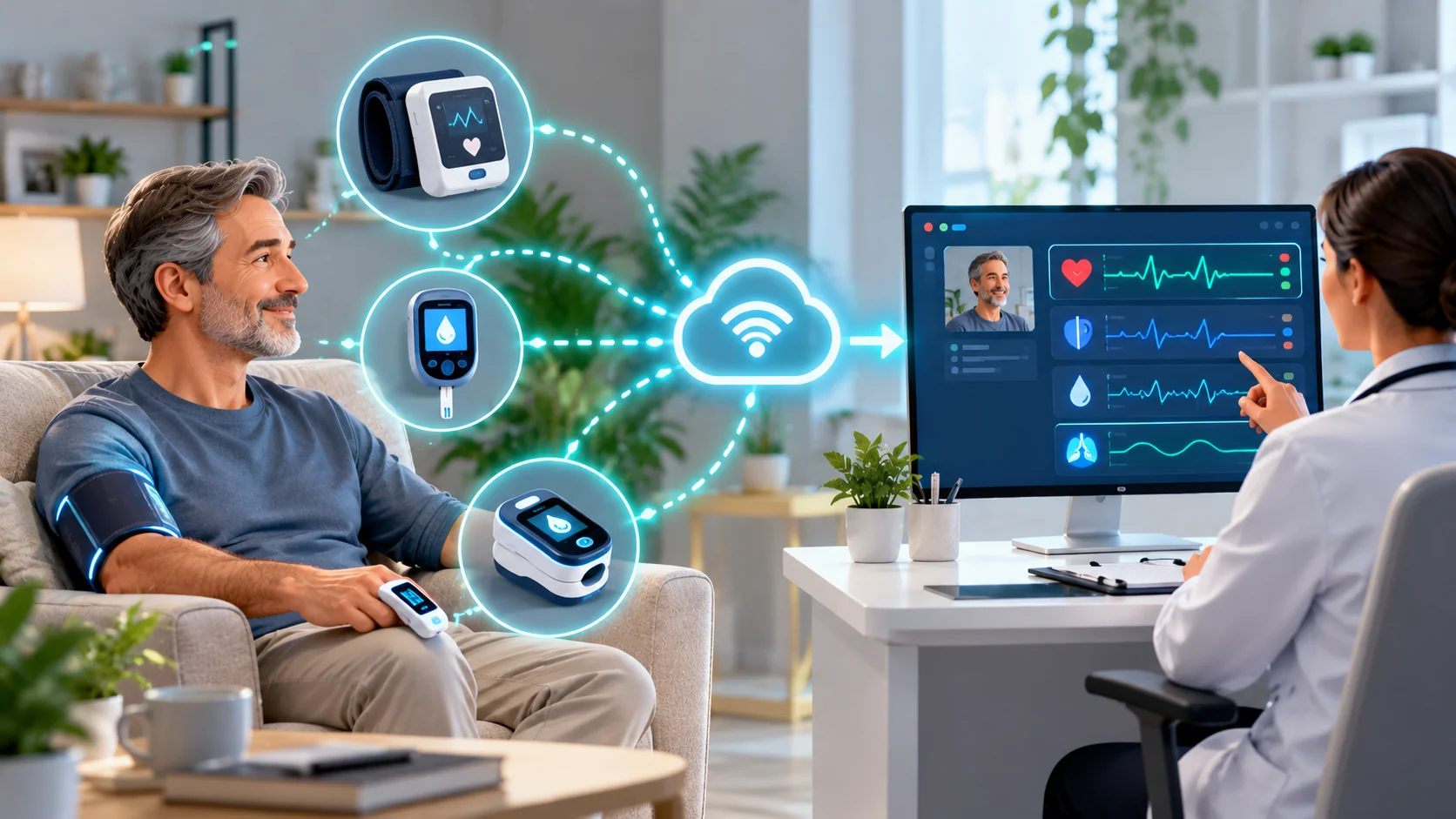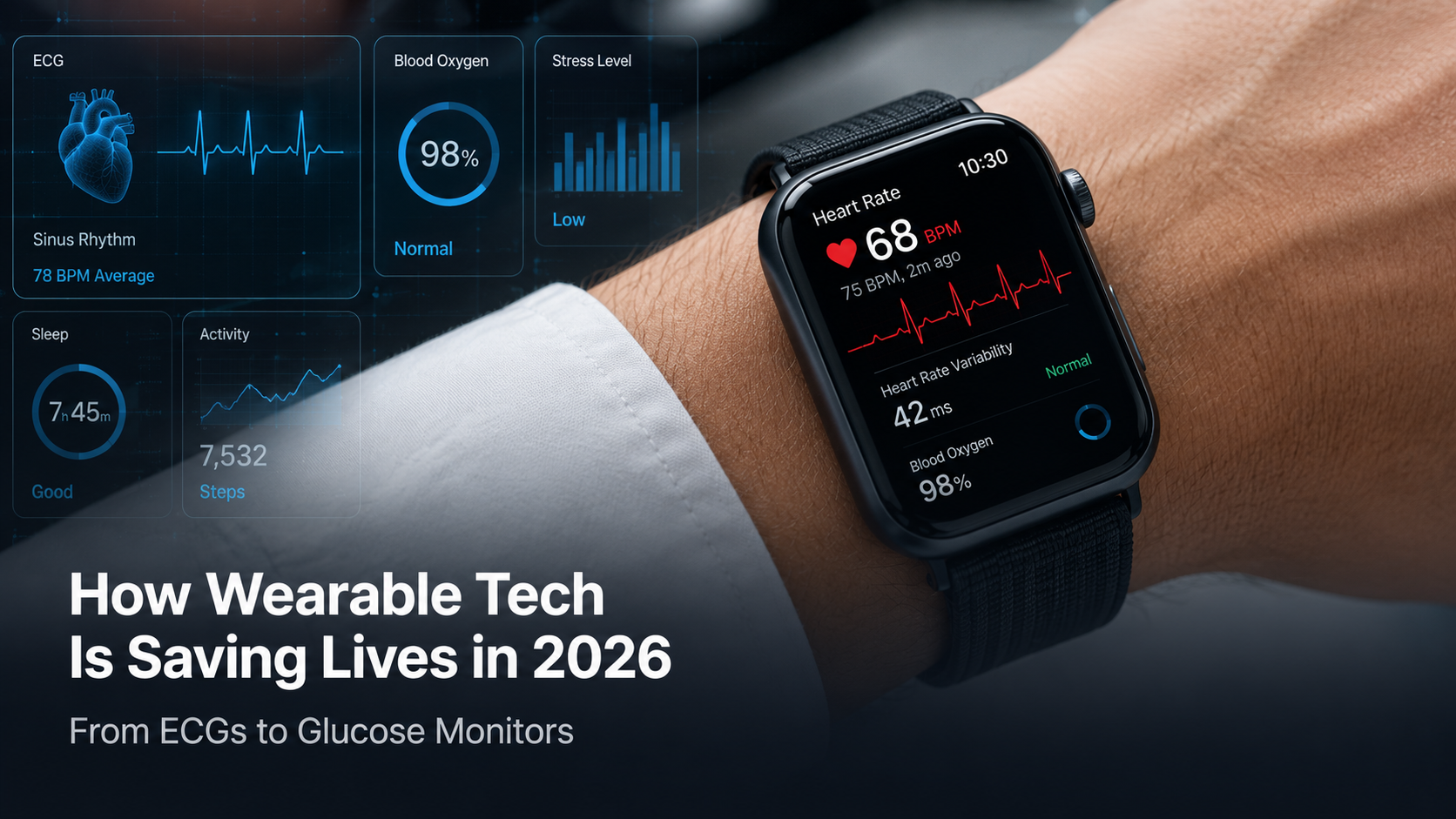

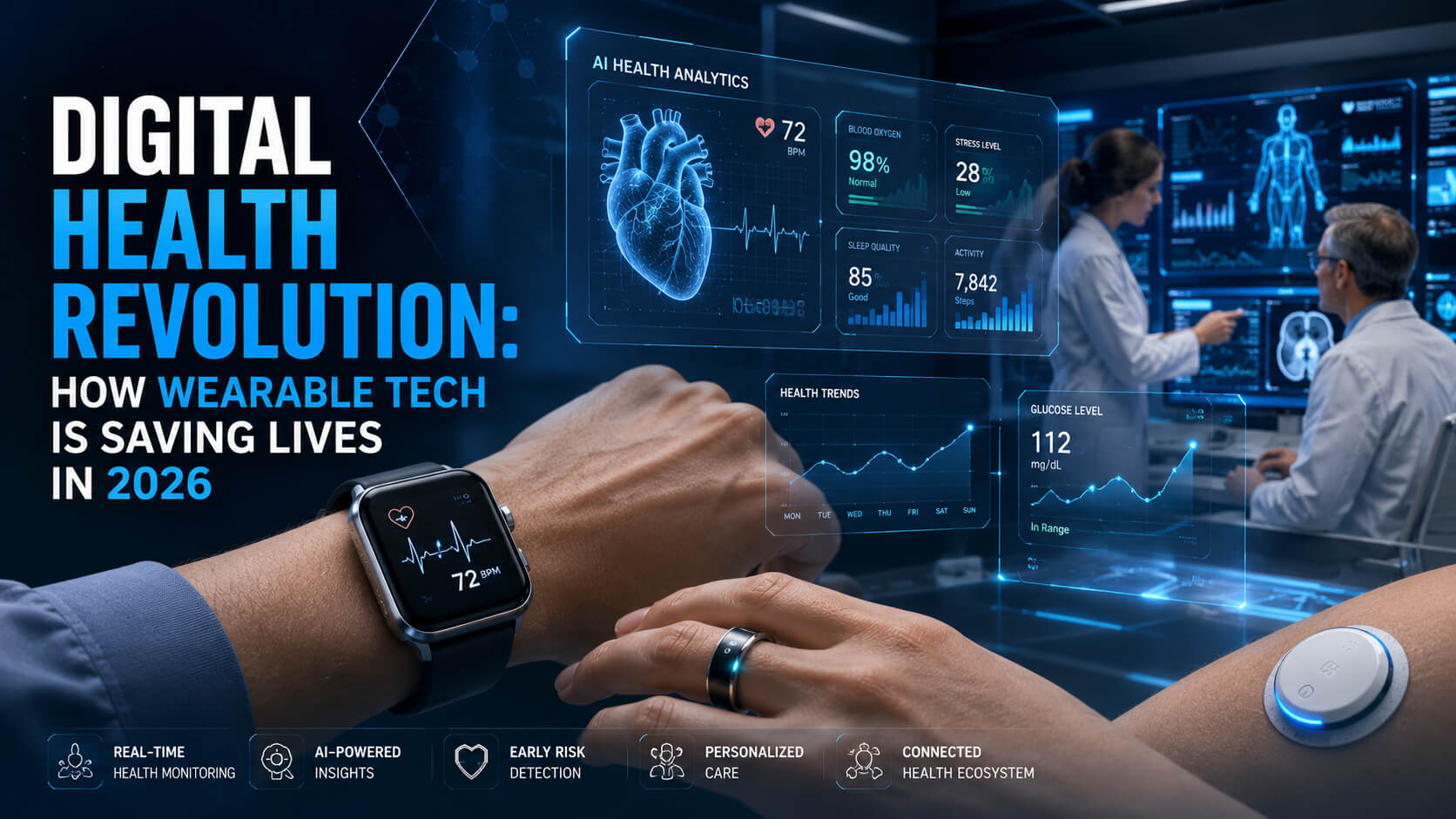
A wrist tap used to mean you were late. In 2026, it might mean your smartwatch just detected an irregular heart rhythm and nudged you to call a doctor.
Wearable technology has quietly moved from fitness accessory to medical tool. Devices that once counted steps now track blood oxygen, blood pressure, sleep stages, glucose levels, menstrual cycles, and early signs of infection. Cardiologists in major hospitals use smartwatch data as a serious clinical signal. Diabetics manage their condition from a patch on their arm instead of finger pricks.
This is the digital health revolution, and it is already saving lives. The numbers on early atrial fibrillation detection, stroke prevention, and remote patient monitoring make that claim concrete, not marketing.
This guide walks through what modern wearable technology can actually do, which devices lead the 2026 market, how health monitoring devices fit into real medical care, and what consumers should look for before buying.
What Is Digital Health? A Clearer Definition
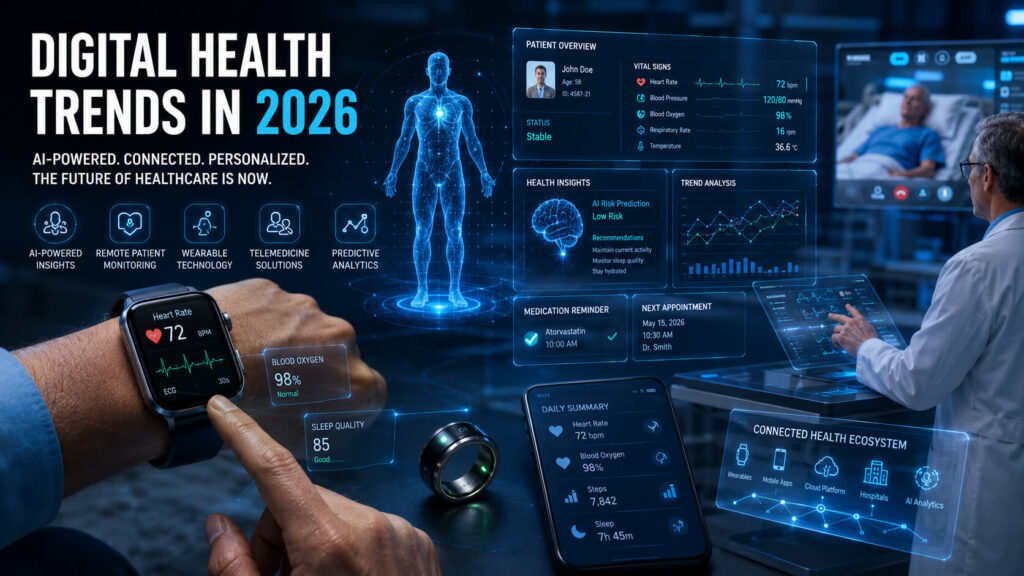
Digital health is the use of connected technology (sensors, software, data analytics, AI) to improve health outcomes. Wearables are one slice of it. The rest includes telemedicine, remote patient monitoring, electronic health records, mobile health apps, and AI-assisted diagnostics.
The part consumers see most is wearable technology: devices worn on the body that continuously measure something about your physiology. Smartwatches, rings, patches, chest straps, continuous glucose monitors, and smart clothing all count.
What makes 2026 different from five years ago is that the data from these devices is now trusted by clinicians for more than general wellness. Continuous ECG, blood pressure cuffs built into watches, and FDA-cleared features are now part of real care pathways.
The 2026 Digital Health Market at a Glance
Grand View Research estimates the global wearable medical device market will clear $125 billion in 2026, up from roughly $60 billion in 2022. More than 40% of adults in the US now own a smartwatch or fitness tracker, and a growing share use it for something more than exercise.
Hospitals have caught up. Over 70% of large US health systems run some form of remote patient monitoring program, up from just 20% before the pandemic. Cardiac, diabetes, and post-surgical programs are the fastest-growing categories.
How Wearable Tech Is Saving Lives: 5 Real Medical Uses
Marketing loves to promise that wearables will “transform your health.” The more useful question is what are they actually doing right now that matters clinically. Five categories stand out.
1. Detecting Atrial Fibrillation Before Stroke
Atrial fibrillation (AFib) is an irregular heart rhythm that dramatically raises stroke risk. For decades it went undiagnosed in most people because it can come and go and shows up only during a doctor visit if you are unlucky.
Modern smartwatches (Apple Watch, Samsung Galaxy Watch, Fitbit) now continuously scan for AFib using photoplethysmography sensors. When they detect a likely episode, they alert the user. The Apple Heart Study, published in the New England Journal of Medicine, showed that over 30% of participants who received AFib notifications from their watches were confirmed to have the condition on medical follow-up.
For someone who never would have known, this can be the difference between a routine blood thinner prescription and a stroke.
2. Continuous Glucose Monitoring for Diabetes Management
Continuous glucose monitors (CGMs) are small patches that sit on the upper arm and measure blood sugar every few minutes. Dexcom and Abbott dominate the category. In 2026, CGMs are moving beyond Type 1 diabetes and into Type 2 care, prediabetes awareness, and even metabolic health for non-diabetic consumers.
The clinical impact is significant. People using CGMs report better glucose control, fewer low-sugar emergencies, and less reliance on finger-stick testing. Endocrinologists increasingly consider CGMs standard of care for any patient on insulin.
3. Early Detection of Infections and COVID-19
Research from Stanford, Scripps, and other institutions has shown that resting heart rate, skin temperature, and sleep data from wearables can often detect viral infections days before symptoms appear.
Oura Ring, in particular, has been used by the NBA, WNBA, and several national militaries as part of early infection screening programs. The data is not perfect (it cannot tell you which infection), but a sustained change in baseline is a useful signal.
4. Fall Detection and Emergency Response in Older Adults
Apple Watch, Garmin, and several specialized devices can detect hard falls and automatically call emergency services if the user does not respond. For older adults living alone, this is a direct lifesaver.
Published case studies from emergency medical services document people who survived serious falls only because their watch summoned help within minutes. The feature has quietly become one of the strongest arguments for gifting an older relative a smartwatch.
5. Sleep Apnea Screening
Untreated sleep apnea raises the risk of heart disease, stroke, and cognitive decline. Most people with sleep apnea do not know they have it because they sleep through the symptoms.
The 2024 and 2025 generations of Apple Watch, Samsung Galaxy Watch, and Withings ScanWatch added FDA-cleared sleep apnea screening. The watch flags nighttime breathing disturbances over several weeks, and users can bring the data to a sleep specialist. This will not replace a formal sleep study, but it lowers the barrier for people who would otherwise never get tested.
The Best Health Monitoring Devices in 2026 (By Use Case)
No single device wins for every person. The right choice depends on what you are trying to track and how integrated you want the data to be with your other tools.
| Best For | Top Device (2026) | Key Features |
|---|---|---|
| General health and heart tracking | Apple Watch Ultra 3 / Series 10 | ECG, AFib detection, blood oxygen, sleep apnea screening, fall detection |
| Long battery life and fitness | Garmin Venu 4 / Fenix 8 | Multi-day battery, GPS, heart rate variability, stress tracking |
| Sleep and recovery | Oura Ring Gen 4 | Sleep stages, readiness score, temperature trends, discreet form factor |
| Athletic performance | Whoop 5.0 | 24/7 strain and recovery tracking, subscription-based, no screen |
| Diabetes / metabolic health | Dexcom G7 / Abbott Libre 3 | Continuous glucose monitoring, real-time data, prescription required for most uses |
| Blood pressure at home | Withings BPM Vision / Omron Complete | Clinical-grade cuff, smartphone sync, physician sharing |
A practical note for shoppers: FDA clearance matters more than marketing claims. When a device advertises a medical feature (AFib, blood oxygen, sleep apnea), look for the specific FDA 510(k) clearance before assuming the feature will be taken seriously by a clinician.
4 Trends Reshaping Digital Health in 2026
Wearables are evolving fast, and a few trends are setting up the next wave.
1. Non-Invasive Glucose Monitoring (Still Not Here, But Close)
Every major consumer tech company has spent years trying to add non-invasive (no needle) glucose sensing to smartwatches. Apple, Samsung, and Rockley Photonics are reportedly closest. As of early 2026, no consumer device has shipped with reliable non-invasive glucose monitoring, but the industry consensus is that this is the biggest pending breakthrough in the category.
2. AI-Assisted Pattern Detection
Raw wearable data is noisy. The 2026 shift is using AI to pull real signals out of the noise. Watches increasingly flag unusual patterns across multiple metrics (heart rate plus sleep plus activity) and summarize them as plain-English insights.
Hospitals use similar techniques on a larger scale. AI tools can sift through months of patient wearable data and highlight patterns that matter clinically, without forcing a doctor to scroll through endless charts.
3. Remote Patient Monitoring Becomes Reimbursable
In the US, Medicare and most private insurers now reimburse clinicians for monitoring patients remotely through connected devices. This has quietly created a durable business model for wearable-based chronic care.
Expect more specialty clinics (cardiology, endocrinology, hypertension) to build programs where a patient wears a connected device at home and a care team watches the data, intervening only when something meaningful changes.
4. Mental Health and Stress Tracking
Heart rate variability, skin temperature, and sleep patterns all correlate with stress and mood. Devices from Apple, Oura, Fitbit, and Whoop now offer daily stress and emotional wellness scores.
The science is still early. These features should not replace mental health care, but they do help users notice patterns (like poor sleep before stressful weeks) and make small adjustments.
Benefits (and Real Limits) of Health Monitoring Devices
Wearables offer real benefits but are not magic. Knowing both sides helps set the right expectations.
| Benefits | Limits |
| Continuous, passive data collection | Accuracy varies by skin tone, device fit, and activity |
| Early detection of conditions like AFib and sleep apnea | Cannot replace formal medical diagnosis |
| Motivation to move more and sleep better | Can create data anxiety if over-tracked |
| Remote monitoring for chronic disease management | Requires smartphone and consistent charging |
| Fall detection and emergency SOS | Battery life often a constraint for continuous use |
| Integration with physicians (with your permission) | Privacy depends on manufacturer policies |
6 Common Mistakes People Make With Wearable Health Devices
Treating wearable data as a diagnosis. A smartwatch can flag a problem. It cannot confirm one. If your device sends a concerning alert, follow up with a clinician before panicking or dismissing it.
Buying for features you will not use. The most expensive smartwatch in the world is useless if you stop charging it. Start with a device that fits your lifestyle and battery tolerance, not one with every sensor available.
Ignoring data privacy. Health data is deeply personal. Read the privacy policy before connecting a device to a third-party app. Look for HIPAA-equivalent protections if you plan to share the data with clinicians.
Obsessing over every number. Health metrics fluctuate. A single night of low sleep score or a mildly elevated heart rate is usually noise, not signal. Look at trends over weeks, not daily swings.
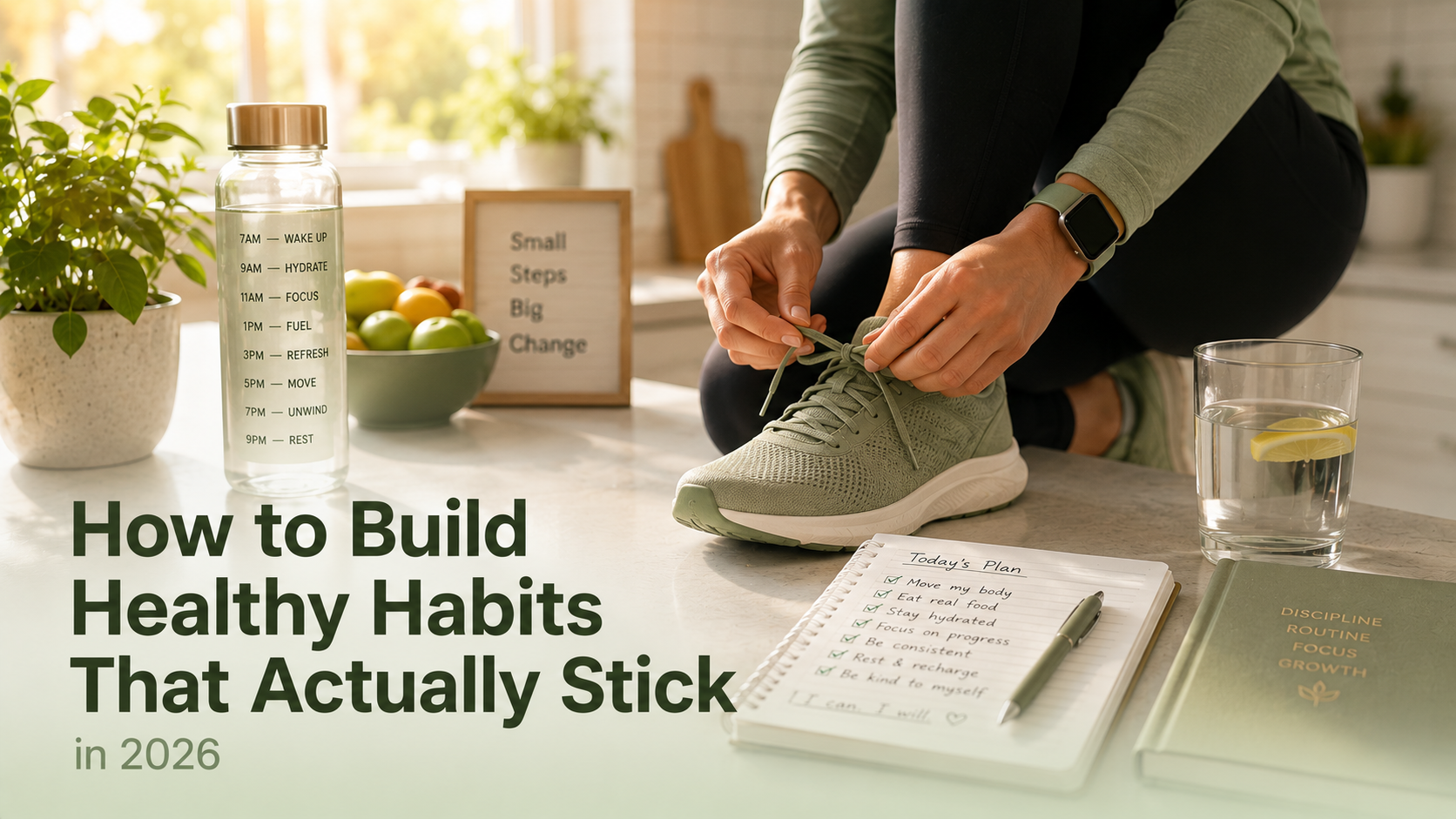
Skipping the basics. Wearables amplify good habits. They do not replace them. Sleep, movement, nutrition, and stress management still matter more than any device metric.
Assuming all devices are equally accurate. Heart rate at rest is accurate on most modern wearables. Blood pressure and pulse oximetry vary significantly. Research independent accuracy studies before trusting a specific metric clinically.
Expert Tips for Getting the Most From Wearable Technology
Share your data with your doctor. Bring a few months of trend data to your next physical. Most clinicians now know how to interpret summary reports from Apple Health, Fitbit, or Garmin, and the extra context helps.
Focus on two or three metrics, not fifteen. Pick the metrics that matter most for your health goals (resting heart rate, sleep consistency, daily movement) and ignore the rest. Dashboards with too many numbers become noise.
Use your baseline, not population averages. A healthy resting heart rate for you is probably different from the population average. Learn your own baselines and watch for changes from there.
Combine wearables with occasional clinical tests. A wearable gives you continuous data. A clinical test gives you accuracy. Use them together: lab work for precision, wearables for trends.
Review and reset your goals every quarter. Whatever goal you started with (more sleep, lower resting heart rate, better recovery) is worth revisiting. Health goals evolve with life circumstances.
Frequently Asked Questions
What is digital health and how does it work?
Digital health is the use of connected technology (wearables, apps, software, AI) to track and improve health outcomes. It works by collecting real-time data from sensors you wear or use, analyzing that data for meaningful patterns, and either sharing it with you, your doctor, or both. Modern digital health platforms combine wearable technology with telemedicine, AI diagnostics, and electronic medical records to create a more continuous picture of a person’s health.
How accurate are wearable health devices?
Accuracy depends on the metric and the device. Step count, resting heart rate, and sleep duration are reliably accurate on modern wearables. ECG and AFib detection on FDA-cleared devices (like Apple Watch and Samsung Galaxy Watch) are accurate enough to be used clinically. Blood oxygen and blood pressure are less consistent and should be confirmed with medical devices. Continuous glucose monitors from Dexcom and Abbott are clinically accurate and widely trusted by endocrinologists.
Can wearable technology replace visits to a doctor?
No. Wearables help you monitor trends and detect potential issues early, but they cannot replace clinical evaluation, lab testing, or prescription decisions. The best approach is to use wearables as an early-warning system and ongoing tracker while still maintaining regular checkups with a primary care doctor. For chronic conditions, wearable data is most useful when shared directly with your care team.
Are wearable devices safe for everyone to use?
Wearable fitness trackers and smartwatches are safe for most healthy adults. People with pacemakers or implanted cardiac devices should check with their cardiologist before using features like ECG or low-level electromagnetic scanning. Children should use age-appropriate devices, and anyone with a skin condition that reacts to long-term wear should pick a device with breathable materials or use a ring form factor.
Which health monitoring device should I buy first?
For most people, start with a general-purpose smartwatch that covers the basics (heart rate, sleep, activity, emergency SOS). Apple Watch and Samsung Galaxy Watch cover the most health features if you are already in their ecosystem. Garmin is best for athletes. Oura Ring is the best choice if you prefer a discreet form factor or only care about sleep and recovery. Specialty devices (CGMs, blood pressure cuffs) are worth adding only if you have a specific condition to manage.
Your Health, Quietly Tracked
Wearable technology will not replace doctors. It will not make you healthy on its own. But for the first time in medical history, ordinary people can see their own bodies working day after day, catching warning signs early enough to do something about them.
The digital health revolution is quiet because it happens in the background. A watch buzzes. A ring shows a changed pattern. A patch sends an alert. Most of the time, nothing is wrong. Occasionally, one of those alerts is the reason someone survives.
If this guide helped you understand where wearable health tech is heading, explore more of our health technology and lifestyle content on PostoryCafe.com. We publish new guides every week to help you make sense of the tools that shape modern life.