

Gen AI for Business: How Companies Are Actually Using AI to Generate Revenue in 2026
Generative AI has moved from boardroom discussion to operational deployment across most industries in 2026. But the deployment patterns that actually generate revenue look very different from the pilots and experiments of 2023 and 2024. The use cases that stuck are the ones that produce measurable output in less time, automate high-frequency tasks that previously required skilled human hours, and create net new capabilities that were economically impossible before.
This guide covers the specific GenAI use cases generating real business value in 2026, organized by function and industry.
Marketing and Content
What Works
- First-draft generation: AI writing assistants produce first drafts of blog posts, emails, ad copy, and social content at 5 to 10x human speed. Human editors refine and fact-check. Organizations running this model consistently report 60 to 80% reduction in content production time.
- Ad creative variation: AI tools generate dozens of ad copy and image variants for A/B testing in hours rather than days. Performance marketers report finding winning creative faster.
- Personalization at scale: AI-generated dynamic email and website content that varies per segment. Klaviyo, HubSpot, and similar platforms now include this as standard. Measurable lift in email conversion rates of 15 to 30% reported in case studies.
- SEO content at scale: Some organizations use AI to produce hundreds of informational pages targeting long-tail keywords at a cost per page that was economically impossible with human writers. Works when editorial quality and factual accuracy are carefully managed.
What Does Not Work
- Replacing thought leadership and executive voices with AI. Audiences and B2B buyers can identify AI-generated content that lacks genuine perspective.
- Automated social media posting without human review. AI-generated social content frequently misses tonal nuance and occasionally produces embarrassing errors.
Sales and Revenue Operations
What Works
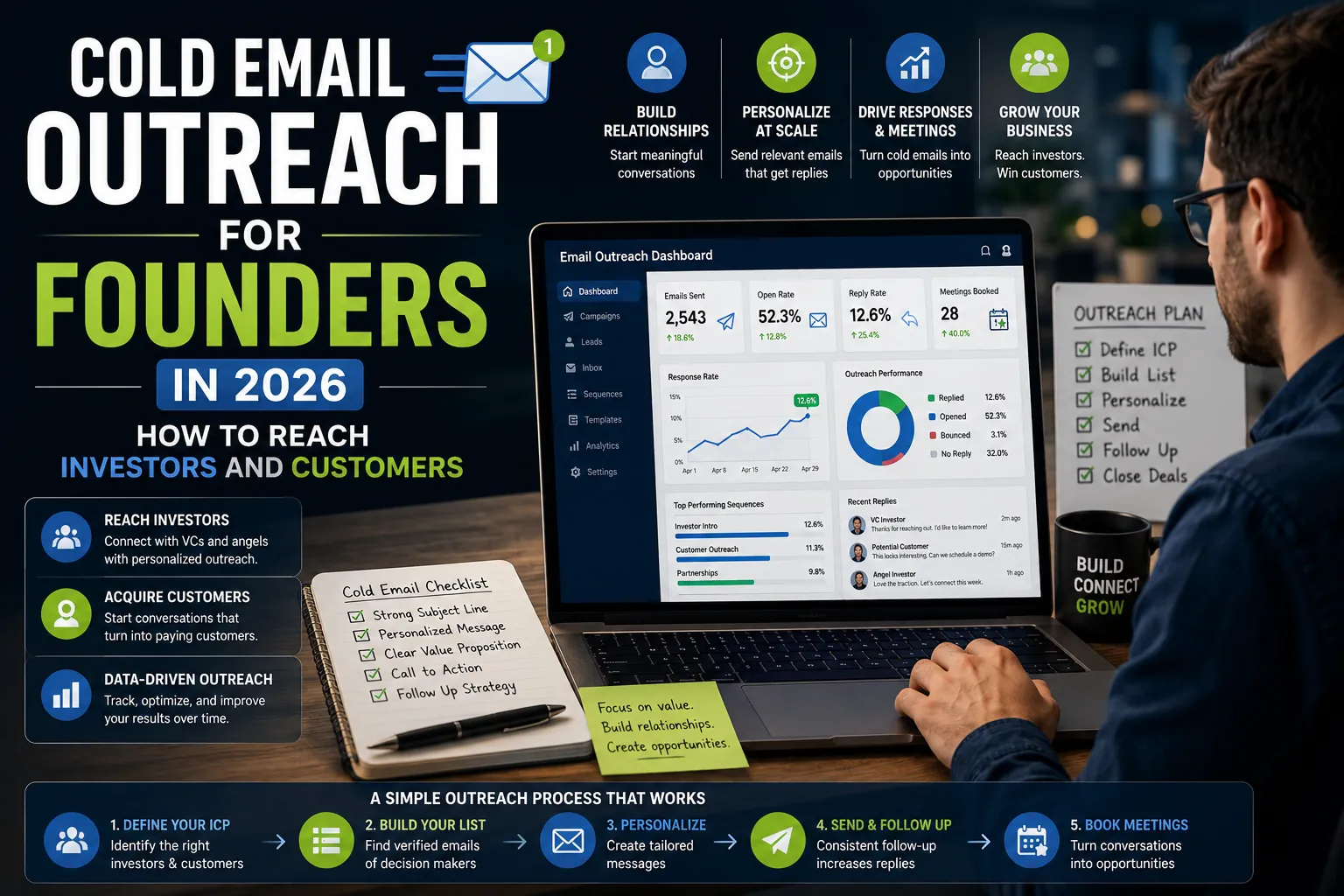
- AI-assisted research and personalization: AI tools (Clay, Apollo AI, 6sense) research prospects, synthesize relevant news and LinkedIn activity, and generate personalized outreach in minutes rather than hours per prospect.
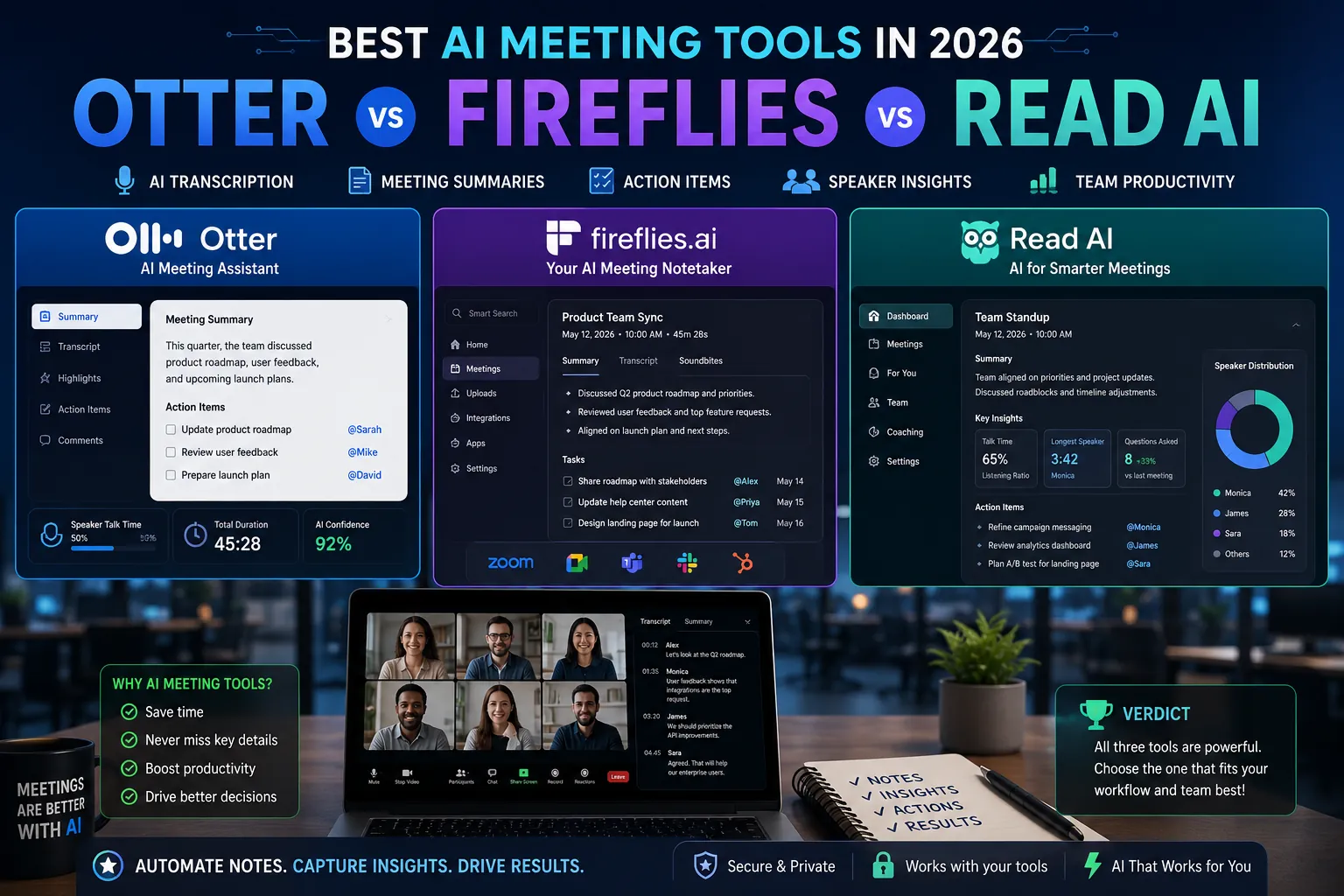
- Call summaries and CRM population: Meeting AI tools (Gong, Chorus, Fireflies) automatically generate call summaries, extract action items, and populate CRM fields. Salesforce and HubSpot both have native AI assistants that do this in 2026. Sales reps report spending 30 to 50% less time on post-call admin.
- Proposal and contract generation: AI generates first-draft proposals using company templates and prospect-specific inputs. Legal teams use AI for first-pass contract redlining. Legal AI tools (Harvey, Ironclad AI) have expanded significantly in 2026.
- Lead scoring: AI models built on CRM data score leads more accurately than rule-based scoring for most organizations.
Customer Service and Support
Customer service is where GenAI has the highest deployment rate in 2026. AI agents (powered by Claude, GPT-4, or fine-tuned models) handle 30 to 70% of customer support volume at companies with mature deployments. The economics are compelling: AI handles routine inquiries at near-zero cost, freeing human agents for complex issues.
What Works
- AI agents answering FAQs, checking order status, processing returns, and resolving account issues.
- AI-assisted human agents: surfacing relevant knowledge base articles, suggesting responses, and summarizing conversation context for faster resolution.
- Proactive outreach: AI agents reaching out to at-risk customers with offers or check-ins based on behavior signals.
What Does Not Work
- AI handling emotionally complex customer situations (complaints, disputes, sensitive issues) without clear escalation paths to humans.
- Deployment without human quality review. AI support agents occasionally produce incorrect or tone-deaf responses. Regular auditing is essential.
Software Engineering and Development
AI coding assistants have produced the most measurable and widely documented productivity gains across functions. GitHub Copilot Business customers report 55% faster coding for routine tasks. Claude Code users report major improvements on complex multi-file refactoring. The engineering function has the most mature AI deployment in 2026.
High-Value Use Cases
- Boilerplate code generation and test case writing.
- Code explanation and documentation generation.
- Bug identification and suggested fixes.
- Legacy code migration and refactoring.
- Infrastructure as Code generation (Terraform, CloudFormation templates).
Finance and Operations
- Financial report generation: AI generates draft variance analyses, board presentation content, and financial narratives from raw data in minutes. Finance teams report 40 to 60% reduction in reporting cycle time.
- Contract analysis: AI extracts key terms, payment dates, and obligations from large volumes of contracts in hours rather than weeks.
- Expense categorization and anomaly detection: AI categorizes transactions, flags anomalies, and surfaces potential fraud signals.
- Procurement analysis: AI tools compare vendor contracts, identify unfavorable terms, and surface savings opportunities across procurement portfolios.
Industry-Specific Deployments
| Industry | High-Value GenAI Use Case | Reported Benefit |
|---|---|---|
| Legal | Contract drafting, research, discovery review (Harvey, Clio) | 50 to 80% reduction in time per task |
| Healthcare | Clinical documentation, prior authorization letters (Nuance DAX) | 70% reduction in documentation time |
| Real estate | Listing descriptions, market analysis reports | 80% time reduction per listing |
| Media/Publishing | Content summaries, transcription, localization | 5 to 10x content volume increase |
| Financial Services | Regulatory reporting, research reports, KYC summaries | 40 to 60% reduction in analyst time |
How to Build a GenAI Implementation Roadmap
- Start with the highest-frequency, lowest-risk tasks. Document drafting, email templates, and research synthesis are safe starting points.
- Measure before and after. Time-to-completion, error rates, and output volume are the right metrics for process automation.
- Build human review into every workflow. AI reduces human time, not human oversight. Review and correction loops are essential.
- Start with existing tools. Claude, ChatGPT, GitHub Copilot, and Perplexity cover most use cases before custom AI development is necessary.
- Invest in prompt engineering. The team members who develop strong prompting skills produce 2 to 3x better AI output than those who do not. Treat prompting as a learnable skill, not a technical one.
What GenAI Cannot Do Well in 2026
- Tasks requiring judgment built on physical presence or sensory experience.
- Deep original research generating new empirical data.
- Strategic decisions requiring synthesis of institutional knowledge and business context.
- Reliably producing accurate complex mathematical or quantitative analysis without verification.
- Relationship-dependent work where personal trust is the product.
Frequently Asked Questions
Which business functions benefit most from GenAI in 2026?
Software engineering (coding assistants), customer service (AI agents), sales operations (research and CRM), and marketing (content generation) show the most mature deployments and documented ROI. Legal and finance are rapidly catching up with specialized AI tools designed for those workflows.
Should small businesses invest in GenAI?
Yes, with low-cost entry points. A $20/month Claude or ChatGPT subscription produces real productivity improvements for a one-person or five-person business handling content, customer communication, research, and documentation. Small businesses do not need enterprise AI platforms to benefit from GenAI.
What is the biggest mistake companies make with GenAI?
Treating GenAI as a replacement for human judgment rather than an amplifier of human output. The organizations generating the most value from GenAI in 2026 are those that use it to make skilled people more productive, not those that use it to eliminate skilled people.
GenAI Value Is in Execution, Not Experimentation
The GenAI opportunity in 2026 is not about running pilots. It is about identifying the highest-frequency tasks in your business, deploying AI assistance on those tasks, measuring the output, and iterating the workflows. The companies generating the most value are those that moved from “we are exploring AI” to “our marketing team writes 3x more content in the same hours” and “our support team handles twice the volume without new hires.”
For the broader picture on AI tools across productivity, coding, and knowledge work, read our pillar: Top 15 AI Productivity Tools Transforming Remote Work in 2026. More AI guides live on PostoryCafe.com.