
Remote patient monitoring (RPM) is one of the most significant structural shifts in healthcare delivery in 2026. Patients with chronic conditions (heart failure, diabetes, hypertension, COPD) are generating continuous health data at home that their care teams monitor remotely. When data trends in concerning directions, clinicians intervene before a hospital admission becomes necessary.
The results are measurable: hospital readmission reductions of 20 to 40%, better medication adherence, earlier intervention on deteriorating conditions, and significantly lower cost per episode of care. This guide covers how RPM works in 2026, the key platforms, the conditions where it delivers the greatest benefit, and what patients should know.
How Remote Patient Monitoring Works
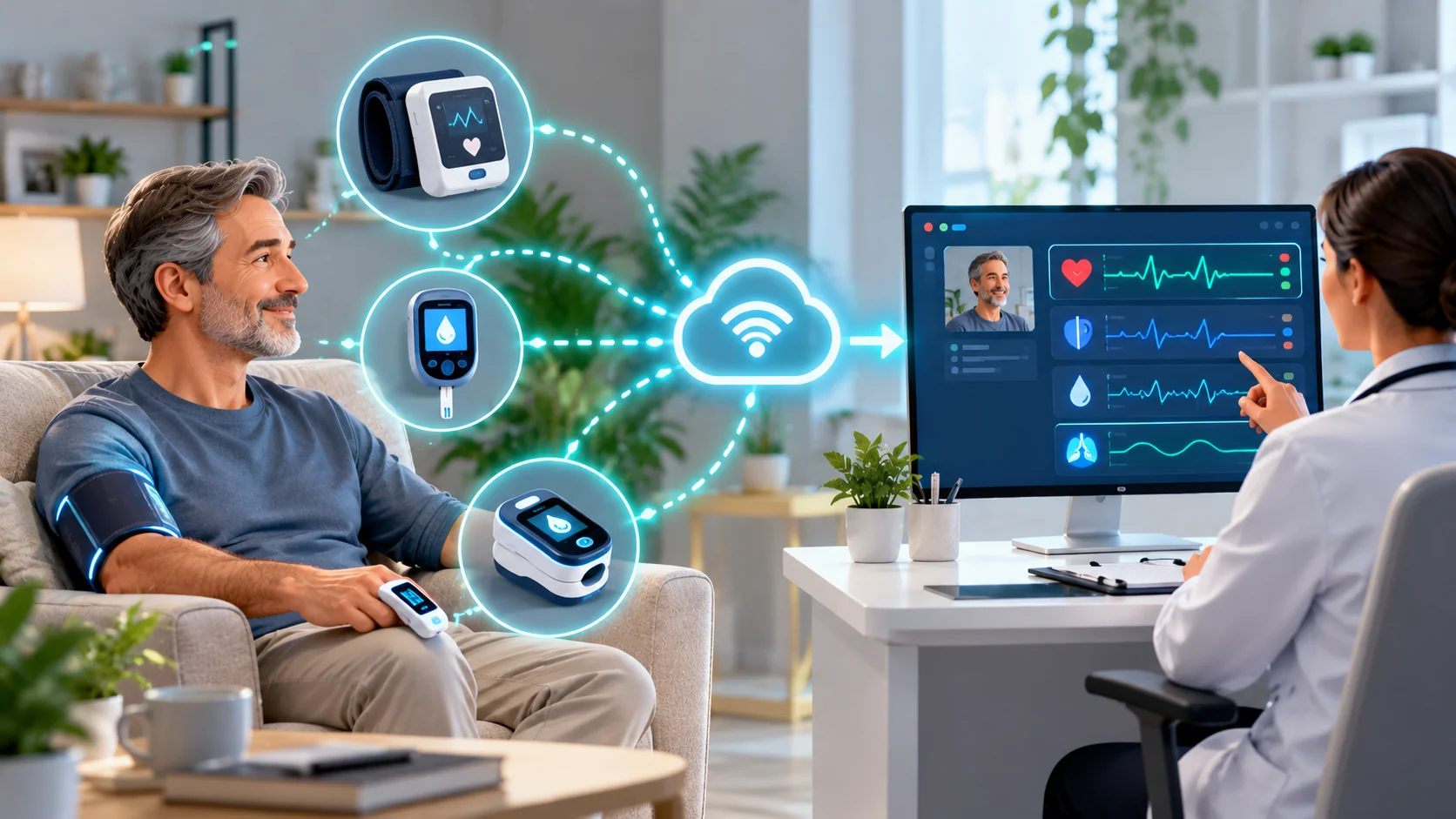
A standard RPM program involves three components: a patient monitoring device (blood pressure cuff, pulse oximeter, weight scale, glucose monitor, or continuous cardiac monitor), a data transmission layer (Bluetooth or cellular connectivity to a care management platform), and a clinical review system where care teams receive alerts and track trends.
The patient takes daily readings at home. The readings transmit automatically to the care team’s dashboard. Thresholds trigger alerts: a patient’s weight increases 3 pounds in 48 hours (a potential heart failure exacerbation sign), blood pressure exceeds 180/110 (hypertensive crisis range), or oxygen saturation drops below 92% (concerning for COPD or cardiac patients). A nurse or physician reviews and contacts the patient before the situation becomes a hospitalization.
Leading RPM Platforms in 2026
Biofourmis
Enterprise-grade RPM platform using AI to predict deterioration events before they become hospitalizations. Deployed by major health systems including Mass General Brigham and Sutter Health. Strongest on AI risk stratification.
Current Health
Wearable-first RPM platform with continuous monitoring capabilities. Strong for hospital-at-home programs and post-surgical monitoring.
Propeller Health (ResMed)
Focused on respiratory conditions (asthma, COPD) with digital inhaler sensors that track medication use and environmental triggers. Strong evidence base for reducing COPD hospitalizations.
Dexcom and Abbott (CGM for Diabetes)
Continuous glucose monitors from Dexcom (G7) and Abbott (Libre 3) are the most widely deployed category of RPM in 2026. Real-time glucose data shared with endocrinologists and PCPs enables proactive diabetes management.
iRhythm Zio Patch
Extended cardiac monitoring patch worn for 7 to 14 days, capturing continuous heart rhythm data for arrhythmia detection. Superior to traditional 24-hour Holter monitors for detecting intermittent conditions like AFib.
Conditions Where RPM Delivers the Greatest Benefit
| Condition | Key Metric Monitored | Evidence of Benefit |
|---|---|---|
| Heart failure | Daily weight, blood pressure, pulse ox | 30 to 40% reduction in 30-day readmissions |
| Type 1 and 2 diabetes | Continuous glucose, A1C trends | 0.5 to 1.0% A1C reduction with CGM + coaching |
| Hypertension | Blood pressure (multiple daily readings) | Stronger BP control vs office visit alone |
| COPD | Oxygen saturation, inhaler use frequency | 20 to 30% reduction in exacerbation hospitalizations |
| Cardiac arrhythmia | Continuous heart rhythm (Zio Patch) | Higher AFib detection vs 24-hour Holter |
| Post-surgical recovery | Wound monitoring, vitals, mobility | Earlier complication detection, shorter stays |
| Mental health | Sleep, activity, mood check-ins | Emerging evidence for depression and bipolar management |
Medicare Reimbursement for RPM
Medicare now reimburses RPM programs under CPT codes 99453, 99454, 99457, and 99458. Reimbursement covers device setup, monthly device supply, and care management time. For a patient monitored for 30 minutes per month, Medicare reimburses approximately $100 to $150 monthly. This reimbursement structure has driven rapid RPM adoption across health systems, physician groups, and home health agencies.
Commercial insurance coverage for RPM is growing but inconsistent. Many major plans now cover RPM for specific high-risk condition categories. Patients should check their specific plan benefits before assuming coverage.
What Patients Should Know About RPM Programs
- RPM is opt-in. Patients enroll in RPM programs voluntarily. Ask your physician if an RPM program is appropriate for your conditions.
- Devices are typically provided or covered. Most RPM programs provide the monitoring devices as part of the program cost, which is covered by Medicare or insurance.
- Daily readings are important. RPM programs generate value from consistent data. Missing readings creates gaps that reduce the clinical usefulness of the monitoring.
- Your data is shared with your care team. RPM data is part of your medical record. Your care team reviews it regularly, not just at appointments.
- RPM does not replace appointments. It supplements in-person care by giving your care team continuous visibility between visits.
Hospital-at-Home: The Emerging Frontier
Hospital-at-Home programs extend RPM to acute care settings, treating patients who would traditionally be admitted to the hospital in their own homes instead. Nurses visit daily. Continuous remote monitoring tracks vitals. RPM technology enables clinical intervention without inpatient admission.
CMS launched the Acute Hospital Care at Home waiver during the pandemic and extended it through 2025. Results from early programs show comparable clinical outcomes at 20 to 40% lower cost per episode. Hospital-at-Home is the most disruptive extension of RPM technology in 2026.
5 Common RPM Implementation Mistakes
- Insufficient patient education. Patients who do not understand why daily readings matter take them inconsistently, reducing program effectiveness.
- Alert fatigue for care teams. Poorly calibrated thresholds produce excessive alerts that overwhelm clinical staff. Start conservative and tune thresholds based on actual alert volumes.
- Technology access gaps. Patients without reliable internet or smartphone access cannot participate in app-based RPM programs. Cellular-enabled devices reduce this barrier.
- Missing the non-clinical factors. Food insecurity, medication costs, and social isolation affect patient outcomes as much as vital signs. RPM programs should screen for social determinants.
- Unclear escalation protocols. When an alert fires, who calls the patient? What is the response time? Unclear protocols lead to missed interventions.
Frequently Asked Questions
Does Medicare cover remote patient monitoring?
Yes. Medicare reimburses RPM under several CPT codes covering device setup, monthly device provision, and care management time. The program must be ordered by a physician or qualified healthcare professional and managed by a clinical team. Coverage is generally available for any chronic condition, not limited to specific diagnoses.
Who benefits most from remote patient monitoring?
Patients with chronic conditions that produce measurable physiological data (heart failure, diabetes, hypertension, COPD, cardiac arrhythmias) benefit most. Patients recently discharged from a hospitalization are another high-value group, as the period immediately post-discharge carries the highest readmission risk.
Is my RPM data private?
RPM data is covered by HIPAA and subject to the same privacy protections as all other medical information. Your data is shared with your care team and stored in your medical record. It is not shared with employers, insurers (beyond billing), or third parties without your authorization.
The Future of Care Is Continuous
Remote patient monitoring represents a fundamental shift in how healthcare works. The current model (episodic care driven by scheduled appointments) is being supplemented by continuous monitoring that generates interventions based on data rather than calendar. For patients with chronic conditions, this shift produces better outcomes, fewer hospitalizations, and higher satisfaction with care.
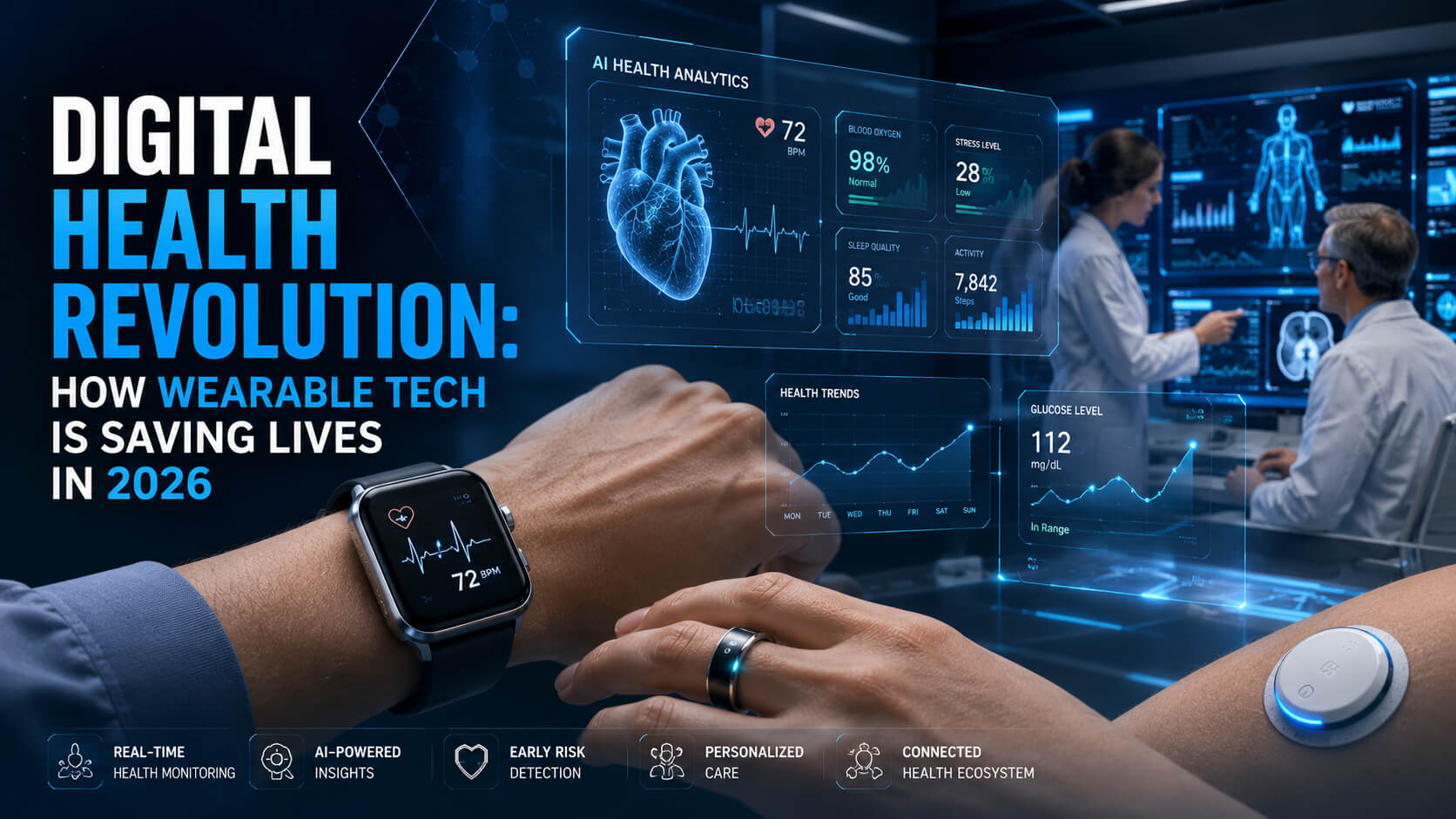
For the broader picture on digital health, AI diagnostics, telemedicine, and connected care, read our pillar: Digital Health Revolution: How Wearable Tech Is Saving Lives in 2026. More health technology guides live on PostoryCafe.com.