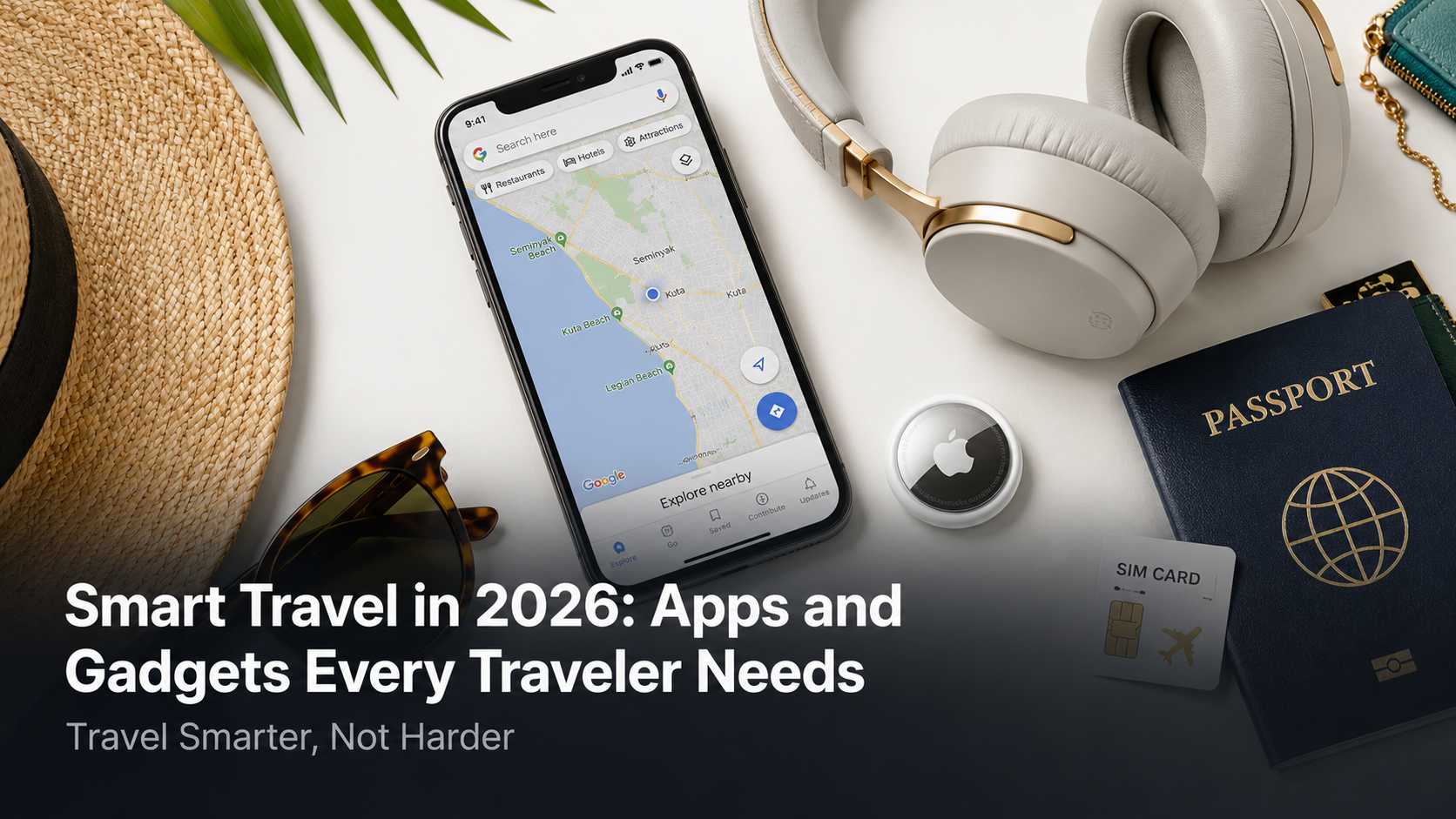

Google Maps’ offline download feature remains the single most universally recommended travel app tool in 2026, letting travelers download an entire city or region before losing wifi and navigate confidently without burning through expensive international roaming data. A newer standout in 2026 is Dream Trip, an AI-powered planner that turns saved TikTok and Instagram content into an organized, day-by-day itinerary automatically, meeting travelers where they already discover destinations rather than requiring manual research from scratch.
No single app handles every part of a trip, and travel guides who have visited over 130 countries consistently recommend combining a handful of specialized tools rather than one all-in-one solution. This guide organizes the essential travel apps of 2026 by the specific problem each one solves, from booking to navigation to staying connected abroad.
Planning and Booking
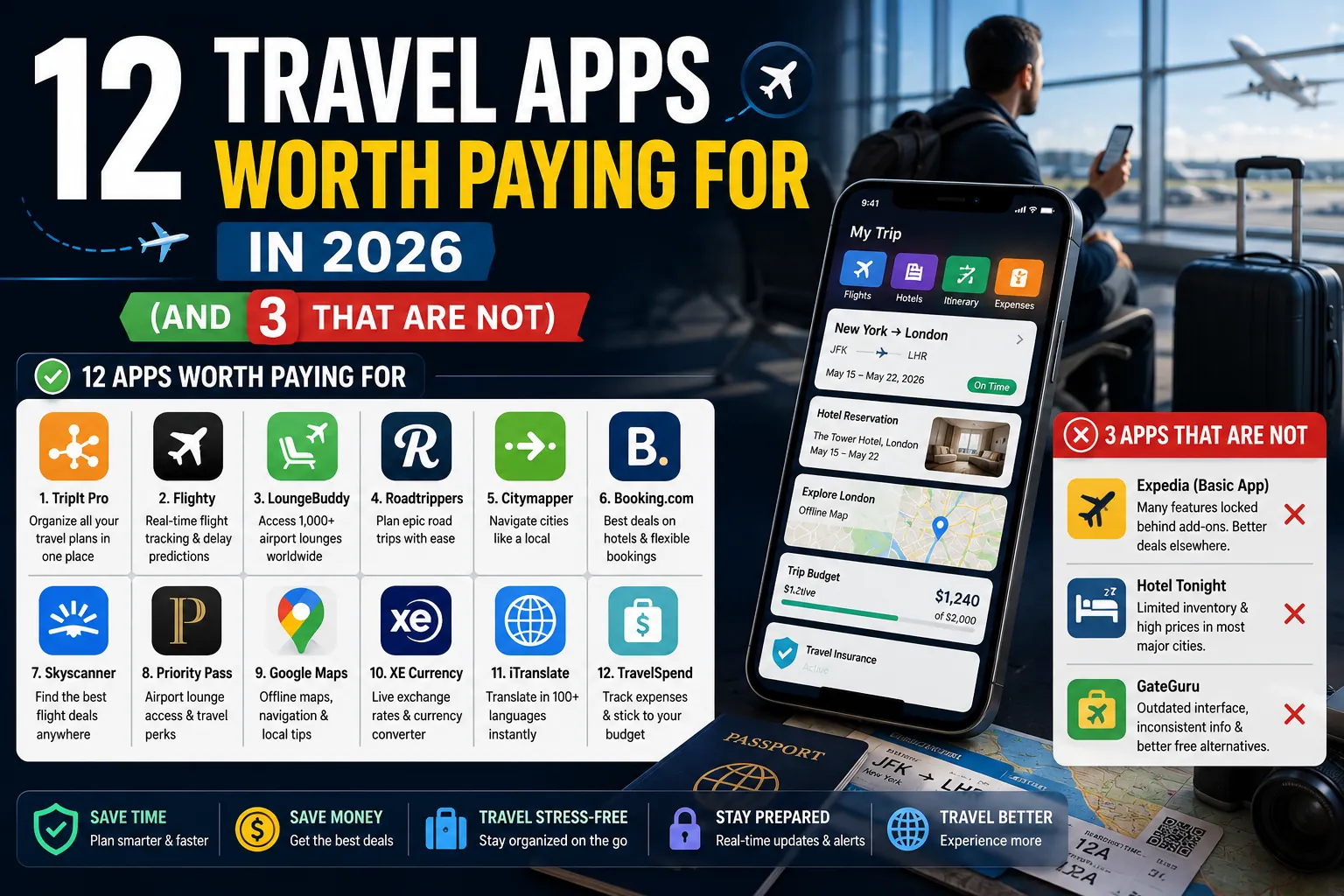
Google Flights remains the fastest starting point for airfare research thanks to its calendar and price-graph view, which shows at a glance whether shifting a departure date by a day or two, or flying from a nearby airport, meaningfully cuts the fare, and its Explore feature is specifically useful for travelers open to multiple destinations rather than one fixed location. TripIt solves a different problem entirely: forward every flight, hotel, and rental car confirmation email to the app, and it automatically organizes everything into one chronological itinerary, particularly valuable on complex multi-leg trips where juggling separate confirmation emails becomes its own source of stress.
Booking.com continues to offer the broadest global accommodation inventory of any single platform, and its free-cancellation filter is worth using deliberately for any trip where plans might still shift, while Airbnb remains the stronger choice specifically for neighborhood-based stays or trips where kitchen access and extra space truly change the experience compared with a standard hotel room.
Navigation and Offline Essentials
| App | Core Function | Works Offline |
| Google Maps | Navigation, offline city downloads, Immersive View for Routes | Yes, with pre-downloaded maps |
| Maps.me | Detailed offline hiking and road-trip navigation | Yes, fully offline after download |
| Google Translate | Text, voice, and camera-based translation | Yes, with downloaded language packs |
| XE Currency Converter | Real-time and last-known exchange rates | Yes, using last updated rate |
| What Three Words | Precise location sharing for emergencies | Partially, location grid works offline |
Google Maps’ 2026 update added Immersive View for Routes, now covering over 100 cities worldwide, which lets travelers preview a walking route in photorealistic 3D before setting out, a truly useful addition for navigating unfamiliar, visually confusing city centers. Maps.me remains the stronger specialist choice specifically for hikers and off-road travelers, since it supports fully offline turn-by-turn navigation and lets users create and share custom routes, a use case Google Maps does not cover as thoroughly in remote areas without cell signal.
Money, Connectivity, and Communication
Wise’s multi-currency card lets travelers spend abroad at the mid-market exchange rate with minimal fees, a meaningful saving compared with standard bank cards that often apply a foreign transaction fee on top of a worse embedded exchange rate. Airalo has become the standard way to set up an eSIM before departure, letting travelers install a data plan for their destination country via QR code before ever landing, removing the once-standard hassle of hunting down a physical SIM card at the airport; regional multi-country plans exist too, though a single-country plan often offers better per-gigabyte value on a trip confined to one destination.
For group trips specifically, Tricount or Splitwise handle uneven expense splitting automatically, calculating exactly who owes whom after a trip with shared costs like a rental car or group dinners, removing the awkward math and conversation that otherwise follows a trip with friends.
Flight Tracking and Travel Safety
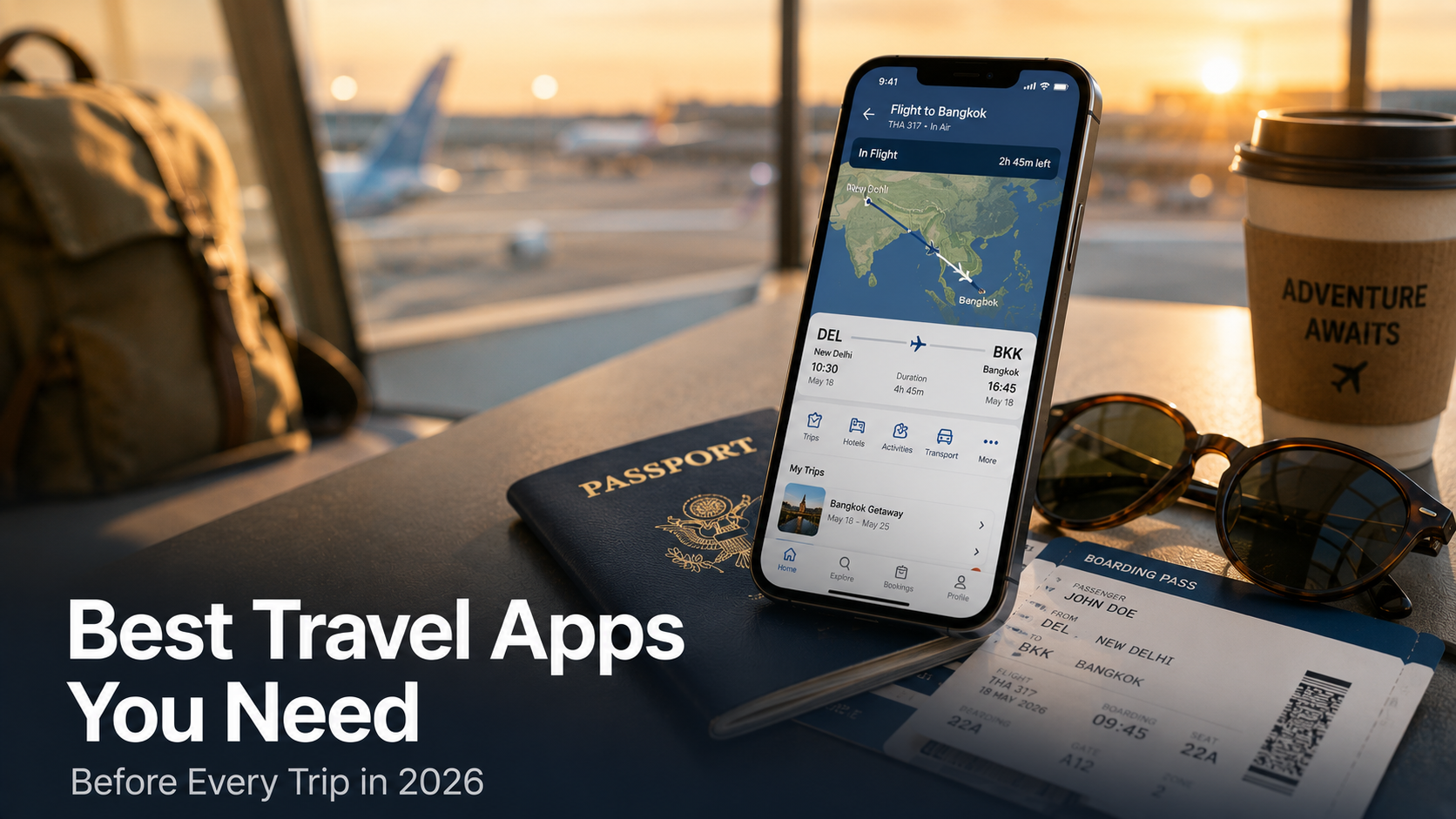
Flighty’s delay-prediction feature often gives travelers 30 or more minutes of advance warning before an airline’s official delay announcement, enough lead time to start rebooking or adjusting connecting plans proactively rather than reactively. Beyond a specific airline’s own app, which should still be downloaded for every flight since it can update faster than airport departure screens during a disruption, a dedicated travel safety app providing real-time alerts for weather, political unrest, or regional safety concerns at your specific destination adds a layer of situational awareness a generic news app does not provide.
Building Your Own Travel App Stack
The strongest travel app setup in 2026 combines a handful of these tools deliberately rather than downloading all twenty-five commonly recommended apps and never opening most of them: an AI planner or TripIt for organizing the trip, Google Maps for navigation, Wise or a multi-currency card for payments, and Google Translate for communication cover the core needs of nearly any trip. Download, log in, and test every app the week before departure rather than on arrival, since verifying that cards link correctly and accounts are properly authenticated abroad avoids the frustrating discovery that a card declined because a new phone was never verified with the bank.
Apps for Destination-Specific Situations
Ride-hailing app availability varies significantly by region, and defaulting to a single global app can mean paying more or waiting longer than necessary: Grab dominates Southeast Asia with combined ride-sharing, food delivery, and payments in one app, Bolt frequently undercuts other options across Europe and Africa, and DiDi remains the standard choice across China and much of Latin America. Downloading the regionally dominant app before arrival, rather than defaulting to whatever ride-hailing app is already installed from home, both saves money and often provides more reliable pickup times in markets where the global brand has weaker local driver density.
For travelers heading somewhere with limited or unreliable cell service, a dedicated offline translation download and a hiking-specific navigation app like Maps.me matter far more than any of the mainstream trip-planning tools, since the entire value proposition of those planning apps depends on connectivity that may simply not exist in a remote destination. Airport lounge access apps have become a legitimate value purchase even for travelers without premium credit cards or airline status, since one-time lounge passes typically costing 25 to 50 dollars can make a long, otherwise miserable layover truly restful.
Budget travelers specifically benefit from Hostelworld’s filtering by social atmosphere and verified cleanliness reviews, a level of specificity general booking platforms like Booking.com do not replicate as thoroughly for the dorm-style accommodation segment.
Frequently Asked Questions: Best Travel Apps
Q: What is the single most important travel app to download before a trip? A: Google Maps, specifically using its offline download feature to save your destination city or region before departure, since reliable navigation without expensive roaming data underpins nearly every other part of a trip.
Q: Do I need an eSIM for international travel in 2026? A: An eSIM through a service like Airalo is now one of the easiest ways to get mobile data immediately upon landing without hunting for a physical SIM card, though it depends on your phone supporting eSIM technology.
Q: Which app is best for tracking flight delays? A: Flighty is specifically known for delay predictions that often arrive 30 or more minutes before an airline’s official announcement, giving travelers meaningful lead time to adjust plans.
Q: How do I split travel expenses fairly with a group? A: Apps like Tricount and Splitwise automatically calculate who owes whom after a trip with shared costs, removing the manual math and awkward conversations that otherwise follow group travel.
Q: Is it better to use one all-in-one travel app or several specialized ones? A: Travel experts consistently recommend combining a handful of specialized apps, since no single app excels at flights, navigation, money, and translation simultaneously as well as dedicated tools for each function.
Q: Should I test my travel apps before leaving home? A: Yes, setting up and verifying logins, card links, and downloaded offline content the week before departure avoids common frustrations like a declined card from an unverified new phone discovered only once abroad.
Traveling Smarter With the Right Setup
The best travel app is the one you actually use consistently, not the longest possible list installed and forgotten after one trip. For more destination ideas and trip planning guides, visit our full travel section. Pick a handful from each category covered here that match your specific destination and travel style, learn them well before departure, and they will serve reliably across many future trips rather than needing to be relearned each time.
Looking to grow your own reach? Postorycafe is a guest posting platform that welcomes writers across every niche covered here. Submit your guest posting pitch today and get your work in front of a global audience.