The May 2024 Google Content Warehouse API leak, which exposed more than 14,000 internal ranking attributes, confirmed what SEO practitioners had long suspected: Google’s algorithm groups ranking signals into five buckets, domain authority, topical authority, document quality, freshness, and engagement, rather than applying a simple flat checklist of factors. FirstPageSage’s 2026 research found keyword usage in meta titles carries roughly 18.6 percent of algorithmic weight and searcher engagement signals carry about 18.2 percent, making these two of the heaviest-weighted on-page factors available to optimize directly.
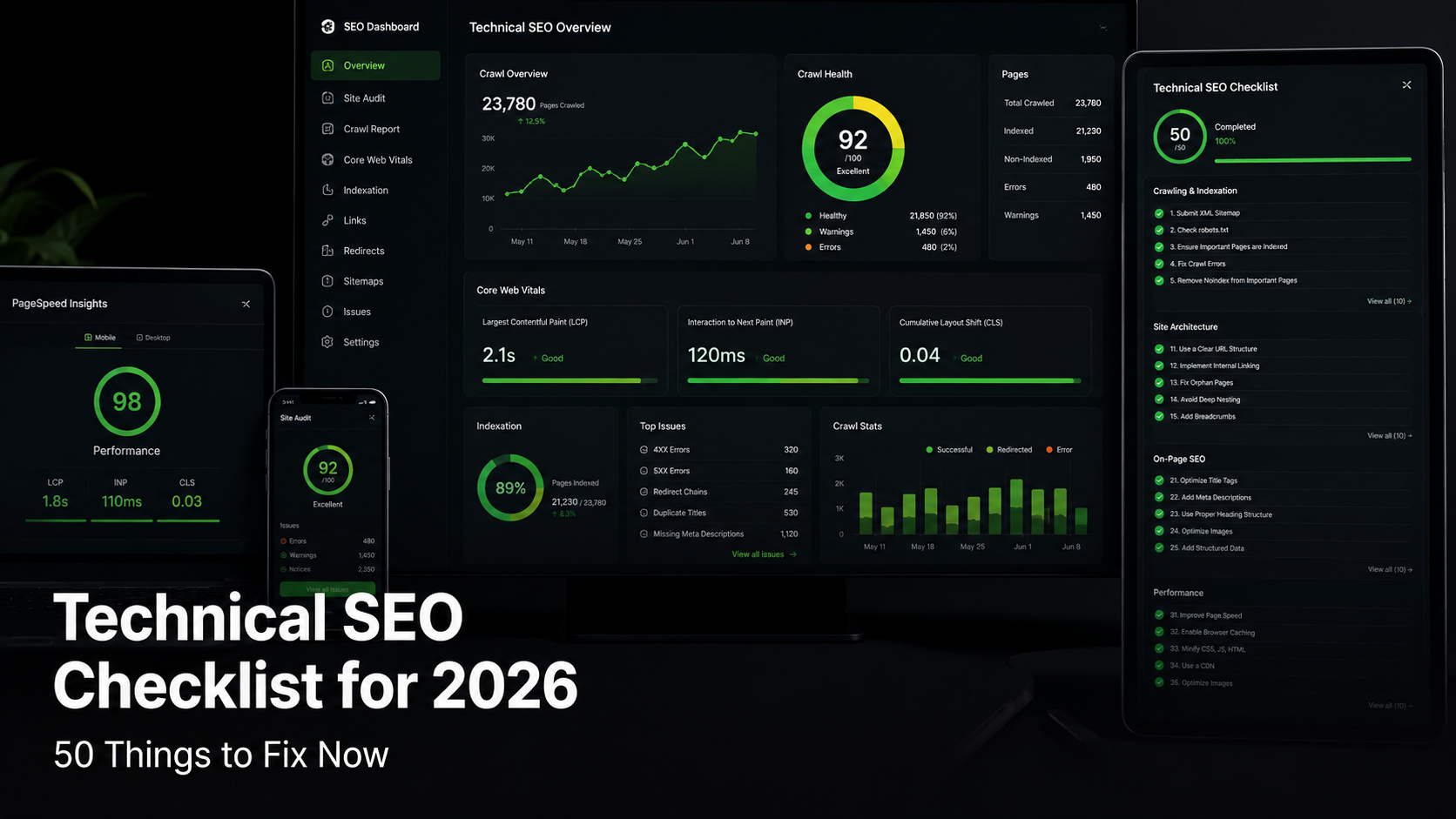
On-page SEO covers everything you control directly on a given page, title tags, headers, content depth, internal links, schema markup, and Core Web Vitals, as distinct from off-page factors like backlinks that depend on other sites linking to you. This checklist walks through the highest-impact on-page elements worth auditing on any page you want to rank in 2026.
Title Tags and Meta Descriptions
Your primary target keyword should appear in the title tag, ideally within the first 60 characters and as close to the beginning as possible, since Moz research has found title tags starting with the keyword tend to outperform those with the keyword buried near the end. Google bolds matching query terms in search results, so a title that mirrors the searcher’s actual phrasing increases visual prominence and click-through rate even at the same ranking position.
Meta descriptions are not a direct ranking factor, but they function as your ad copy in the search results, and a description that clearly states what the page delivers, ideally under 160 characters, measurably improves click-through rate even when Google occasionally rewrites it with its own generated snippet instead.
Content Structure and Header Hierarchy
Keyword prominence in the first 100 words of content correlates with first-page rankings, and using your keyword naturally within H2 or H3 subheadings provides Google with a weak but real relevancy signal about how the page is structured. Google’s systems now interpret meaning and semantic context, not just exact keyword matches, so surrounding your primary keyword with related entities and co-occurring terms, for a page about email marketing that might mean automation, open rates, and segmentation, delivers more ranking value in 2026 than repeating the exact phrase.
Content freshness matters as a ranking signal in two distinct ways: how often a page has been updated historically, and the magnitude of those updates, since adding or removing entire sections signals genuine freshness far more than fixing a typo or reordering a sentence.
The 30-Point On-Page Checklist
| Category | Key Items to Check | Why It Matters |
| Title & Meta | Keyword near start of title, description under 160 characters | Direct relevance signal plus click-through rate impact |
| Headers | Keyword in H1 and at least one H2, logical hierarchy | Structure signal and content scannability |
| Content Quality | Depth matching top-ranking pages, original insight, first-hand experience | E-E-A-T and Helpful Content system evaluation |
| Core Web Vitals | LCP, INP, CLS within Google thresholds | Confirmed ranking factor, roughly 28% of weighted score |
| Internal Linking | Related pages linked, important pages within 3 clicks of homepage | Distributes authority and aids crawl depth |
| Schema Markup | Article, FAQ, Breadcrumb, or relevant schema implemented | Improves eligibility for rich results and AI citation |
| Mobile Experience | Fully responsive, tap targets sized correctly | Google indexes and ranks the mobile version first |
Core Web Vitals and Technical Foundations
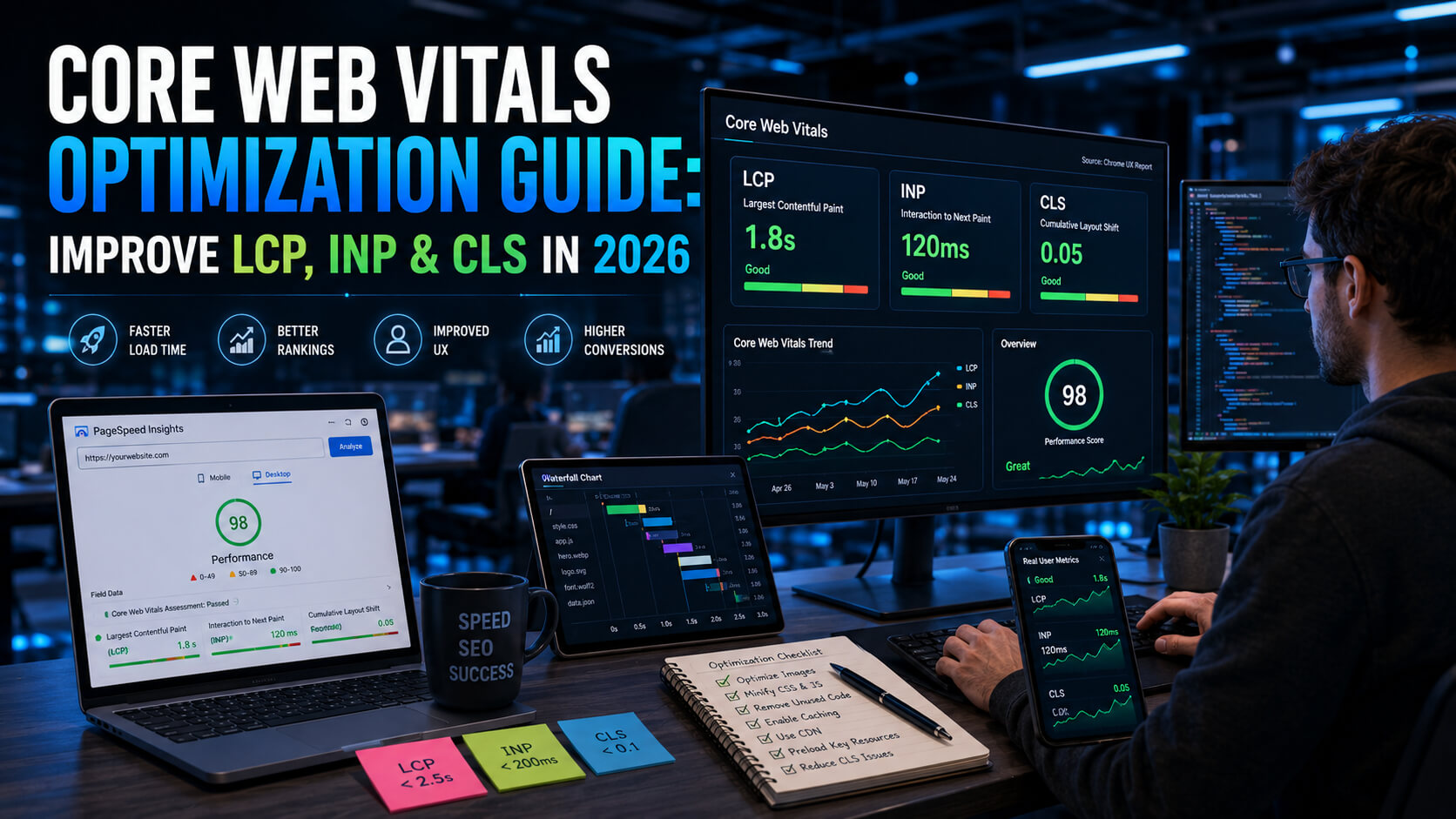
Core Web Vitals, covering Largest Contentful Paint, Interaction to Next Paint, and Cumulative Layout Shift, are a confirmed Google ranking factor that one 2026 industry analysis weights at roughly 28 percent of total ranking score, making page speed a direct algorithmic lever rather than a secondary user-experience nicety. Technical SEO issues, broken crawl paths, blocked resources, poor mobile rendering, suppress rankings even for truly high-quality, well-linked content, since Google cannot rank a page it cannot properly access and parse.
Internal linking is the one link-building activity fully within your direct control and costs nothing to execute: keeping every important page within three clicks of the homepage prevents crawl-depth penalties, and each internal link a reader follows extends their session, sending a stronger dwell-time signal back to Google’s ranking systems.
E-E-A-T and Content Quality Signals
Pages demonstrating strong Experience, Expertise, Authoritativeness, and Trustworthiness have a documented 30 percent higher chance of appearing in the top three organic results according to 2026 research, and this framework increasingly rewards genuine first-hand experience, a real case study, an actual product test, over content that merely aggregates and rephrases what already ranks elsewhere. A newer consideration for 2026 specifically: research from Brandlight found the overlap between top-ranking Google pages and pages cited by AI answer engines like ChatGPT and Perplexity has collapsed from 70 percent to below 20 percent, meaning ranking first on Google no longer guarantees citation in AI-generated answers, a gap that increasingly requires separate optimization consideration.
Image Optimization and Schema Markup
Descriptive, keyword-relevant file names and alt text on every image serve two purposes at once: they help Google understand image content for image search visibility, and they make a page truly accessible to visually impaired users relying on screen readers, a rare case where an SEO best practice and a pure accessibility requirement fully overlap. Compressing images to modern formats like WebP before upload, rather than relying on a plugin to compress after the fact, avoids the common mistake of a beautifully designed page quietly failing its Core Web Vitals score because of unoptimized image weight.
Schema markup, structured data that explicitly tells Google what type of content a page contains, whether an article, a product, an FAQ section, or a recipe, does not directly boost rankings on its own but significantly improves eligibility for rich results like star ratings, FAQ dropdowns, and featured snippets that increase click-through rate at the same ranking position. Implementing Article, FAQPage, and BreadcrumbList schema as a baseline on most content pages covers the majority of rich-result opportunities available to a typical blog or informational site without requiring deep technical development work.
Validate schema markup after implementation using Google’s Rich Results Test rather than assuming a plugin or manual implementation is error-free, since malformed schema can be entirely ignored by Google or, in worse cases, actively flagged as a spam signal if it misrepresents the actual page content.
Frequently Asked Questions: On-Page SEO
Q: What is the single most important on-page SEO factor in 2026? A: There is no single most important factor; Google evaluates content quality, Core Web Vitals, E-E-A-T signals, and technical accessibility together, with keyword usage in meta titles and searcher engagement carrying particularly heavy weight among on-page signals specifically.
Q: Do Core Web Vitals really affect rankings, or just user experience? A: They are a confirmed direct ranking factor, with one 2026 analysis estimating Core Web Vitals account for roughly 28 percent of total ranking weight, making page speed a genuine algorithmic lever, not just a soft user-experience consideration.
Q: How long should my content be to rank well? A: There is no fixed word count target; Google rewards content that completely answers the searcher’s question and matches the depth of currently top-ranking pages for that specific query, not length for its own sake.
Q: What is E-E-A-T and why does it matter for on-page SEO? A: E-E-A-T stands for Experience, Expertise, Authoritativeness, and Trustworthiness, the framework Google’s quality raters use to evaluate content, and pages demonstrating it strongly have a documented higher chance of ranking in the top three results.
Q: Does ranking well on Google guarantee my content gets cited by AI tools like ChatGPT? A: No, 2026 research found the overlap between top Google rankings and AI-cited sources has fallen below 20 percent, meaning traditional SEO and generative engine optimization increasingly require separate, parallel strategies.
Q: How often should I update existing content to maintain rankings? A: Scheduling a quarterly review of your most valuable pages is a reasonable baseline, and substantive updates, adding or removing entire sections, carry more freshness signal than minor edits like fixing typos.
Making This Checklist a Repeatable Habit
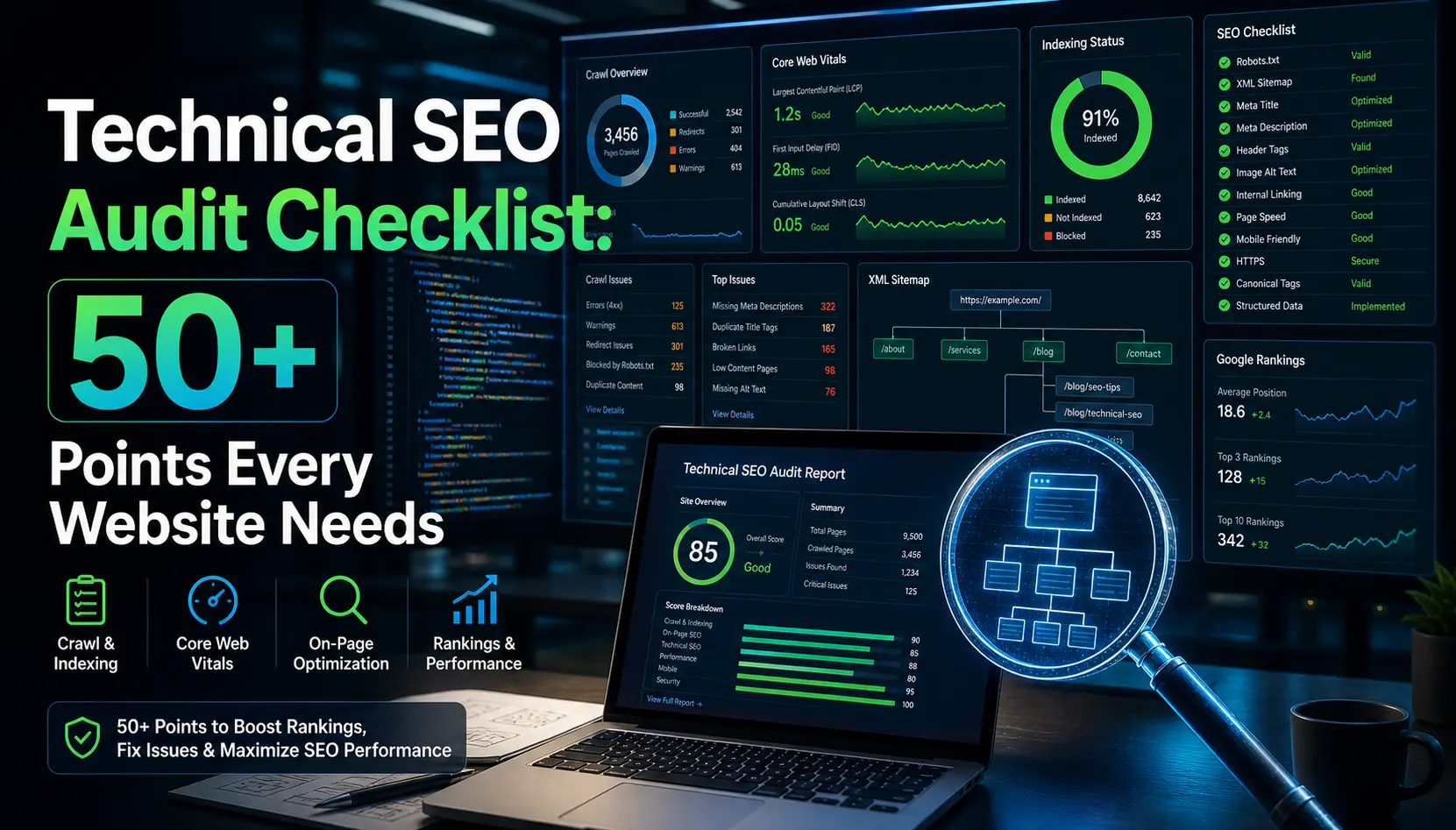
On-page SEO is not a one-time audit to complete and forget; the sites that consistently rank well treat this checklist as a recurring quarterly review rather than a launch-day task. Pair it with a full technical SEO audit checklist covering the crawlability and indexing issues that sit underneath on-page work. Run through the 30 items above on your highest-priority pages first, fix the gaps with the clearest impact, Core Web Vitals and title tags typically deliver the fastest visible movement, and schedule the next review before moving on to lower-priority pages.
Looking to grow your own reach? Postorycafe is a guest posting platform that welcomes writers across every niche covered here. Submit your guest posting pitch today and get your work in front of a global audience.