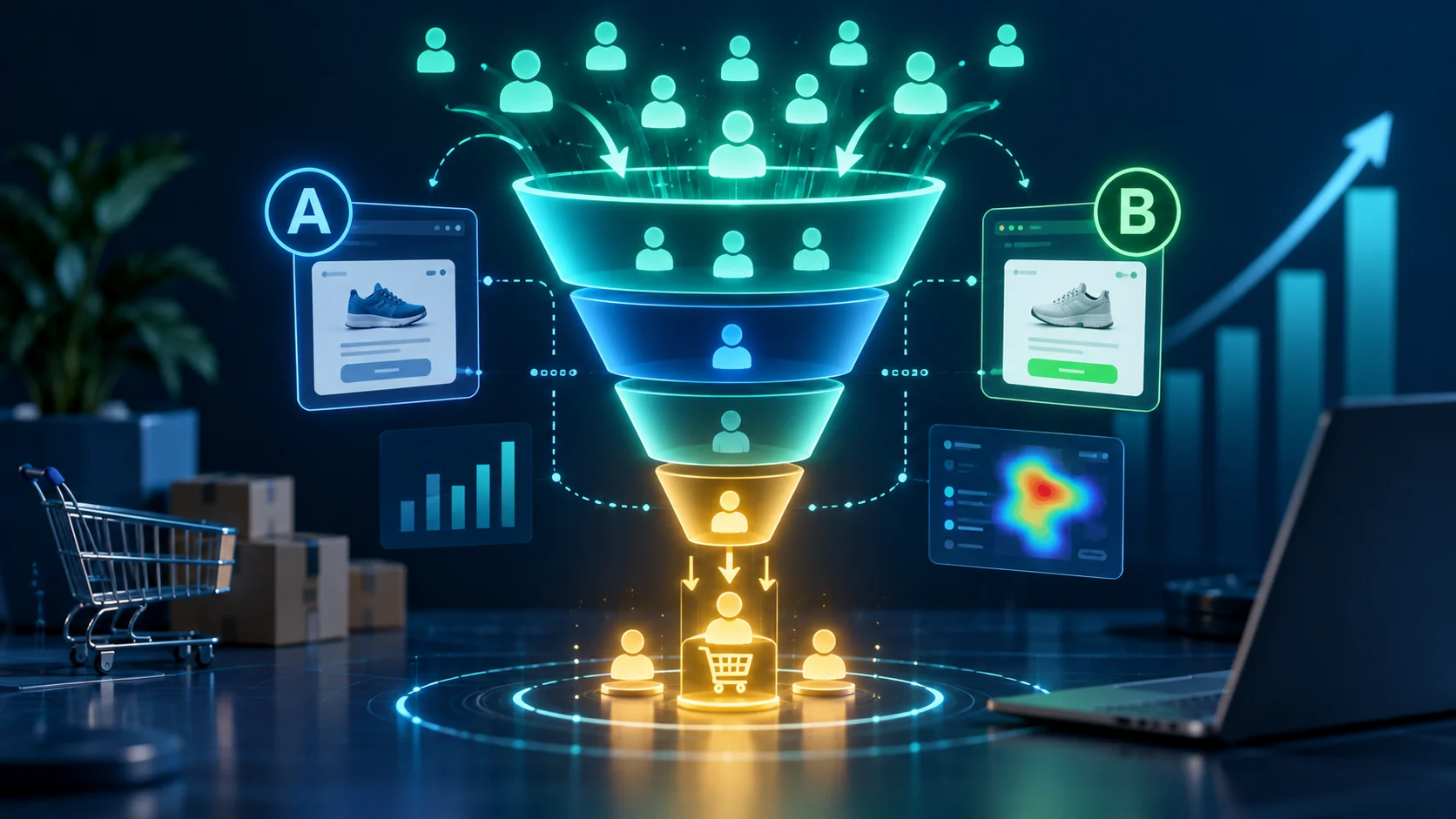

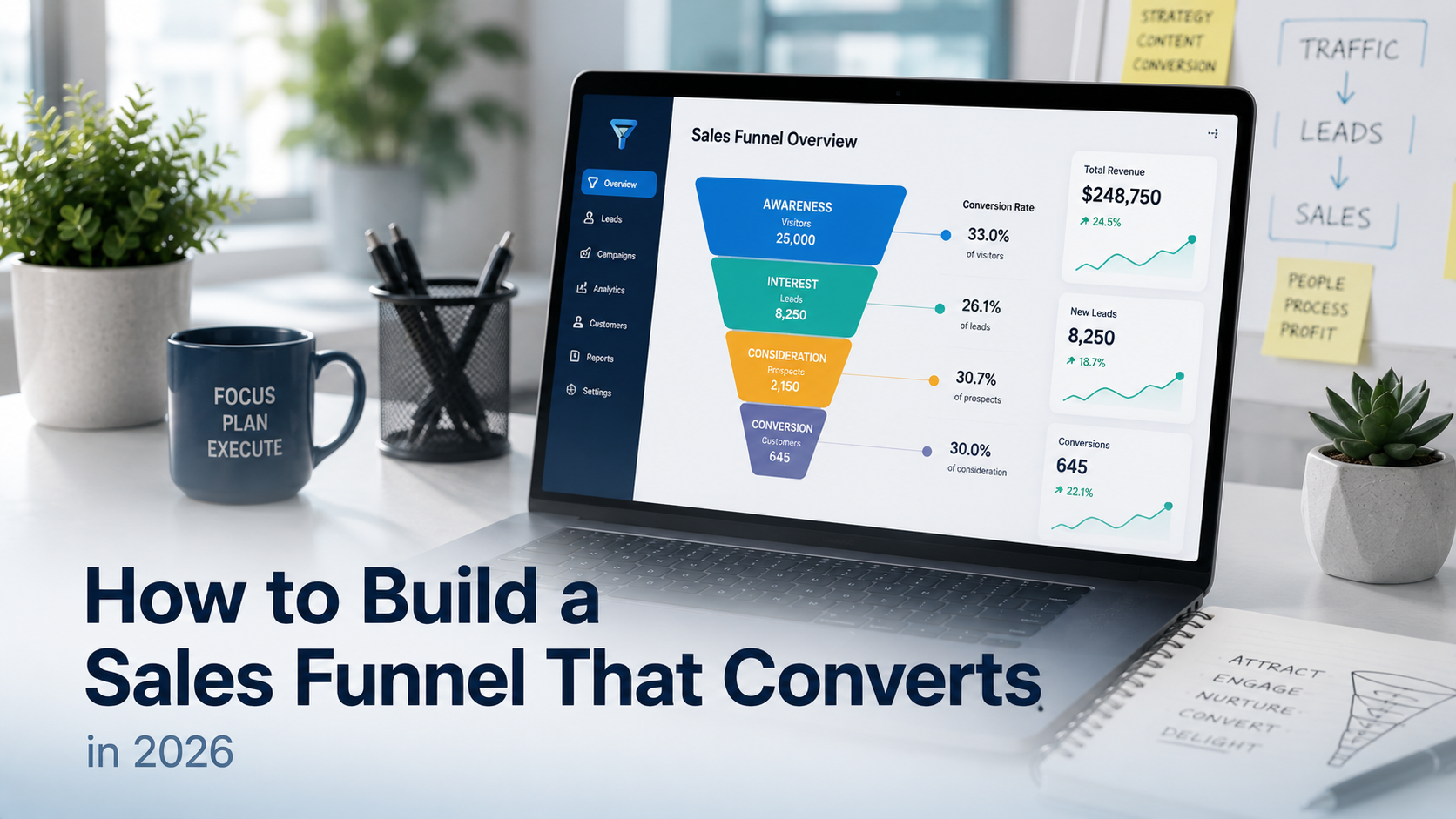
First Page Sage’s 2026 benchmark data, drawn from over 30 industries and eight years of tracking, shows the sharpest drop-off in most B2B funnels happens at the marketing-to-sales handoff: Lead to MQL converts at 25 to 35 percent, but MQL to SQL falls to just 13 to 26 percent on average, a gap wide enough that Kirro’s analysis of the same data calls it “not a benchmark, that’s a canyon.” Meanwhile VWO’s research found that sales funnels achieving 10 percent or higher overall conversion are considered excellent, typically found in organizations with strong product-market fit and consistent, ongoing optimization rather than a single funnel redesign.
A sales funnel that converts is not a static asset built once and left alone; it is a series of measured handoffs, each with its own benchmark, and the biggest wins usually come from fixing whichever specific stage is leaking the most rather than tweaking the whole funnel evenly. This guide walks through each stage, the current 2026 benchmarks, and the specific fixes that move the needle at each one.
The Five-Stage Funnel and Its Real Benchmarks
| Stage | Typical Conversion Rate | What It Measures |
| Visitor to Lead | 1-3% (B2B), 2-5% (B2C) | How well traffic and landing pages capture contact info |
| Lead to MQL | 25-35% | Whether leads show genuine buying interest |
| MQL to SQL | 13-26% | Whether sales validates marketing’s best leads |
| SQL to Opportunity | 50-62% | Conversion of qualified leads into real pipeline |
| Opportunity to Closed Deal | 15-30% | Final win rate once a proposal is in hand |
These ranges come from First Page Sage and Ruler Analytics data spanning over 100 million data points and 30-plus industries, and the overall end-to-end conversion for most B2B funnels sits at just 3 to 10 percent depending on industry and deal complexity, a number that looks alarmingly low in isolation but is normal given how many stages compound together.
Fixing the Top of the Funnel: Visitor to Lead
Organic search traffic converts to leads at roughly double the rate of paid social for B2B specifically, since visitors arriving through search are further along in their own research process than someone scrolling past a paid ad, which means channel mix often matters more than landing page design alone. Cutting a signup form from ten fields down to three, deferring less critical questions until after the initial conversion, has been documented to raise completion rates by 20 percent in real case studies, making form length one of the highest-impact, lowest-effort fixes available at this stage.
Removing standard site navigation from a dedicated landing page, rather than a general website page, is another well-supported tactic, since a focused page without an easy path to wander elsewhere on the site keeps visitors concentrated on the single conversion action the page was built for.
Fixing the Marketing-to-Sales Handoff
The 1-hour response rule is the single most cited fix for the MQL-to-SQL stage: research shows responding to a qualified lead within one hour versus a slower response can be the difference between a 53 percent and a 17 percent conversion rate at this stage, a gap large enough to justify restructuring an entire sales team’s workflow around speed. A large share of MQL-to-SQL failures trace back to a broken lead-scoring definition rather than a sales execution problem, since roughly 90 percent of MQLs never convert to SQLs specifically because marketing classified them too early, before genuine buying intent was actually present.
Aligning sales and marketing on one shared definition of a qualified lead, reviewed and adjusted quarterly based on which leads actually closed, closes this gap more reliably than adding more top-of-funnel volume to compensate for a leaky middle stage.
Fixing the Bottom of the Funnel: Opportunity to Close
Enterprise deals close at meaningfully lower rates than SMB deals, roughly 31 percent versus 39 percent according to 2026 industry data, largely because more stakeholders and longer procurement cycles introduce more opportunities for a deal to stall, which means bottom-of-funnel optimization for enterprise sales should focus on multi-threading relationships across several stakeholders rather than relying on a single champion. Improving even a single percentage point at this stage compounds meaningfully: one modeled example showed lifting visitor-to-lead conversion from 2 to 3 percent alone added 75,000 dollars in monthly revenue for a mid-size B2B SaaS company, without any increase in traffic acquisition spend.
Tools for Tracking Funnel Performance Accurately
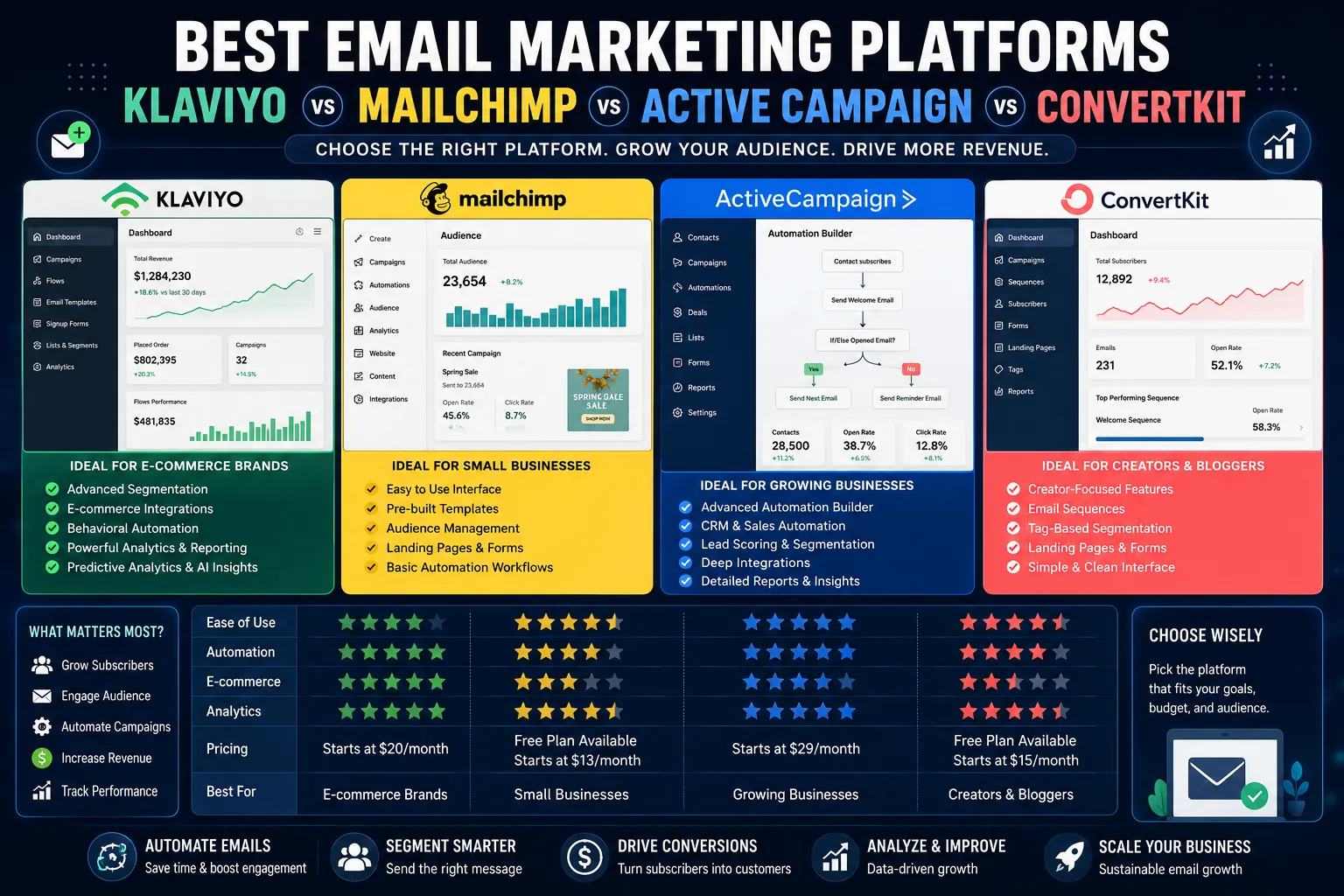
A CRM connected directly to your website analytics and email platform is the minimum foundation for tracking funnel performance accurately, since manually reconciling spreadsheets across three disconnected tools introduces exactly the kind of data errors that make stage-by-stage benchmarking unreliable. Attribution matters as much as raw volume: a lead that converts after touching five different marketing channels needs a consistent rule for which channel gets credit, or comparing channel performance across quarters becomes meaningless.
Clean email data specifically undermines more funnel analysis than most teams realize; a bounce rate above roughly 5 percent on outbound sales emails signals a data quality problem serious enough to distort every downstream conversion metric, since emails that never reach a real inbox cannot possibly convert regardless of how well-targeted the underlying leads actually are.
Running a monthly, not just quarterly, review specifically at the stage level rather than only the overall funnel number catches problems while they are still small: a two-week dip in MQL-to-SQL conversion is a quick fix if caught immediately, but the same dip left unaddressed for a full quarter compounds into a genuine revenue shortfall that takes considerably more effort to recover from.
Frequently Asked Questions: Sales Funnels That Convert
Q: What is a good overall sales funnel conversion rate in 2026? A: Most B2B funnels convert 3 to 10 percent end to end, though this varies significantly by industry, deal complexity, and traffic source, making your own historical rate a more useful benchmark than a single generic average.
Q: Where do most sales funnels lose the most prospects? A: The marketing-to-sales handoff, specifically MQL to SQL, is where most funnels see the sharpest and most inconsistent drop-off, often due to a poorly defined lead-scoring system rather than a sales performance problem.
Q: Does responding faster to leads really improve conversion that much? A: Yes, research shows responding within one hour versus a slower response can mean the difference between a 53 percent and a 17 percent conversion rate at the MQL-to-SQL stage, making response speed one of the highest-impact, lowest-cost fixes available.
Q: Should I focus on organic search or paid ads for top-of-funnel conversion? A: Organic search consistently converts at roughly double the rate of paid social for B2B, since visitors arriving through search intent are further along in their buying research than a cold paid-social impression.
Q: How many form fields should a lead capture form have? A: As few as possible; cutting a form from ten fields to three has been documented to raise completion rates by 20 percent, with additional details gathered after the initial conversion instead.
Q: Do enterprise and SMB sales funnels convert at the same rate? A: No, enterprise funnels typically convert lower at the top due to longer research cycles but often close at somewhat lower final rates too, roughly 31 percent versus 39 percent for SMB, due to more stakeholders and longer procurement processes.
Treating Funnel Optimization as an Ongoing Discipline
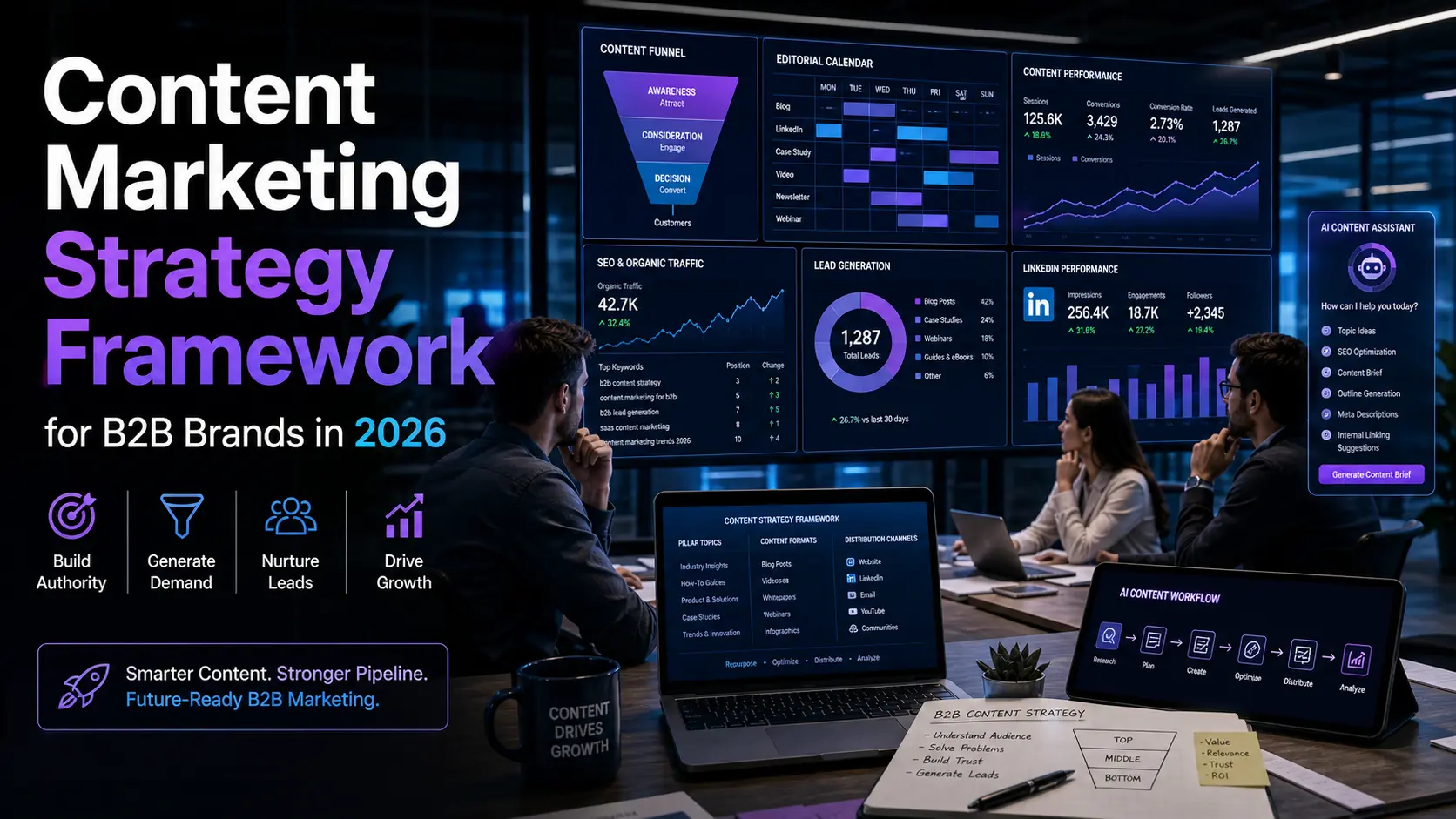
The teams outperforming these benchmarks share one habit: they review conversion data by stage every month rather than annually, catching a leaking stage before it compounds into a quarter of missed revenue targets. A well-optimized funnel still depends on the content strategy feeding it, and our content marketing strategy framework covers how to build that foundation. Pick the single weakest stage in your own funnel data this week, apply one of the fixes described here, and measure the specific change before moving to the next stage rather than trying to overhaul the entire funnel at once.
Looking to grow your own reach? Postorycafe is a guest posting platform that welcomes writers across every niche covered here. Submit your guest posting pitch today and get your work in front of a global audience.