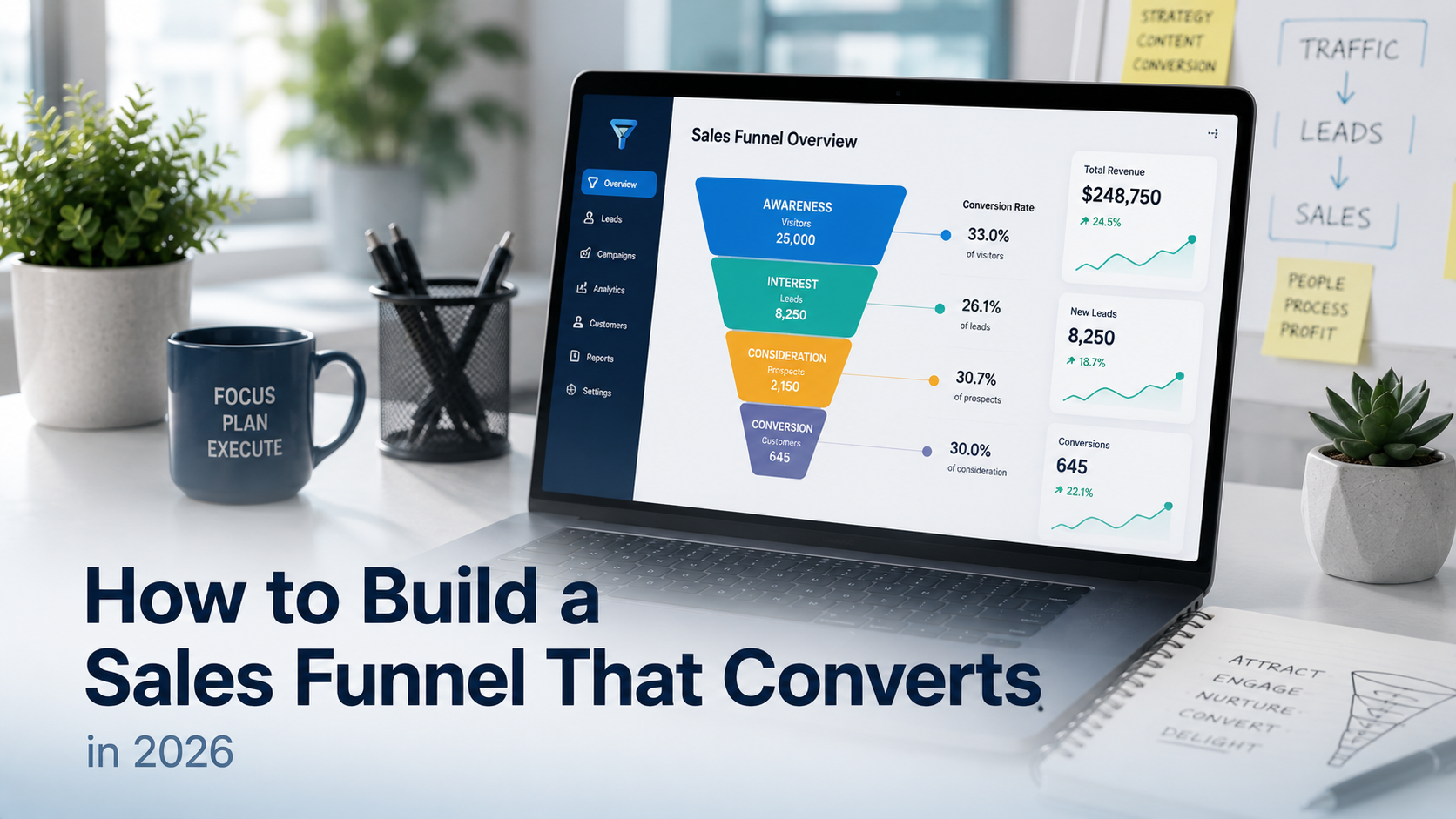

Conversion rate optimization (CRO) is the discipline of increasing the percentage of website visitors who take a desired action: buying a product, signing up for a trial, booking a demo. A 1% conversion rate improvement on a site doing $1 million in annual revenue adds $100,000 without any additional traffic.
The tools that enable CRO in 2026 range from A/B testing platforms to session recording tools to AI personalization engines. This guide covers the essential CRO stack, how each category of tool contributes to optimization, and how to prioritize your efforts.
The CRO Stack: 5 Categories of Tools
1. Analytics: Understanding What Is Happening
Google Analytics 4 (Free)
GA4 is the foundational analytics tool for most e-commerce and SaaS sites. It tracks user behavior, conversion paths, traffic sources, and revenue attribution. Setting up GA4 correctly (with Enhanced E-commerce tracking or SaaS conversion events) is the prerequisite to any CRO program.
Plausible or Fathom (Privacy-First Alternatives)
Simpler, GDPR-compliant alternatives to GA4 that do not require cookie consent banners in most jurisdictions. Good choice for content sites and teams that find GA4 overwhelming. $9 to $14/month.
2. Session Recording and Heatmaps: Understanding Why
Hotjar
Hotjar records real user sessions, generates heatmaps showing where users click and scroll, and allows on-site surveys. The combination of watching real sessions and seeing aggregated click patterns reveals friction points invisible in quantitative analytics. Free tier (35 daily sessions). Plus from $32/month.
Microsoft Clarity (Free Alternative)
Microsoft Clarity offers session recording and heatmaps at zero cost with no limits on sessions. Weaker on surveys and qualitative research features than Hotjar but often the right choice for budget-conscious teams.
FullStory (Enterprise)
FullStory offers the most powerful session recording and behavioral analytics for enterprise teams. Strong DX data capabilities and integrations with analytics platforms. Custom pricing.
3. A/B Testing: Measuring What Works
VWO (Visual Website Optimizer)
VWO is the leading A/B testing platform for mid-market e-commerce and SaaS. Visual editor for no-code test creation, multivariate testing, and strong statistical significance reporting. From $199/month for 10,000 monthly tracked users.
Optimizely
Enterprise-grade experimentation platform used by large organizations. Full-stack testing across web, mobile, and server-side. Custom pricing. The gold standard for organizations running hundreds of concurrent experiments.
Statsig (Developer-Friendly)
Statsig has grown rapidly as the preferred A/B testing platform for engineering-led teams. Strong feature flags, experimentation analytics, and product analytics in one platform. Free tier generous. Enterprise pricing available.
Google Optimize Replacement
Google Optimize sunset in 2023. Teams that relied on it have migrated primarily to VWO, Optimizely, Statsig, or AB Tasty. There is no free replacement at comparable quality from Google.
4. Personalization: Serving the Right Experience
Mutiny
Mutiny personalizes website content in real time based on visitor attributes: company, industry, location, traffic source, firmographic data from enrichment. Particularly strong for B2B SaaS landing pages. Custom pricing.
Rebuy (E-Commerce)
Rebuy personalizes Shopify store experiences with AI-powered product recommendations, upsell widgets, and smart cart features. Standard plan $99/month for stores up to $1M monthly GMV.
5. User Research: Learning From Users Directly
Maze
Maze is a user research platform that tests prototypes and live designs with real users quickly. Strong for pre-launch validation and usability research. Free plan for small studies. Professional from $99/month.
Typeform or Tally (Survey Tools)
On-site and post-conversion surveys provide qualitative data about why users converted or did not. Typeform ($25/month) has the best interface. Tally is free with similar functionality.
The CRO Process: Where to Start
Effective CRO follows a research-hypothesis-test-analyze cycle, not random guessing.
- Step 1: Quantitative research. Use GA4 to find high-traffic, low-conversion pages. Identify funnel drop-off points.
- Step 2: Qualitative research. Use Hotjar sessions and heatmaps to understand why users are dropping off. Watch 20 to 30 sessions on your highest-traffic landing pages.
- Step 3: Form hypotheses. “Changing [element] to [variation] will increase [metric] because [reason from research].”
- Step 4: Run tests. A/B test the highest-impact hypotheses first. Run until statistical significance (typically 95% confidence, 100+ conversions per variant).
- Step 5: Implement winners and iterate. Ship winning variants, document learnings, and move to the next hypothesis.
Highest-ROI CRO Improvements by Category
| Page / Element | High-Impact Changes | Typical Lift |
|---|---|---|
| Product page | Better photography, clearer value prop, prominent reviews | 5 to 25% CR improvement |
| Checkout flow | Reducing fields, adding trust badges, guest checkout | 10 to 30% reduction in abandonment |
| Landing page headline | Benefit-focused, specific, tested against alternatives | 20 to 50% lift on best tests |
| CTA button copy | Specific action text vs generic ‘Submit’ | 5 to 15% lift typically |
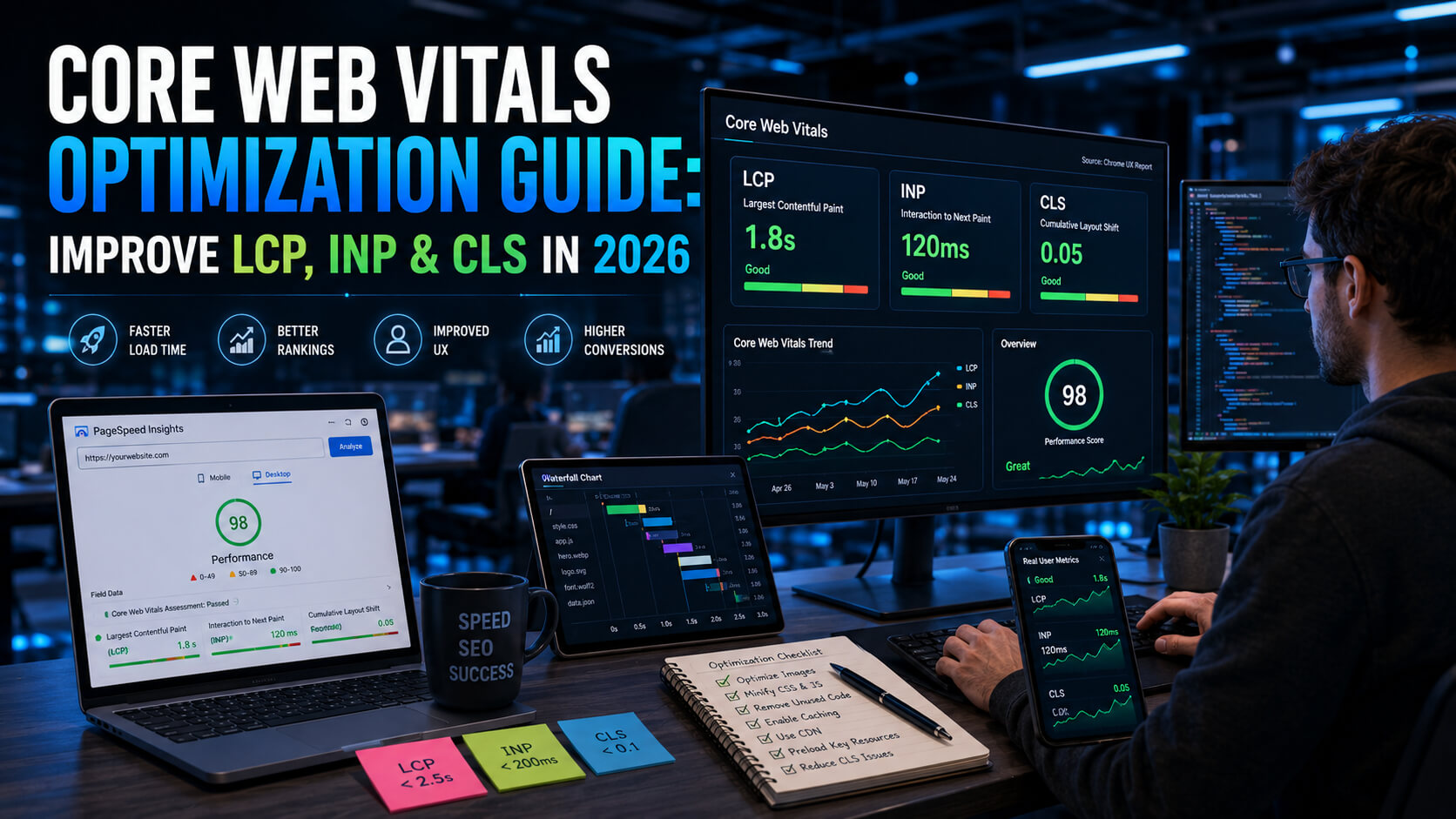
| Page speed | Sub-2-second load time vs 4+ seconds | 7% conversion improvement per second |
| Social proof | Specific customer quotes and metrics | 5 to 15% lift when relevant |
5 Common CRO Mistakes
- Testing too many things simultaneously. Multivariate tests with many variants require enormous traffic to reach significance. Test one thing at a time.
- Stopping tests too early. Underpowered tests produce false confidence in results that are actually statistical noise.
- Ignoring mobile users. Mobile conversion rates often differ significantly from desktop. Analyze and test mobile separately.
- Testing without a hypothesis. Random changes produce random results. Research-driven hypotheses produce learnable insights.
- Copying competitors blindly. What works for a competitor’s audience may not work for yours. Test everything against your actual users.
Expert Tips
- Watch 100 session recordings before running your first test. What you see will surface more actionable insights than any analytics report.
- Prioritize checkout over landing pages for e-commerce. Users who reach checkout have the highest intent. Reducing abandonment there produces more immediate revenue.
- Speed is CRO. Page load time has an enormous impact on conversion rates. Fix performance issues before any other CRO activity.
- Build a test backlog. Maintain a prioritized list of hypotheses ranked by estimated impact and implementation ease.
Frequently Asked Questions
What is a good conversion rate for e-commerce?
2 to 4% is the typical range for e-commerce in 2026. Above 5% is strong and usually indicates highly targeted traffic or a niche audience. Below 1.5% suggests either traffic quality issues, friction in the purchase flow, or product-market fit problems that CRO alone cannot solve.
How much traffic do I need to run A/B tests?
At minimum, 100 conversions per variant to reach statistical significance for most A/B tests. For a site converting at 3%, that means approximately 3,300 visitors per variant. Small-traffic sites often get better ROI from qualitative research (sessions, surveys) than from formal A/B testing.
Is VWO better than Optimizely?
VWO is the stronger choice for most mid-market e-commerce and SaaS teams: better pricing, strong visual editor, and sufficient testing capabilities. Optimizely is the stronger choice for large enterprises running hundreds of concurrent experiments across complex tech stacks.
Research First, Test Second, Iterate Always
CRO is a compounding discipline. Each test produces insights that improve the next hypothesis. Teams that maintain a consistent test-learn-iterate cycle for 12+ months consistently achieve 20 to 50% conversion rate improvements over their baseline.
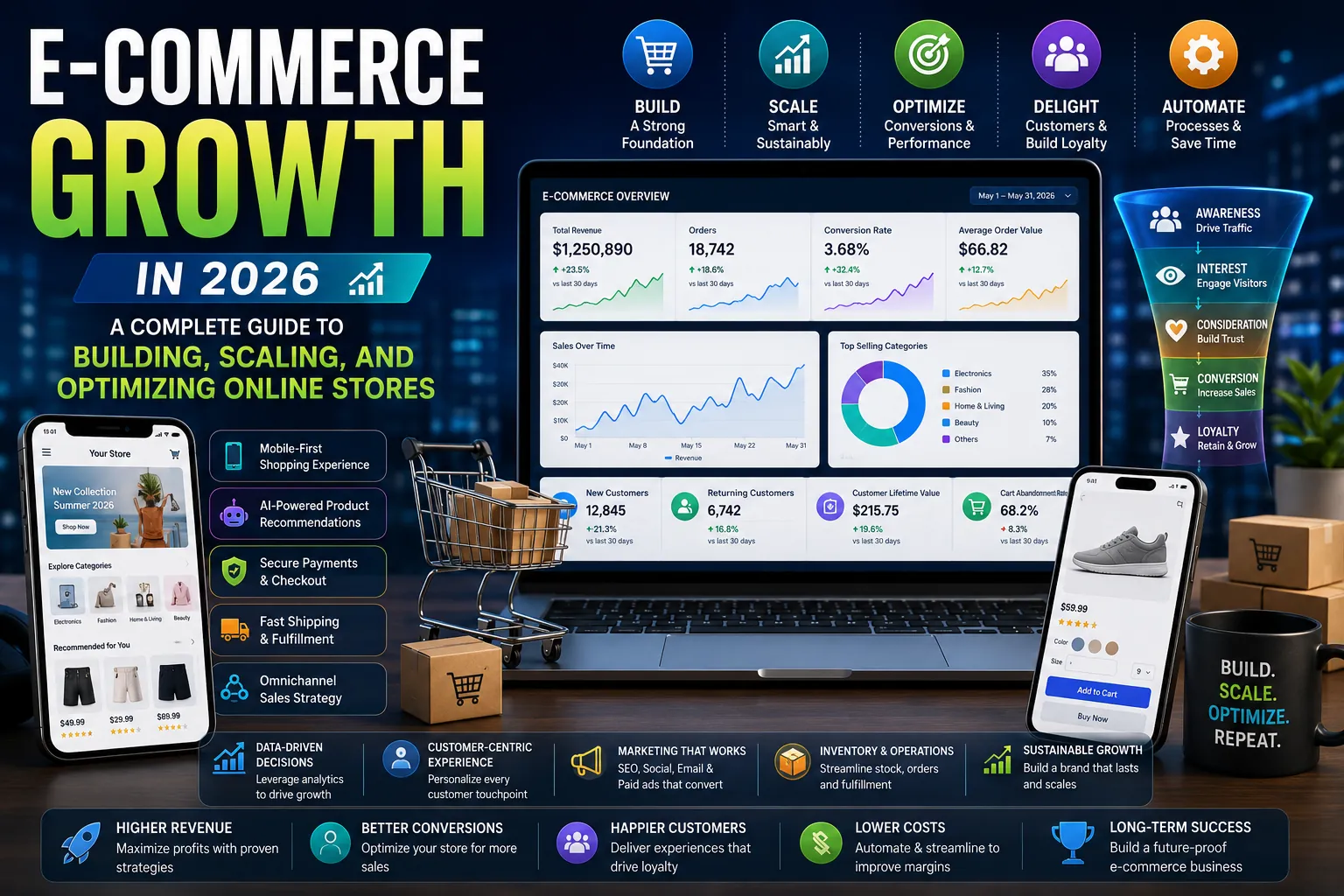
For the foundational view on e-commerce strategy, marketing channels, and growth, read our pillar: E-Commerce Growth in 2026: A Complete Guide. More e-commerce guides live on PostoryCafe.com.