
Keyword research is the foundation every effective SEO strategy is built on. Get it right and every blog post, landing page, and product description you create has a clear audience, a real ranking opportunity, and a defined intent it serves. Get it wrong and you spend months creating content nobody searches for.
Keyword research in 2026 is more nuanced than it was five years ago. AI search tools reward structured, expert-driven content. Search intent classification has grown more sophisticated. Zero-click searches change how traffic flows from Google. This guide walks you through the complete process with the tools and techniques that work right now.
Why Keyword Research Matters More Than Ever
Three shifts make keyword research more important in 2026 than in previous years. First, AI-generated content flooded search results, making it easier to publish and harder to rank without a clear strategic intent behind each piece. Second, Google’s emphasis on search intent alignment has strengthened: ranking for a keyword now requires matching what users actually want, not just including the phrase in the content. Third, AI search tools (Perplexity, ChatGPT Search, Google AI Overviews) surface structured, expert content differently from traditional organic results, creating new keyword opportunities for well-organized sites.
Done well, keyword research turns content creation from a guessing game into a predictable growth channel. Done poorly, it wastes the most limited resource most content teams have: the attention of skilled writers.
Step 1: Build Your Seed Keyword List
Seed keywords are the broad phrases that describe your core topics. For a SaaS expense management product, seeds include “expense tracking,” “corporate cards,” and “spend management software.” For a personal finance blog, seeds are “budgeting,” “investing,” and “credit score.” For a cybersecurity vendor, seeds are “endpoint security,” “ransomware protection,” and “SIEM software.”
Build your seed list by asking one question: what would my ideal customer type into Google when they have the problem I solve? Pull terms from four sources: your product’s own navigation and category labels, your competitor sites’ navigation and blog categories, customer support ticket subject lines and sales call transcripts, and the Google autocomplete and related searches that appear when you start typing your core terms.
Aim for 15 to 40 seed keywords per major content area. This gives your keyword tools enough variety to surface the long-tail variations that represent real traffic opportunities.
Step 2: Expand With Keyword Research Tools
Seed keywords feed into research tools that surface search volume, keyword difficulty, related terms, and SERP feature data. The tools worth knowing in 2026:
| Tool | Strength | Best For | Cost |
|---|---|---|---|
| Ahrefs | Best keyword difficulty scoring and backlink data | Competitive research and gap analysis | From $99/month |
| Semrush | Broadest feature set, strong competitor gap analysis | Full-cycle SEO teams | From $117/month |
| Google Keyword Planner | Direct Google volume data, free | Volume sanity checks and ad campaigns | Free with Google Ads account |
| Answer the Public / AlsoAsked | Question-based keyword discovery | Long-tail and FAQ content planning | Free tier available |
| Ubersuggest | Budget-friendly alternative | Small sites and solo bloggers | From $12/month |
| Google Search itself | Real-time autocomplete, People Also Ask, Related Searches | Validating intent and finding variants | Free |
For most sites with a modest budget, Semrush or Ahrefs plus Google’s free tools cover the full research workflow. Budget-conscious teams can accomplish 80% of what paid tools provide by combining Google Keyword Planner, Google Search autocomplete, and AlsoAsked.
Step 3: Understand and Match Search Intent
Search intent is the single most important concept in keyword research in 2026. Every keyword reflects an underlying goal. Google classifies searches into four primary intent categories.
- Informational: “how does cloud computing work,” “what is embedded finance.” Users want to learn.
- Navigational: “Notion login,” “AWS console.” Users want to find a specific site or page.
- Commercial: “best password managers 2026,” “Bitdefender vs Norton.” Users are comparing before a decision.
- Transactional: “buy Ahrefs,” “download Malwarebytes.” Users are ready to take action.
Matching intent is not optional. Creating an informational guide for a transactional keyword, or a product page for an informational keyword, almost never ranks regardless of how well the content is written.
The fastest way to verify intent: search the keyword and examine the top 5 organic results. Their format tells you exactly what Google believes users want. If they are all listicles, write a listicle. If they are all step-by-step guides, write a guide. If they are all product pages, rank requires a product page.
Step 4: Assess Keyword Difficulty and Volume
Keyword difficulty (KD) is an estimate of how hard it is to rank on the first page for a given term. Both Ahrefs and Semrush score difficulty from 0 (easy) to 100 (nearly impossible). The right difficulty range depends entirely on your site’s current authority.
| Site Authority Stage | Target KD Range | Volume Target |
|---|---|---|
| New site (0 to 6 months old) | 0 to 20 | 100 to 1,000 monthly searches |
| Growing site (6 months to 2 years) | 10 to 40 | 500 to 5,000 monthly searches |
| Established site (2+ years, strong backlinks) | 30 to 65 | 1,000 to 20,000 monthly searches |
| Authority site (major publisher) | 50 to 80 | 5,000 to 100,000+ monthly searches |
Volume and difficulty together form the opportunity score. A 10,000 monthly search keyword at KD 80 may be worth less than a 500 monthly search keyword at KD 12 if your site cannot realistically rank for the high-difficulty term. Focus on winnable opportunities, not just high-volume ones.
Step 5: Organize Into Pillar-and-Cluster Architecture
Once you have a list of viable keywords, organize them into 3 to 5 pillar topics and 8 to 15 cluster topics per pillar. This structure is the most effective content architecture for building topical authority in 2026.
A pillar post is a comprehensive guide targeting a broader, moderate-difficulty keyword: “Technical SEO Checklist,” “How to Start a Blog,” “What Is Embedded Finance.” Cluster posts are focused pieces targeting specific, lower-competition long-tail variations that link back to the pillar: “How to Fix Core Web Vitals,” “10 Blogging Mistakes That Kill Beginner Sites,” “Top 10 Fintech Startups.”
Topical authority builds when Google sees your site thoroughly covering every aspect of a subject. A cluster of 10 to 15 posts around a single pillar topic tells Google you are a serious source on that subject, which lifts rankings across the entire cluster.
Step 6: Assign Keywords and Avoid Cannibalization
Each page on your site should target one primary keyword and two to five secondary keywords. Primary keyword in the title, H1, and first paragraph. Secondary keywords in subheadings and naturally throughout the content.
Keyword cannibalization occurs when two pages on your site target the same primary keyword and compete against each other in search results. This splits authority and usually prevents either page from ranking well. Audit for cannibalization quarterly. Where it exists, either consolidate the two pages or differentiate their intent clearly enough that they no longer compete.
Keyword Research for AI Search in 2026
AI search tools (Perplexity, ChatGPT Search, Google AI Overviews) pull answers from content that is structured, factually grounded, and directly addresses specific questions. This creates new keyword opportunities that traditional SEO tools do not always capture.
Conversational question keywords (natural language queries users type into AI tools: “what is the best way to structure a SAFE note,” “how do I reduce my LCP score on WordPress”) are increasingly worth targeting with well-structured FAQ sections and direct-answer content. FAQ schema markup helps both traditional search snippets and AI extraction.
Original data, research statistics, and unique expert perspectives also rank disproportionately well in AI search because they are cited as sources rather than paraphrased. Including original data points with clear attribution in your content serves both traditional and AI search simultaneously.
5 Keyword Research Mistakes
- Chasing volume over opportunity. High monthly search volume means nothing if the KD is above your site’s realistic range. Winnable low-competition terms outperform aspirational high-competition ones.
- Skipping intent analysis. Writing the wrong format for a keyword wastes every hour spent on the post.
- Not revisiting the keyword list. Search volumes and competitive landscapes shift. A quarterly refresh of your keyword priorities takes 2 hours and frequently surfaces new opportunities.
- Ignoring competitor gaps. Knowing what keywords your competitors rank for and you do not is one of the fastest ways to find high-value targets.
- Treating keyword research as a one-time project. It is an ongoing discipline. Publish your monthly search data to a shared document and review it alongside content performance metrics.
Expert Tips
- Start each research session with competitor gap analysis. In Ahrefs or Semrush, run the competitor gap report to find keywords where your three closest competitors rank in the top 10 and you do not. These are your highest-priority targets.
- Use Google’s People Also Ask as a content outline. The questions in People Also Ask boxes for your target keyword map almost directly to the subheadings your post should address.
- Track keyword rankings weekly once you publish. Pages take 3 to 6 months to reach their ranking ceiling. Watching rank movement helps you identify which posts to update early.
- Prioritize transactional and commercial keywords for product pages. Informational keywords are valuable for authority building. Transactional and commercial keywords are where revenue conversions happen.
Frequently Asked Questions
How long does keyword research take?
A thorough initial keyword research project for a new site takes 4 to 8 hours using paid tools, 8 to 12 hours using primarily free tools. Ongoing monthly refinement for an established site takes 1 to 2 hours. The investment is front-loaded: the first research session is the most intensive. After that, the process becomes an efficient monthly review.
What keyword volume should I target as a new site?
New sites should start with 50 to 500 monthly search volume keywords at difficulty scores below 20. These terms are achievable, often have strong conversion intent, and allow a new site to build real rankings and authority before pursuing larger opportunities. As domain authority grows through backlinks and publishing consistency, move up to moderate-volume, moderate-difficulty targets.
Do I need a paid SEO tool for keyword research?
Not to start. Combining Google Keyword Planner (free), Answer the Public (free tier), Google autocomplete and related searches, and AlsoAsked covers the basics well for a new site. Paid tools like Ahrefs and Semrush become worth the investment when you need precise difficulty scores, competitor gap analysis, and rank tracking across dozens of keywords simultaneously.
Keywords Are the Map, Content Is the Territory
Keyword research tells you where the opportunity is. Creating content that genuinely serves the reader with depth, accuracy, and real expertise is what actually earns rankings and keeps them. Use this process to build a prioritized 90-day content plan, execute it with discipline, and review results monthly.
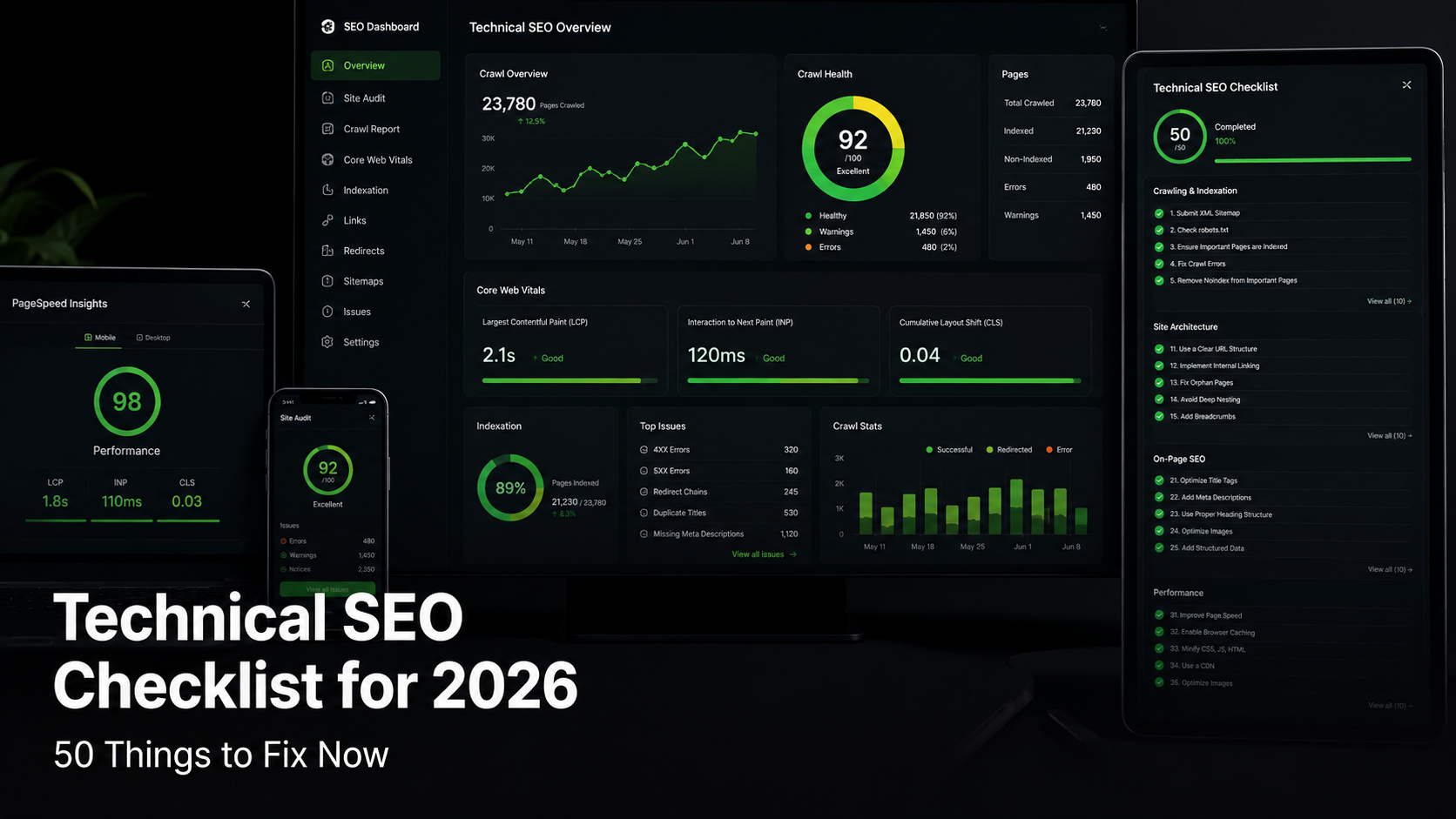
For the full 50-point framework covering every dimension of technical site health, read our pillar: Technical SEO Audit Checklist: 50+ Points Every Website Needs. More SEO guides live on PostoryCafe.com.
Strong SEO starts with understanding search intent, content structure, and ranking opportunities. WritoryBuzz creates research-driven SEO content that helps brands improve visibility, authority, and long-term organic growth.Strong SEO starts with understanding search intent, content structure, and ranking opportunities. WritoryBuzz creates research-driven SEO content that helps brands improve visibility, authority, and long-term organic growth.