

- Report a workplace injury to your employer as soon as possible, even if it seems minor.
- Seek medical attention if you experience pain, swelling, restricted movement or other symptoms.
- Report the injury to WCB Alberta when required and keep records of medical visits and symptoms.
- Physiotherapy can help address pain, improve strength and mobility, and support recovery after a workplace injury.
- Follow your personalised rehabilitation plan and communicate with your physiotherapist about changes in your symptoms.
- Return to work gradually, following appropriate medical advice and any recommended modified duties.
- If you need work injury physiotherapy in Sherwood Park, an assessment at Eastgate Physiotherapy can help determine suitable rehabilitation options.
A workplace injury can happen unexpectedly. It might be a back strain from lifting a heavy object, a wrist injury from repetitive movements or a fall that affects your knee or shoulder. Regardless of how minor the injury may seem, knowing what to do next is important.
Many employees are unsure whether they should report the incident, visit a healthcare provider or contact the Workers’ Compensation Board (WCB). Taking the right steps early can help you understand your options, access appropriate care and plan your recovery.
Here are seven important steps to follow after getting injured at work in Alberta.
1. Report the Injury to Your Employer
The first thing you should do after a workplace injury is inform your supervisor or employer. Explain what happened, when it happened and which part of your body was affected.
Even if the injury seems minor, reporting it creates a record of the incident. Some symptoms may become more noticeable hours or days later.
Include details such as:
- The date, time and location of the incident.
- What task you were performing.
- How the injury occurred.
- Any pain, stiffness or movement difficulties you noticed.
- Whether anyone witnessed the incident.
Keep a copy of any incident report or written communication for your records.
2. Get Medical Attention
Your health should come first. If you have a serious injury, seek immediate medical attention. For less urgent injuries, arrange an assessment with an appropriate healthcare professional.
A workplace injury may involve:
- Back or neck strains.
- Shoulder and rotator cuff injuries.
- Wrist and carpal tunnel problems.
- Knee injuries and ligament strains.
- Repetitive strain injuries.
- Muscle and joint pain.
Tell your healthcare provider that the injury happened at work. In Alberta, healthcare providers are required to report workplace injuries to WCB within 48 hours of treatment.
3. Report Your Injury to WCB Alberta
If your injury requires treatment beyond first aid or causes you to miss work beyond the day of the accident, it is important to report it to WCB Alberta.
You can submit your Worker Report of Injury through the myWCB mobile app or the WCB website.
Your employer also has reporting responsibilities. In applicable cases, employers must submit their report to WCB within 72 hours of being notified.
Providing accurate information helps WCB understand the circumstances of your injury and assess your claim.
4. Keep Track of Your Symptoms and Recovery
After an injury, pay attention to changes in how your body feels and moves.
For example, you may notice:
- Increased pain when bending or lifting.
- Difficulty sitting or standing for long periods.
- Reduced grip strength.
- Stiffness when walking or climbing stairs.
- Discomfort during repetitive work activities.
Keep notes about your symptoms, medical appointments and any changes in your ability to complete everyday tasks. This information can help your healthcare provider understand your progress.
5. Consider Physiotherapy for Your Recovery
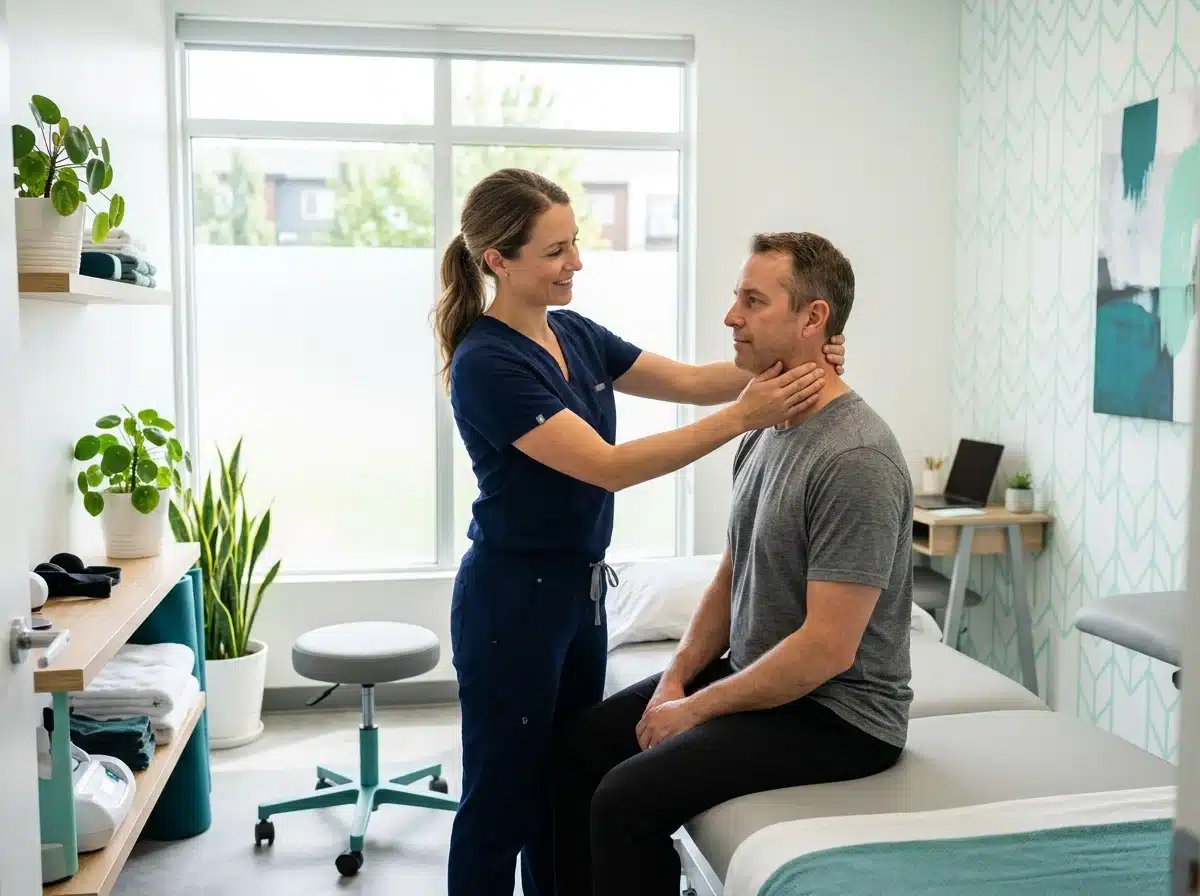
Physiotherapy may be recommended when an injury affects your strength, flexibility, joint movement or ability to perform everyday activities.
A physiotherapist can assess your condition and develop a treatment plan based on your injury and job requirements.
Depending on your needs, treatment may include:
- Movement assessment: Checking your flexibility, strength and range of motion.
- Therapeutic exercises: Gradually rebuilding strength and improving physical function.
- Manual therapy: Using appropriate hands-on techniques to address stiffness and movement restrictions.
- Work-related movement guidance: Learning safer ways to lift, bend, reach and perform job tasks.
- Progress monitoring: Reviewing your recovery and adjusting your treatment plan.
If you are looking for work injury physiotherapy Sherwood Park, Eastgate Physiotherapy provides workplace injury assessments and rehabilitation support for eligible WCB claims.
6. Discuss Modified Duties and Returning to Work
An injury does not always mean you must remain away from work until you have completely recovered.
Depending on your condition, you may be able to return with temporary changes to your responsibilities. These are commonly called modified duties.
Examples include:
- Reducing heavy lifting.
- Taking additional movement breaks.
- Limiting repetitive tasks.
- Adjusting working hours.
- Temporarily avoiding movements that aggravate your injury.
Your healthcare provider can offer recommendations based on your abilities. Discuss suitable duties with your employer and follow your medical and WCB guidance.
7. Follow Your Rehabilitation Plan
Recovery takes time, and returning to demanding activities too quickly may make it harder to manage your symptoms.
Attend recommended appointments, follow your home exercise instructions and communicate any changes in your condition to your physiotherapist.
Your rehabilitation plan may change as your strength and movement improve. The goal is to help you return to your usual activities safely and confidently.
How Eastgate Physiotherapy Supports Workplace Injury Recovery
Eastgate Physiotherapy has served the Sherwood Park community for more than 35 years. The clinic provides workplace injury assessments and rehabilitation for people experiencing back pain, repetitive strain injuries, shoulder problems, carpal tunnel symptoms and knee injuries.
Eastgate is a WCB Alberta-approved physiotherapy provider. The team can complete initial physiotherapy reports, provide treatment recommendations and communicate progress to WCB as required.
Treatment is based on your assessment and may include guided exercises, manual therapy and practical advice for returning to work. The clinic also supports return-to-work planning based on your physical abilities and job requirements.
Conclusion
Getting injured at work can be stressful, but knowing what to do can make the next steps easier. Report the incident, seek appropriate medical attention, complete the necessary WCB reporting and keep track of your recovery.
Physiotherapy may also help address movement limitations and rebuild strength when it is appropriate for your injury. With suitable care and a gradual return-to-work plan, you can work towards resuming your daily responsibilities safely.
Frequently Asked Questions
1. What is the first thing I should do after getting injured at work?
Inform your employer or supervisor, seek first aid or medical attention as needed, and record the details of the incident. Serious injuries require immediate medical care.
2. Do I need to report a minor workplace injury in Alberta?
It is important to notify your employer about workplace injuries, even when they initially seem minor. Keeping a record can be useful if symptoms develop or become worse later.
3. Does WCB Alberta cover workplace injury physiotherapy?
Eligible workplace injury treatment may be covered through WCB Alberta. Coverage and treatment approval depend on the claim and applicable WCB requirements.
4. Can I see a physiotherapist without a doctor’s referral?
Generally, you can book directly with a physiotherapist in Alberta. However, WCB claim procedures and individual treatment requirements may apply.
5. Can I return to work while receiving physiotherapy?
In some cases, yes. Modified duties may allow employees to continue working while recovering. Your healthcare provider, employer and WCB case manager can help determine appropriate arrangements.
About the Author
Satish Steve Pandya
Satish Steve Pandya is a physiotherapy professional associated with Eastgate Physiotherapy in Sherwood Park, Alberta. His approach focuses on understanding workplace injuries, assessing movement difficulties and supporting patients through individual rehabilitation plans.
Eastgate Physiotherapy has more than 35 years of experience serving the Sherwood Park community.
Need Help After a Workplace Injury?
If a workplace injury is affecting your ability to move, work or complete everyday activities, the team at Eastgate Physiotherapy can help you understand your assessment and rehabilitation options. Contact the clinic at (587) 200-4874 or Book An Appointment to learn more.
Was this guide helpful?
Thanks for the feedback. It helps us write better guides.