

- A usage standard is the amount of product one service should use.
- Measure real use for two weeks before fixing any figure.
- Set separate figures for short, medium and long hair.
- Compare expected use with actual use at the end of each month.
- A large gap is a question to ask the team, not proof of loss.
Good salon inventory management starts with a number most salons never write down: how much product one service is supposed to use. Without that number you know what you bought and what is left on the shelf, but you have no way of telling whether the difference is normal or a problem.
This guide explains how to set that number for each service, and how to use it to keep your stock honest.
Why product usage is the missing piece of salon inventory management
Retail stock is easy to follow. A bottle is sold, a bottle leaves the shelf, and the bill is the record.
Professional stock is different. Colour, developer, backwash shampoo, wax and facial products leave the shelf in small amounts, many times a day, and no bill ever says “30 grams of colour”. At the end of the month you can see that three tubes of a shade are gone. What you can’t see is whether they went on six clients or on four.
A usage standard answers that. If a root touch-up is meant to use 30 grams of colour and you did eight of them, about 240 grams should be gone. If 400 grams are gone, you have a question worth asking. Without the standard, you don’t even know there is a question.
How to set a usage standard for each service
You don’t need to do this for the whole menu at once. Four steps are enough to get started.
Step 1: List the services that use the most product
Start with the ten services you do most often that consume product: root touch-up, global colour, highlights, hair spa, keratin, facials, waxing. Leave the rest for later.
Step 2: Measure, don’t guess
For two weeks, measure what is actually used each time one of those services is done. A small kitchen scale works for colour. A measuring cup or a count of pumps works for shampoo, conditioner and treatment products. Keep a sheet at the colour station and ask the team to note the amount next to the service.
Step 3: Agree one figure with the team
Look at the two weeks of notes and pick the typical amount for each service. Go through the list with your senior stylists, because they will know when a figure is unrealistic.
Hair length changes everything in colour work, so set separate figures for short, medium and long hair. As an example only, a salon might settle on 30 grams for roots and 60 grams for a full head on medium hair. Your own measurements are the ones to use, not these.
Step 4: Put the figures where the work happens
Print the list and fix it at the colour bar and the backwash. A standard that lives in the owner’s notebook changes nothing.
Using the standard to check your stock
Once the figures are set, salon inventory management turns into simple arithmetic at the end of each month.
Expected use is the number of services done multiplied by the standard for that service. Actual use is opening stock plus purchases minus what is on the shelf now. Put the two side by side.
A small gap is normal, because no two heads of hair are the same. A large gap usually has one of these causes:
- More product is being mixed than the service needs, and the extra is thrown away.
- The standard was set too low. In that case, correct the standard.
- Services were done but never billed, so they are missing from your count.
- Product was used for training, models or staff.
- A retail product was opened and used at the chair.
Treat the gap as something to understand together with the team. Most of the time the answer is a habit that can be fixed, not a person to blame.
Where software fits in
Doing this by hand works for ten services. It gets tedious for forty, and that is usually when the monthly check stops happening and salon inventory management slips back into guesswork.
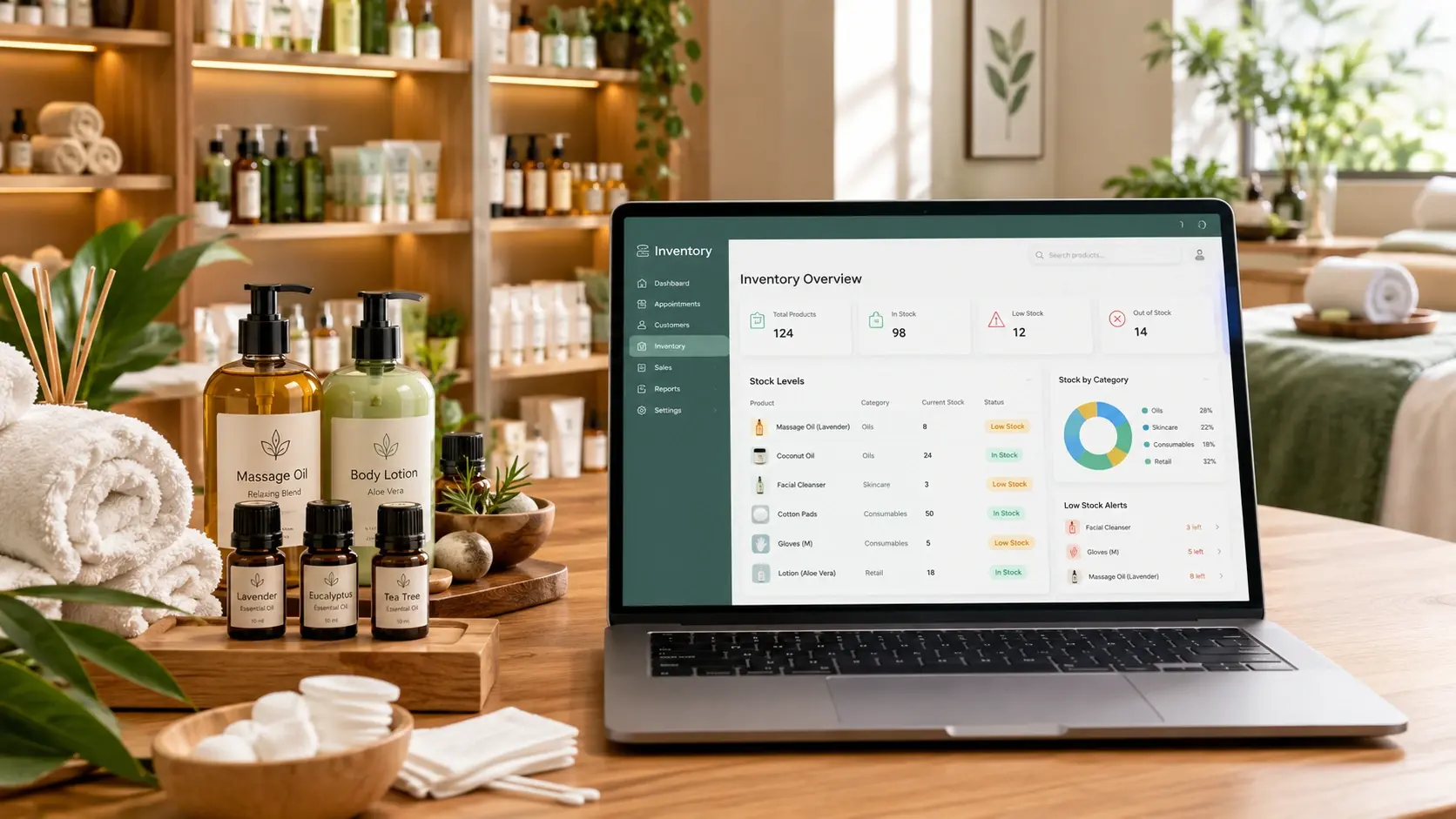
This is the part that salon inventory software is built for. In Wellnito, for example, you set the quantity each service consumes, including part quantities such as 30 ml of colour or 25 g of a product, and that amount is deducted from stock when the service is invoiced. Retail items come off stock when they are billed. A consumption history shows what was used and when, and a dashboard lists the items that are low or out of stock.
A notebook can do a simpler version of the same job: one page per product, a tally mark for each service, and a total at the end of the month.
Common mistakes when setting usage standards
Most problems with salon inventory management at this stage come from how the figures were set, not from the stock itself.
- Copying the supplier’s figure. The brochure describes ideal use. Your salon’s real practice is what you need to measure.
- One figure for every client. Short and long hair need different amounts. A single number will always look wrong.
- Never updating. Review the figures every few months, and whenever you change a brand or add a service.
- Using the standard as a stick. If the team feels watched, the notes stop being honest. Explain that the goal is to order the right amount and waste less.
Start with one service
Pick your most popular colour service. Measure it for two weeks, agree a figure, and compare expected and actual use at the end of the month. When that works, add the next service.
Salon inventory management becomes much easier once each service has a number attached to it, because the stock count finally has something to be compared against.
I work with Wellnito, the salon software mentioned in this article.
Was this guide helpful?
Thanks for the feedback. It helps us write better guides.